Monday, 26 December 2016

Audio for the November 2016 Royal Society lectures

Audio for the November 2016 lectures as the Royal Society meeting is now up:

New trends in evolutionary biology: biological, philosophical and social science perspectives.

Click on the "Show Detail" links on the schedule to access the audio.

These folk are evolutionary revolutionaries who want a new evolutionary milestone after the modern synthesis of the 1940s - and have some ideas about what ought to go into it. One of the ideas - extended inheritance - is a big theme of Universal Darwinism - as covered on this site - though they don't seem to have any idea about Darwinian physics.

I'm rather less impressed by some of their other proposals. It does seem as though a lot of different people want to add in their favorite area of evolutionary biology, and turn evolutionary theory into a complex rat's nest. Part of the appeal of Darwinism is that it explains a lot with a few simple ideas. Adding complexity is sometimes necessary, but how much of that complexity belongs in the "core" seems debatable.

Tuesday, 20 December 2016

Scientists are often reluctant futurists

I think the statement in the title is hard to argue with - but why don't scientists make more long-term forecasts? Science is centrally concerned with forecasting the future using models and checking the predictions against reality. So, you might think that forecasters would be scientists. Yet often working scientists constrain their predictions to the very near term, and systematically avoid longer-term predictions.

It doesn't always happen this way. When forecasting solar eclipses, the sun blowing up, or the heat death of the universe, scientists are prepared to step up. The problems seem to arise when predictions are difficult, or there is uncertainty. Of course these are the areas where the best input of scientists would be most valuable.

Instead of scientists, technical experts seem most attracted to futurism. There, taking a long term view sometimes seems to have some associated status, and people are not quite so reluctant to look to the future. Futurists are a bit of a motley crew, though. They are not necessarily folk which scientists gain by affiliating with. I suspect that that's a big part of the problem.

I think more evolution enthusiasts should step up to the plate. Now we have a reasonable stab at a science of cultural evolution, we are better equipped to look to the future of evolution and consider its possible attributes. Scientists not expressing their opinions or not studying the topic is problematical. It leaves civilization without very much foresight - and without the ability to see, it becomes harder to steer.

One popular meme which recommends avoiding long term forecasting places a so-called "singularity" in the near future - and claims that making forecasts beyond this is practically worthless. This meme is hokum. Machine superintelligence might represent a significant change, but it is not one that makes all of our models fall to pieces. I think that making this claim regarding the impossibility of forecasting shows naïveté about models and forecasting in general.

Most of those involved in long term future forecasting are not very well versed in evolutionary theory. Indeed, one of the popular ideas is that evolutionary theory isn't going to be very relevant because natural selection is horrible and cruel and so humans are going to decommission it and go off in their own direction. This is a poor excuse for not making more use of evolutionary theory, IMO.

We are, by most accounts, in the midst of a major evolutionary transition. Evolutionary theory knows some things about major evolutionary transitions. IMO, it's time for more scientists to step up to the plate and share their best forecasts.

Monday, 19 December 2016

Cultural evolution and the future

One reason for developing a proper science of how culture evolves it to understand human social institutions, and then use this understanding to build better ones. We should have better educational, political, scientific, technological and religious institutions.

Human cultural evolution is the bleeding edge of evolution on the planet. Many of the current significant changes in the biosphere are due to it. Because cultural evolution itself is so important, its study is correspondingly significant. However until relatively recently, it was not being studied very scientifically, and an absolute basic requirement for any sensible study of cultural evolution - Darwinian evolutionary theory - was largely missing.

Thankfully that has changed over the last 40 years. In the mid-1970s scientists started looking at the topic and the field has been slowly snowballing since then. Part of the progress appears to be recent acceleration due to scientists getting on the internet and engaging in social networking activities. This has mostly made criticism easier and made misconceptions harder to sustain.

Science is intimately involved in predicting the future, and cultural evolution is the main science needed to predict future human evolution. So, what can be said? Here are four basic takeaway points:

  • Synthetic life is here already. Before I learned about cultural evolution I thought that creating synthetic life would largely involve building self-reproducing robots, or virtual living systems capable of undergoing open-ended evolution. However non-DNA life forms are already out there in the wild undergoing their own open ended evolution. They live in symbiosis with humans in the form of human culture. I think that I first clearly articulated this point in 2008 - in my video/essay Synthetic life is here already. Our roles are thus not that of creators but rather nursemaids.

  • A new kind of evolution. An important idea is that cultural evolution differs in some respects from the DNA evolution that preceded it. In next to no time, humans have conquered the globe and even landed on the moon. This is not evolution as normal, something new and different is going on. My 2008 video/essay A new kind of evolution covered this idea. The similarities and differences between cultural evolution and the largely DNA-based evolution that preceded it is a complex topic. One recent innovation is that evolution now involves intelligent design. Engineering is affecting both cultural evolution and the evolution of DNA-based creatures - but it illustrates one of the ways in which evolution itself is changing.

  • Engineered future. The future is likely to be be engineered. Intelligent design leads to better and more flexible solutions than is produced by older evolutionary forces - and these will out-compete any lifeforms that don't make use of engineering. My 2008 video/essay The engineered future covers this idea.

  • Memetic takeover A memetic takeover is likely to be imminent. DNA's near monopoly on high-fidelity information storage is over. The death knell for nature's one-size-fits all storage solution started with the evolution of brains. Progress accelerated with the evolution of culture, writing, printing and the internet. Now we can see that a one-size-fits all storage solution is not appropriate for living systems. Sometimes, random access is needed. Sometimes a read/write storage medium is appropriate. Storage should sometimes be volatile, and sometimes not. Power consumption and heat dissipation requirements can be quite variable. DNA storage meets only a few of these requirements and is currently hardly used at all by engineered systems. Most far future organisms are pretty unlikely to use DNA to store inherited information in. The idea is named after the genetic takeover of A. G. Cairns Smith. Here is my main memetic takeover page on the internet about this idea.

These points seem important. Some of them were forecast long ago - for example in the work of Teilhard de Chardin. Modern proponents of some of these ideas include Hans Moravec and Ray Kurzweil. However, understanding of these outcomes does not appear to be very widespread.

Saturday, 17 December 2016

Niche construction vs coevolution

Niche construction has found some adherents since the 8 million dollar grant to its proponents. I tend to regard niche construction more as a competing concept than anything else.

My previous public criticism of the concept has focused on terminology issues. "Niche construction" is defined by its proponents to refer to environmental modification by organisms. This covers constructive and destructive activities. This is counterintuitive and confusing. A more important concept to me seems to be "environmental modification". Does it matter to the organisms it affects whether the landslide was started by a mountain goat or by a meteorite? Not so much. Yet one landslide is "niche construction", while the other is not.

Part of the idea of niche construction is that it is an alternative evolutionary force to natural selection. Supposedly, natural selection involves environments affecting organisms while niche construction represents organisms affecting their environments. However, there's a problem with this idea. The environment of organisms often consists of other organisms. So, from the perspective of one organism, an event would be niche construction, while from the perspective of another organism it would be natural selection. This severely erodes the rhetoric about niche construction and natural selection being different evolutionary forces. In short, the organism-environment split is subjective. One creature's environment can be another organism. From their perspective, first creature is part of the environment.

Traditionally another area of biology covers interactions between different organisms - symbiosis. There's the concept of a biological interaction, which covers the ways in which creatures can interact. Evolution involving such interactions is known as "coevolution". Rather than having scientific concepts based around the organism-environment split, which is highly subjective, an alternative is to use the existing concepts of symbiosis and coevolution to handle interactions between organisms, and then expand the idea of Darwinian populations so they completely tile the universe. Traditionally, evolution treats a set of organisms and their environment. Coevolution theories show how to deal with parts of the environment that are composed of other creatures. Universal Darwinism extends the idea of a Darwinian population to include practically any set of things. Rocks, atoms, planets, etc can all be modeled as being Darwinian populations. This allows the entire universe to be tiled with Darwinian populations and modeled using coevolution theories. That eliminates the need for modeling the environment separately. The environment becomes just a bunch of other Darwinian populations that organisms can coevolve with.

This strategy of demoting the concept of "environment" eliminates the problems associated with the environment being a subjective concept, that depends on what organism, or set of organisms is being considered. Subjective science isn't necessarily bad, but you have to be careful to make sure that the sums come out the same way for all observers. If A is an organism and B is its environment, models should make the same predictions as if B is an organism and A is its environment. Using separate theoretical categories for A and B increases the complexity of the model and increases the chances of these two modeling perspectives producing different predictions. Coevolution models avoid this problem by treating A and B symmetrically - as individuals in coevolving populations.

References

Thursday, 15 December 2016

Positional inheritance - draft chapter

Positional inheritance has become one of my key concepts. It's important when explaining universal Darwinism, because it is common, simple and easy to understand and visualize. However, my previous writings on the topic have been spread out over many web pages. Here are the main points, collected from my previous writings and organized. The page is low in hyperlinks and animations - since this is a draft of a book chapter on the topic. However, pictures still illustrate the main points.


Positional inheritance

We have previously seen that copying is found ubiquitously in nature, from spreading ripples to propagating cracks, from growing crystals to scattering radiation. Of course, copying, variation and selection are the basis of Darwinian evolutionary theory. The copying can take a variety of forms, but the most basic is positional inheritance.

It is common knowledge that people inherit the environment of their parents - along with their parents genes. They inherit the local climate, the local language, government and religion - along with traits coded in DNA. A number of parental traits are inherited in these examples, but one of the attributes which is always inherited is position.

It is common for organisms to inherit their parents' position with considerable precision. Not all organisms have effective dispersal strategies - so often the apple does not fall far from the tree. Rabbits tend to inherit the warren of their parents. Corals inherit their parent's reef - and so on. Much the same is true of many inorganic natural forms.

Examples

Here are some examples of inorganic positional inheritance:

  • Raindrops - split and produce offspring that inherit their parent's position.
  • Cracks - when a crack tip divides the offspring crack tips start their lives nearby.
  • Atoms - when atoms split, the offspring particles originate near to the parent atom.
  • Ripples - parent ripples give rise to child ripples near to their parents.
Because of locality in physics, any form of inheritance is also accompanied by positional inheritance. That makes positional inheritance the most widespread form of inheritance in existence. Positional inheritance applies to waves and particles of all kinds. Since waves and particles are important building blocks of the universe, this makes positional inheritance very widespread.

Trees

The products of positional inheritance often form tree-like structures. The roots and branches of plants resemble trees - and actually are phylogenetic trees of plant cells, laid down in order during development - in a combination of phylogeny and ontogeny. Similarly, lightning, propagating cracks, fractal drainage patterns, and crystalline dendrites are all associated with prominent visual trees. In each case, these are family trees, that show the path of descent. That these trees are in fact family trees can often be easily verified by filming their formation in slow motion. Videos of lightning strikes slowed down show that forks always descend from existing branches. If you look at videos of bullets hitting panes of glass you will see that propagating cracks behave in a similar manner - the cracks spread outwards in a radial pattern where each crack descends from an earlier parent crack.

Sometimes the associated phylogenetic trees are less obvious. For example, in a landslide, each moving boulder has been pushed into motion by collisions with one or more parent boulders. Though each boulder can trace its ancestry back to the first falling stone, the resulting family tree is not obvious to casual observers. It's the same with splitting raindrops, vortices and photons. Family trees are still involved, but you would need a time lapse image to see them.

Heritable fitness

One of the commonly-specified requirements for Darwinian systems is that fitness must be heritable. In other words, on average, relatively fit offspring should be ancestral to relatively fit descendants. Without this condition being met, adaptations can't get off the ground. Does positional inheritance exhibit heritable fitness? Often, fitness is heritable in systems involving positional inheritance - simply as a result of the uneven distribution of resources needed to fuel division.

For example, in diffusion-limited aggregation systems, the concentration of aggregating particles is often greater in some places than others. In electrical discharge systems, the potential gradients can be greater in some places than others. With propagating cracks, the medium can be more brittle in some places than others. These situations are all commonplace ones. In each case, the association between fit ancestors and fit descendants is due to what might be called the smoothness of nature: the tendency of natural systems to be locally fairly uniform on a small scale - the tendency for nearby places to be alike.

In short, ancestors who are in the right place at the right time tend to have descendants who are in the who are in the right place at the right time - while ancestors who are in the wrong place at the wrong time tend to have descendants who are in the who are in the wrong place at the wrong time. The reason is simple: the descendants are born near to the ancestors and so tend to share a similar environment. The result is heritable fitness.

Fidelity

One thing that evolving systems typically need, in order to exhibit complex adaptations, is high-fidelity copying. Excessive noise often results in inherited information getting lost - and this leads to the disintegration of complex adaptations. However, positional inheritance often has pretty high fidelity - allowing adaptations based on it to remain stable. If you think of it in terms of coordinates in the universe that are unknown to an observer, by learning the location of an object an observer gains a considerable quantity of information - that object's coordinates in three dimensional space. If the offspring is within 1 meter of the parent, then that's about 265 bits of mutual information copied with high-fidelity. Say 350 bits of spacetime. Of course in practice, few positional inheritance systems take up the whole universe, so 350 bits is an upper limit. 350 bits is peanuts compared to biological systems, but it represents a search space of considerable size - it's enough for some non-trivial optimization processes to take place.

Adaptation

Positional inheritance also results in adaptation - another hallmark of Darwinian evolution. Cracks adaptively seek the weakest path through matter, streams adaptively trace out the boundaries of their associated drainage basins and turbulence selectively forms where there is the most energy to feed it.

Some cases which are easy to understand can be found in the organic realm. A tree growing partly underneath a bridge is a useful example. Where the branches are under the bridge they don't grow so well, due to lack of light. The parts of the tree that are not under the bridge grow more vigorously. The result is an adaptive fit between the tree and the bridge. This adaptation is not caused by to changes in DNA. It can happen even if every cell in the tree is genetically identical. With a tree under a bridge the adaptive fit between the tree and its environment is caused by differential reproductive success of the cells of the tree - their different rates of growth, reproduction and death. However the important evolving variable is not stored chemically the tree's cells - rather it is the position of the cells themselves which affects their fitness.

If it is acknowledged that the goodness of fit between the tree and the bridge is an adaptation, then by the same logic we ought to count a number of inorganic systems as exhibiting adaptations too - since they display essentially the same dynamics. Crystal dendrites growing near a heat source adapts to grow around the hot area. Rivers and streams adapt to avoid rocky outcrops, cracks propagate around reinforced areas - and so on.

Multiple inheritance channels

Since the modern evolutionary synthesis traditional evolutionary theory has specialized in studying the evolution of nucleic acid-based creatures. A splinter group has rebelled against this orthodoxy, promoting dual inheritance theory - the idea that there are two main information highways in biology - one which transmits inherited information via cells and the other which transmits inherited information down the generations using brains and social learning. However, two inheritance channels is just not enough. Information can also be transmitted down the generations using multiple other channels. Velocity, time, chemical composition and electrical charge are among the many other variables that can be inherited.

Temporal inheritance merits a mention here. Positional inheritance only covers the three dimensions of space. However since Einstein's era, science has understood that space and time are interwoven, and that it often makes sense to talk about spacetime. Spatio-temporal inheritance is a bit of a mouthful, though. Also, it makes reasonable practical sense to talk about positional inheritance and temporal inheritance separately.

Including temporal inheritance and velocity inheritance - which are both also common - bumps up the information carrying capacity of many simple physical systems, making their evolutionary dynamics more interesting.

Universal inheritance

Positional inheritance makes inheritance ubiquitous in the universe. Far from being confined to biology, inheritance happens whenever starlight hits dust - one of the most common interactions in the universe. This is part of the justification for using the term "Universal" in "Universal Darwinism". A number of other writers on the topic have expanded Darwinism to culture, but left the theory confined to biology - leaving chemistry and physics out of the domain of Darwinism. Others have embraced Darwinism in physics - but only applied it to quantum theory, observation selection or the possibility that our entire visible universe might have ancestor universes that existed before the big bang. These applications of Darwinism are interesting, but still narrow, making "Universal Darwinism" not very "universal". Here, Darwinian evolutionary theory is expanded to most dissipative structures - making its application domain much larger and making the theory correspondingly more significant.

Limitations
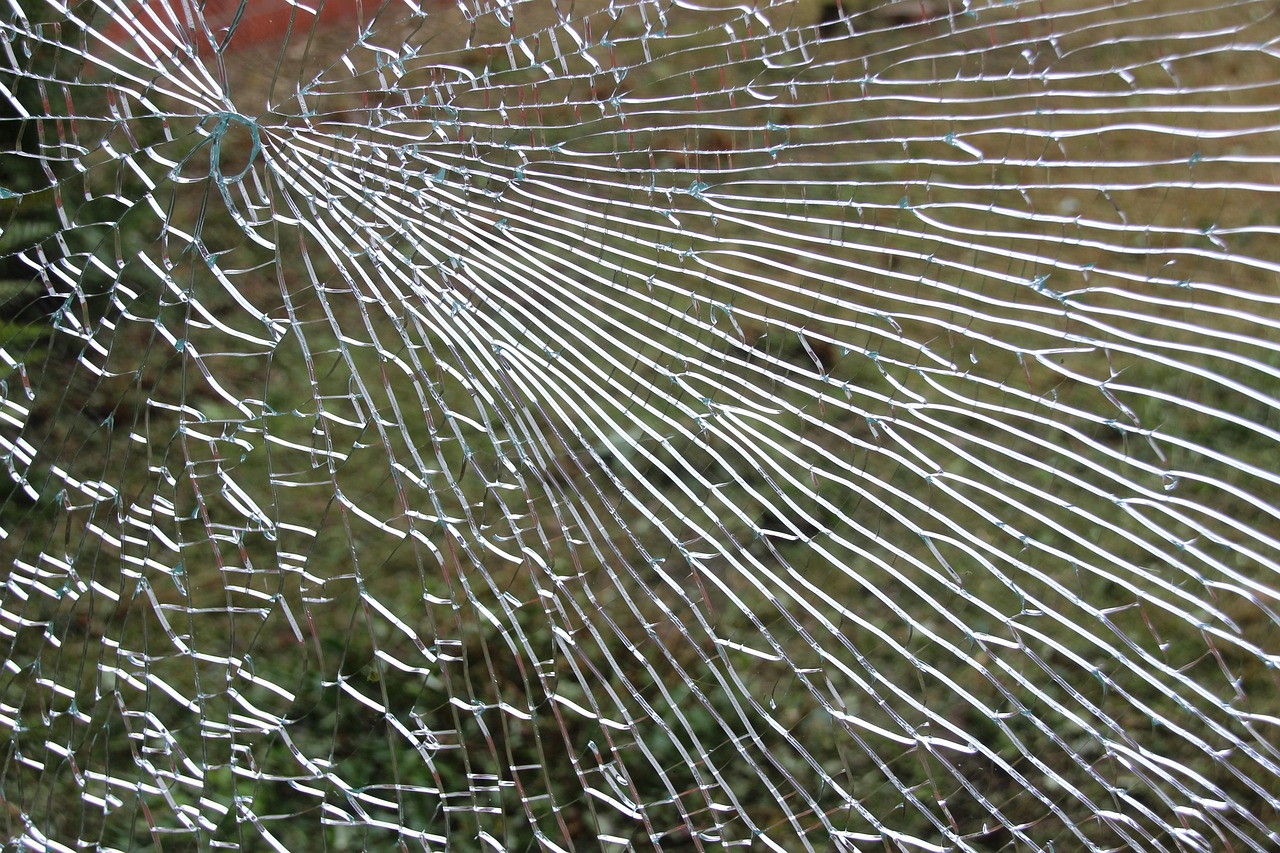
Positional inheritance doesn't lead to adaptations on the scale seen in biological evolution. Various problems and limitations reduce its scope for generating adaptations. Many inorganic systems exhibiting positional inheritance lack important properties found in the organic domain.

One such property is an unlimited number of generations. Living organisms today can trace their lineage back four billion years. By contrast, many positional inheritance systems last for tens, hundreds or thousands of generations before going extinct. Electrical discharges or propagating cracks and splitting photons are all examples of positional inheritance systems which tend to have definite origins and finite lifespans. I some cases, the finite lifespan is a product of the lack of a growth phase. In biology, organisms typically divide and then grow before dividing again. Not all positional inheritance systems have this growth phase. Some divide, divide and divide again. Rocks are usually like this and so are photons. By contrast electrical discharges and drainage basins do have a growth phase. Without a growth phase, unlimited inheritance is obviously impossible. Even with a growth phase, inorganic systems often have a limited temporal extent. Lightning strikes feature a growth phase, but it is fueled by a finite potential difference, and once the potential gradient diminishes, the lightning's pathway disappears.

Another limitation involves the quantity of material inherited. Living organisms can transmit megabytes of information to their descendants. However positional inheritance just doesn't support such large quantities of information. 10 - 50 bits seems like a more reasonable figure for many positional inheritance systems. You can still communicate using 10-50 bits - but the bandwidth limit restricts what can be said.

Criticism

Peter Godfrey-Smith has a section in Darwinian Populations and Natural Selection denigrating the significance of positional inheritance. He writes (on page 55):

Parent and offspring often correlate with respect to their location. It is possible to inherit a high-fitness location; one tree can inherit the sunny side of the hill from another. But the significance of this inherited variation is limited. A population can near-literally 'explore' a physical space, if location is heritable and is linked with fitness. It may move along gradients of environmental quality it may climb hills, or settle around water. But to the extent that reproductive success is being determined by location per se it is not being determined by the intrinsic features that individuals have. If extrinsic features are most of what matters to realized fitness — if intrinsic character is not very important - then other than this physical wandering, not much can happen.

What can happen is that adaptations can develop. Lightning strikes can find the shortest path to the ground, propagating cracks can locate weaknesses in materials and drainage patterns can develop structures that efficiently drain basins. The idea that concepts like 'fitness' and 'adaptation' apply to these kinds of simple inorganic systems is a big deal for physics - and a big deal for Darwinism.

Godfrey-Smith attempts to draw a distinction between "intrinsic" and "extrinsic" traits - and then claims that this distinction affects the "Darwinian character" of processes - with extrinsic traits not being very "Darwinian". However, most traditional evolutionary theory has no use for such a distinction - all it cares about is whether traits are inherited. If you look at axiomatic expressions of Darwinian evolution, "intrinsic" and "extrinsic" inheritance don't get mentioned. That's because this is a distinction that doesn't make much difference: it is irrelevant to most evolutionary theory. Inheritance of traits is what matters - not whether those traits are inherited via "intrinsic" or "extrinsic" mechanisms.

Peter says "the significance of this inherited variation is limited". It seems to me that the significance of this inherited variation is huge. It it wasn't for positional inheritance, we would all have been born in the vacuum of space and died instantly. It may be only "physical wandering" that means that we were born on the surface of a planet - rather than in interstellar space - but it makes the difference between life and death for all of us. Location is actually a very important property that affects fitness. Evolutionary theory is mostly agnostic about how information is passed down the generations - so we can use its existing tools to study positional inheritance.

References

Tuesday, 29 November 2016

The evolution of observers and observations

Here's a draft of a book chapter I have written on the topic of observer and observation evolution.


Introduction

One of the places where mainstream physics has come closest to embracing Darwinism involves the role of observers. Physicists identified the role selection of observers plays, and identified it as the cause of goodness of fit between man and his environment - in the form of life-friendly physical laws and a stable planetary home.

History

Historically, the evolution of observers was first studied by a physicist called Brandon Carter in the 1970s. One of the ideas he came up was was that physical constants having values that made the universe habitable was not due to chance or an intelligent designer. It was no accident that we observed a universe with life-friendly physical laws, since it could not be otherwise: any observers in universes with physical laws that were not life friendly would rapidly perish. This idea was christened "the anthropic principle" and it was contrasted with the Copernican principle - which states that we are not in a special place in the universe. According to the anthropic principle we are in a very unusual place in the universe - one suitable for the evolution of humans over billions of years.

The result of the need for life-friendly physical laws is an adaptive fit between the universe and living systems inside it. The physicists didn't describe what they had discovered as an "adaptive" fit. Instead they said that the universe was 'fine tuned' for life. Most of the physicists involved didn't seem to link these ideas to evolutionary theory. Instead they seemed to consider it to be an entirely new area of science which they had discovered, one that could explain the appearance of design without invoking a designer. They did, however use the terminology of 'selection' to describe their findings - mirroring the terminology used in evolutionary theory. Retrospectively, it seems obvious that they were just applying Darwin's discovery to human observers.

Observation selection

A subsequent development was the discovery that a similar idea could be applied to observations, as well as to observers. Observations may be filtered in a number of ways - both before and after arriving at the senses. For example, publication bias filters information before it reaches an observer. An observer's expectations and preconceptions might then go on to filter information further before it reaches consciousness.

Observation of the observable

From one perspective, observation selection is one type of selection in the nervous system among many. Filters also control whether information is stored, when it is retrieved, and when it is forgotten. Still more filters are applied to ideas, action plans and motor outputs. However, if you look at the situation another way, observations seem to be fundamental - since all knowledge gains are made through observation. Observations are the basis of everything an organism knows. Everything else consists of inferences derived from observations. This gives observations a primary status. For example, if a fruit fly in an scientists's experiment dies, that's a case of natural selection. However the scientist doesn't learn about it until an observation is made. We can say that survival of the fittest is a special case of observation of the observable. This results in a reformulation of evolutionary theory puts observers at the heart of the theory. This broadly mirrors the changes in physics that happened at the turn of the last century, when it was discovered that observers played a surprisingly central role in physics.

Observation reproduction

Selection is only part of Darwinism. That many observers reproduce is perhaps too obvious to mention. However, observation reproduction merits a few comments. Behavioral reproduction is ubiquitous in human cultural transmission. It is widely agreed that humans often copy the behavior of other humans via behavioral imitation. However, behavior is only one side of behavioral imitation. To be copied, behaviors have to also be observed. Observations reproduce during this process just as behaviors do. To give an example of an observation that catalyzes its own reproduction consider the observation of yourself, snorting cocaine. Such an observation is often followed by more similar observations. This is a simple case of observation reproduction.

Beyond survival and reproduction

Observation selection illustrates how Darwinian dynamics can involve more than survival and reproduction. Observation selection also filters out things that are hidden from the observer. This allows evolutionary theory to be applied to cases where the observation of entities is based on their visibility - rather than because they and their ancestors survived and reproduce. Survival and reproduction are important determinants of what we observe, but they are not the only factors involved.

Multiverse

The idea that the visible universe is the product of selection effects suggests that the visible universe is part of a multiverse. It which case it would be helpful to know the size of the multiverse - and which parameters are free to vary in it. Alas we can only observe our small corner of the multiverse. This leads to a difficult inductive inference problem with very little data to go on. The concept of a "reference class" is sometimes used to denote the set of objects being selected from. When dealing with other possible worlds it isn't always clear what the set of worlds being selected from consists of - since we only see one world.

Brandon Carter's Ultra-Darwinism

One of the physicists who did recognize links to Darwinism was the originator the idea in the first place: Brandon Carter. He wrote in 1992 that: "anthropic selection should be considered as an adjunct to ordinary natural selection". He proposed that the union of anthropic selection and natural selection be called 'Ultra Darwinism'. That's pretty much the same thing that I am saying - except that Brandon used a different name. However, I would emphasize that the topic is mostly just applying basic Darwinian principles to observers and observations. There are a few other topics involved too - for example, the maximum entropy principle is used to handle ignorance. However, this is mostly ordinary Darwinism applied to observers and observations.

Terminology

The term "anthropic" turns out to be rather unfortunate. The "anthro-" prefix means: "man", but the basic idea can easily be generalized to cover animals, plants and machines. The human-based version of the idea seems anthropocentric to the point of being unscientific.

References

Thursday, 24 November 2016

Douglas Futuyma: no evolution revolution

Evolutionary revolutionaries face opposition from conservatives, who apparently like their evolutionary theory the way they were taught it in school. A case in point is Douglas Futuyma, well known as the author of a popular evolutionary biology textbook.

In the essay Can Modern Evolutionary Theory Explain Macroevolution? (see the "sample pages" link at the bottom of the page for the free PDF), Futuyma explains his perspective on various proposed changes to evolutionary theory - including changes proposed by students of cultural evolution. Thanks are due to Jerry Coyne for drawing attention to this paper.

The abstract starts:

Ever since the Evolutionary Synthesis of the 1930s and 1940s, some biologists have expressed doubt that the Synthetic Theory, based principally on mutation, genetic variation, and natural selection, adequately accounts for macroevolution, or evolution above the species level.

...and concludes:

I conclude that although several proposed extensions and seemingly unorthodox ideas have some merit, the observations they purport to explain can mostly be interpreted within the framework of the Synthetic Theory.
I think the essay goes after the wrong targets. The biggest change in our understanding of evolution since the 1930s has been the massive expansion of the domain of evolutionary theory - to include the Darwinian evolution of cultural variation, learned knowledge development systems and inorganic systems. Futuyma's treatment of this consists of a section entitled "Nongenetic Inheritance" - which mentions cultural inheritance, saying "Cultural characteristics such as language and wealth are nongenetically inherited". However he spends the rest of the section discussing a inheritance via meiosis and mitosis. That's it. The biggest revolution in evolutionary theory swept under the rug in one brief paragraph.

IMO, the second biggest change in evolutionary theory, since the 1930s is the revolution represented by symbiology. This conclusively added merging and joining operations to the basic evolutionary toolkit - which had previously consisted of splitting and selection. Surely any discussion of updating the modern synthesis ought to include some coverage of this change to the basic fundamentals of evolutionary theory. Futuyma gives this revolution one sentence. He writes: "possibly newly established endosymbioses will likewise have large but beneficial effects".

Since Futuyma offers so little coverage of what I consider to be the real revolutions in evolutionary theory since the 1930s, what does he talk about? S. J. Gould is mentioned 45 times in the essay. Alas, my rather dim view of S. J. Gould extends to those who take him seriously. I'm mostly OK with bashing Gould's proposed revolutions, but here they are distracting from the real action - and that's not OK.

The essay closes with the comment:

Of course, the Evolutionary Synthesis will be extended, molded, and modified. But there will not be a Kuhnian “paradigm shift.”
My take on the "paradigm shift" business is a bit different. Evolutionary theory caused a pretty dramatic shift in biology in the 1800s. It causes similarly dramatic shifts in other fields it enters. Evolutionary economics is a major shift for economics, evolutionary epistemology is a major shift for epistemology - and so on. What Futuyma is apparently talking about is a paradigm shift within evolutionary theory. Most of the claims for memetics as a paradigm shift aren't talking about that. For example, Richard Brodie, in Virus of the Mind (1996), says:

Viruses of the mind, and the whole science of memetics, represent a major paradigm shift in the science of the mind.

In Thought Contagion, Aaron Lynch (1998) wrote:

Memetics represents just such a paradigm shift. In a nutshell, it takes the much explored question of how people acquire ideas, and turns it on its head - the new approach asks how ideas acquire people.

These folks are talking about memetics as a paradigm shift within psychology.

Are memetics and universal Darwinism a paradigm shift within evolutionary theory? This raises the issue of what qualifies. I have described symbiology and the expansion of evolutionary theory's domain as being 'revolutions'. However, they clearly build on the existing theory. A "Kuhnian paradigm shift" doesn't seem to be a particularly well-defined scientific concept, so it is not always easy to see whether something qualifies or not. Ultimately it doesn't matter. What's more important is to digest and assimilate the revolutions. At this stage, I'm not convinced that Futuyma has done very much of that.

Does Futuyma have any understanding of cultural evolution? If there was evidence that he knew what he was talking about, I might give his opinion some more weight. It's hard to coherently argue against the significance of a scientific revolution when you don't even understand it.

Friday, 18 November 2016

Political memes

Obama won his last election with social media. Now Trump has won with social media. Political memes are officially a big thing. Throughout the election cycle, Trump was the more-discussed candidate on social media. The discussions were not always positive - but they made sure that Trump would win any contest based on the availability heuristic. There were some Clinton memes, but they were nowhere near as diverse, interesting and spreadable as the Trump memes. Love or loathe Trump, one has to acknowledge that he and his team have some marketing skills.

The Trump campaign illustrated the marketing heuristic that there's no such thing as bad news. The important thing is to get in the news. In many cases, it doesn't matter too much if the news reflects badly on you - so long as everyone is talking about you and discussing you.

I'd like to illustrate this article with an internet meme. Early in the campaign the Gregory brothers made a memorable video illustrating the Trump marketing tactics titled Donald Trump Sings & Dances. The video showed how Trump grabbed the media spotlight using provocative behavior - essentially by trolling everyone. The chorus lyrics go: "I love Mexicans they're rapists" - a mashup of Trump's contradictory comments.

It was easy to dismiss Trump during the campaign because his policy positions were so ridiculous. Building a 2000 mile wall along the Mexican border with North America is the most obvious example. However, because his ideas were ridiculous, people discussed them, ridiculed them - and in the process, shared them. Trump went along with his memes for the ride, using memetic hitchhiking. It worked. Now America has four years of Donald Trump as president of the union.

Daniel Dennett is Bach

Daniel Dennett is coming out with his book on cultural evolution in 2017. Here's the Amazon page for the book. It says the book is coming out in February. The title is: From Bacteria to Bach and Back: The Evolution of Minds.

The blurb reads in part:

In From Bacteria to Bach and Back, [Dennett's] most comprehensive exploration of evolutionary thinking yet, he builds on ideas from computer science and biology to show how a comprehending mind could in fact have arisen from a mindless process of natural selection. Part philosophical whodunit, part bold scientific conjecture, this landmark work enlarges themes that have sustained Dennett’s legendary career at the forefront of philosophical thought. In his inimitable style―laced with wit and arresting thought experiments―Dennett explains that a crucial shift occurred when humans developed the ability to share memes, or ways of doing things not based in genetic instinct. Language, itself composed of memes, turbocharged this interplay. Competition among memes―a form of natural selection―produced thinking tools so well-designed that they gave us the power to design our own memes. The result, a mind that not only perceives and controls but can create and comprehend, was thus largely shaped by the process of cultural evolution.

Dennett has previously written on cultural evolution, in Darwin's Dangerous Idea, Consciousness Explained and Breaking The Spell. This looks set to be his first book largely devoted to the topic. 496 pages: biblical proportions.

Monday, 14 November 2016

Cultural evolution vs cultural epidemiology

Jason Collins recently raised the issue of cultural evolution vs cultural epidemiology, thus:

Then there is the question of whether evolution is the right framework for all the forms of cultural transmission? Are models for the spread of disease a better fit? You will find plenty of discussions of this type of question across the cultural evolution literature, but little convergence.

I think it's fair to say this issue has been widely discussed - with some folks promoting "viruses of the mind" and "cultural virus theory" for example, and other folk criticizing them. However the issue is not very complicated and should not be that controversial. Here's a position summary that I think that most knowledgeable parties should be able to agree on:

Models of disease spread often need to be generalized before being applied to culture. One issue is the sign of the fitness correlation between symbiont and host. Diseases almost always have a negative fitness correlation with their hosts - i.e they reduce host fitness. By contrast, culture can have positive or negative effects on host fitness. The sign of the fitness impact matters, since negative fitness impacts on hosts are resisted and rejected, while positive fitness impacts on hosts are promoted and encouraged. Symbiology performs this generalization. However symbiology generally deals with close relationships. There's a larger field that deals with all kinds of relationships - known as biological interactions. Models of biological interactions are highly suitable for modeling cultural evolution.

Many models of epidemiology are explicitly evolutionary these days. It is widely recognized that parasites evolve in real time - including within host lifetimes. Less widely recognized, but still well-established science is the notion that host immune systems use evolution and natural selection to adapt to the parasites they face. Evolutionary epidemiology is clearly a thing. The main cases where non-evolutionary models of epidemiology are useful is when dealing with short time scales - or highly simplified models. For example, fleas might spread through an island community without either them or their hosts evolving very much. A similar cultural example of where a non-evolutionary epidemiological model might be appropriate is where Rubik cubes spread through a network of children in schools. Here, neither the cubes nor the children are doing much change or evolution. As a first approximation, models based on evolutionary theory can be ignored in favor of simple epidemiological models.

It is certainly true that in cultural evolution, epidemiological models are sometimes the most appropriate. The exact same thing is true in the organic realm. However evolutionary and epidemiological models are generally complementary and compatible - they are best used under different circumstances.