 Robert Boyd's new book on cultural evolution is out. It is titled:
A Different Kind of Animal: How Culture Transformed Our Species
The publisher's blurb is here. It says, among other things:
Human beings are a very different kind of animal. We have evolved to become the most dominant species on Earth. We have a larger geographical range and process more energy than any other creature alive. This astonishing transformation is usually explained in terms of cognitive ability — people are just smarter than all the rest. But in this compelling book, Robert Boyd argues that culture — our ability to learn from each other — has been the essential ingredient of our remarkable success.
Google books has it here and offers a peek inside.
The publisher's site says:
Based on the Tanner Lectures delivered at Princeton University, A Different Kind of Animal features challenging responses by biologist H. Allen Orr, philosopher Kim Sterelny, economist Paul Seabright, and evolutionary anthropologist Ruth Mace, as well as an introduction by Stephen Macedo.
There's a review here.
I've long sought better ways of explaining and teaching evolutionary theory. A recent novel approach involves evolutionary topology. One approach to applying topological ideas to evolution is to apply it to the histoy of the relationships between the agents involved. This is commonly done when constructing family trees. Here is a set of primitive operations:
 Creation |
 Destruction |
 Splitting |
 Merging |
 Emigration |
 Immigration |
The operations are fairly self-explanatory, but some notes may help. To start with, this is a dualistic agent-environment framework. If it isn't clear what the agents are, that's the first thing to sort out. Agents have no properies or attributes - those would be modeled independently. Similarly there is no spatialization - again that would be modeled independently.
"Creation" refers to the construction of agents from non-agents. The most common way that agents originate is normally not "Creation" but "Splitting". An example of creation is the origin of life. However, creation can be more common than this suggests. For example as well as a first organism, there was a first ants nest and a first company.
The framework represents merging and splitting events from symbiology. Splitting is a common evolutionary primitive operation, but the significance of merging was not fully appreciated until the 1960s. Until then recombination was the only "merging" operation most evolutionists considered. Then it became seriously entertained that eucaryotic cells had symbiotic origins. While this endosymbiosis subsequently became widely-accepted science, it didn't have much effect on the foundations of evolutionary theory. Instead it was typically tacked on as an afterthought. Endosymbiosis was considered to be a rare accident during the history of life. Here, by contrast, merging is a primitive operation. It is the time reverse-operation of splitting.
Lastly immigration and emigration are included as fundamental operations. They are listed mainly because they are so important. If you are dealing with a closed system, feel free to reject them.
The framework is an alternative to the "selection-drift" framework, which seems to be one of the main ways in which the concepts of evolution are introduced to people. Selection includes both splitting and destruction, while here those are very different categories.
Historically this framework grew out of my Natural production and natural elimination. I noticed that adding more categories would help to improve the overall clarity. The concept of "evolutionary topology" is not mine. For earlier use see (for example): Topology of viral evolution (2013).
Genetic drift is a well-established idea in population genetics. It generally refers to stochastic changes in gene frequency that are not caused by selection. The term comes from nautical language: if a ship is not driven by the wind it may "drift" around, pushed hither and thither by the waves. Historically, genetic drift was not considered to be a very important force until the 1960s, when it was shown to be significant experimentally, and it was discovered that many genomes were full of useless junk DNA, which was then subject to genetic drift, resulting in molecular clocks useful for dating evolutionary divergences.
Genetic drift results in "neutral networks", whih in turn allow populations to maintain diversity that can be recruited by natural selection if the environment changes. Drift results in historical contingency and path dependence.
Complicating the definition of genetic drift is the desire to distinguish it from genetic draft. The term "genetic draft" refers to gene changes caused by linkage and selection at other loci. It is related to the concept of genetic hitchhiking. Like genetic drift, genetic draft can have a stochastic component, as a gene's neighbours vary over time. Unlike genetic drift, genetic draft can act persistently in the same direction.
Memetic drift is pretty much the exact same thing with memes instead of genes. Like gene frequencies, meme frequencies drift around in the absence of directional selection, resulting in loss of memetic diversity in small meme pools. As with genetic drift, memetic drift is a useful null hypothesis when dealing with the issue of whether an observed trait is an adaptation. As with genetic drift and genetic draft, we can distinguish between memetic drift and memetic draft.
Genetic drift is much discussed but memetic drift is rarely mentioned. I remember a good discussion of it in Kevin Layland's book "Sense and Nonsense". It is sometimes used by researchers as a null hypothesis. However, it is much less frequently mentioned than genetic drift is. This is, I believe, largely caused by cultural evolution's scientific lag. The significance of genetic drift was not recognised until the 1960s. Cultural evolution lags behind its organic counterpart in many ways, and this is plausibly one of them.
If you think about optimization frameworks in economics (one of the most advanced evolutionary social sciences) then the equivalent of genetic drift is rarely mentioned. It is the same with optimization frameworks in physics. Phyics features the "maximum entropy production principle" which explains a good deal of physical evolution. It too has concepts corresponding to genetic drift. However, it rarely mentions or makes use of these concepts. Phausibly, it is because these sciences are underdeveloped relative to evolutionary biology.
I'm generally a critic of contrasting "genetic drift" with "natural selection" (for details see here). Indeed, the definition of genetic drift is relatively complex, and it is often not a very useful scientific category, due to the practical difficulty of identifying it in any particular case. Memetic drift has much the same set of problems. However, I do, of course, acknowledge the significance of evolution by accident, and the systematic loss of diversity in small populations that arises due to factors which don't involve directional selection.
I created my pages about memetic linkage and memetic hitchhiking way back in 2011. However, I haven't seen much in the way of attempts to quantify memetic
linkage. To help rectify this I performed a quick study of linkage between lines within nursery
rhymes. The aim was to see how the distance between lines altered the
chance of them being inherited together. Some results (obtained via Google searches):
Doe a deer
| Reference line | Target line | Document count |
| Doe, a deer, a female deer | Ray, a drop of golden
sun | 394,000 |
| Doe, a deer, a female deer | Me, a name I call
myself | 353,000 |
| Doe, a deer, a female deer | Far, a long, long way to
run | 296,000 |
| Doe, a deer, a female deer | Sew, a needle pulling
thread | 180,000 |
| Doe, a deer, a female deer | La, a note to follow
Sew | 116,000 |
| Doe, a deer, a female deer | Tea, a drink with jam and
bread | 121,000 |
This old man
| Reference line | Target line | Document count |
| He played knick-knack on my thumb | He played knick-knack on my shoe | 3,290 |
| He played knick-knack on my thumb | He played knick-knack on my knee | 2,670 |
| He played knick-knack on my thumb | He played knick-knack on my door | 2,550 |
| He played knick-knack on my thumb | He played knick-knack on my hive | 2,130 |
| He played knick-knack on my thumb | He played knick-knack on my sticks | 2,030 |
| He played knick-knack on my thumb | He played knick-knack up in heaven | 1,630 |
| He played knick-knack on my thumb | He played knick-knack on my gate | 1,930 |
| He played knick-knack on my thumb | He played knick-knack on my spine | 1,670 |
The first thing to say about this data is that memetic linkage is clearly evident, and its effect is quite large.
With genetic linkage, the probability of two genes being separated is roughly proportional to the distance between them, at least for small distances. This is a consequence of the logic of meiosis. However, with memetic linkage, much less linear relationships could be possible - because selection by humans for brevity is involved, and the shape of the linkage curve depends to some extent on how much humans like brevity.
While the data here suggests a fairly linear relationship, we should not expect that result to hold in general. It seems likely that some sets of adjacent memes will have natural "fracture points" where the probability of memes on either side getting unlinked during transmission is high.
A science of memetic linkage is important in advertising and marketing. Many want to attach memetic payloads to existing highly viral memes, in order to spread their content around. That means engineering high memetic linkage. At the risk of stating the obvious, sound engineering ought to be based on good science.
The term "memenomics" seems like an interesting fusion of "meme" and "economics". It seems to have become a brand at memenomics.com. I rather like the word but am less convinced by the associated MEMEnomics book and its "vMemes". That seems more like marketing and self-promotion than science.
I think "memenomics" should just refer to some ground in the vicinity of economic approaches to memetics and evolutionary approaches to economics. "Evolutionary economics" already has a pretty nice name, so maybe "memenomics" could be used to refer to economic approaches to memetics. A nice example of this is the well-known idea of an "attention economy" - where attention is a scarce resource that memes compete to monopolise. That's an example of applying economic thinking to memetics, but there are other ways in which economics could be applied to memetics. For one thing, attention is not the only resource that memes are interested in. They also compete for storage space, transmission bandwidth and various other resources.
In my 2011 video/essay title " Dawkins Dangerous Idea", I approvingly quoted Paul McFedries as saying:
Richard Dawkins became famous in the 1970s for his concept of the selfish gene, and he has become infamous in recent years for his unyielding atheism. But I predict that Dawkins will be known, a hundred years hence, not for these contributions to science and culture but for the concept of the meme. Feel free to spread that idea around.
Now it appears that genetics blogger Razib Khan has come around to much the same idea, writing an article titled:
In 2546 Richard Dawkins Will Be Remembered For “Memes”
I still think that this is right. What is Dawkins second-biggest scientific idea? Probably the extended phenotype. That seems rather insignificant compared to memes and memetics.
Virtue Signaling by Geoffrey Miller
I'm pleased to see an increased number of evolutionists adopting the "virtue signalling" terminology that I've been promoting since 2011.
The best slides (IMO) are the ones in the introduction at the start of the presentation.
Here, Miller applies virtue signaling theory to the "Effective Altruism" community. It is a topic I have been interested in for a while - though I haven't written much about it so far. A number of those involved have tried to distance themselves from signalling - saying they are trying to do good, not appear to do good. Maybe - but that is probably just a form of virtue signaling for a more critical audience.
There's no cultural evolution in this talk. Most self-styled evolutionary psychologists seem to know little about the topic. Of course, cultural evolution is of critical importance in understanding modern cultural movements, such as "Effective Altruism".
Thanks to Andres Gomez Emilsson at Qualia
Computing for directing my attention to this presentation.
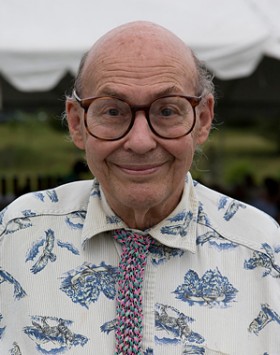 Here's the late Marvin Minsky (1994) in " Will Robots Inherit the Earth?":
In the past, we have tended to see ourselves as a final product of
evolution - but our evolution has not ceased. Indeed, we are now
evolving more rapidly - although not in the familiar, slow Darwinian way.
It is time that we started to think about our new emerging identities. We
now can design systems based on new kinds of "unnatural selection" that
can exploit explicit plans and goals, and can also exploit the inheritance of
acquired characteristics. It took a century for evolutionists to train
themselves to avoid such ideas - biologists call them 'teleological' and
Lamarckian' - but now we may have to change those rules!
That's more or less what I have been trying to do over the last decade:
drag the theory of evolution into the 21st century by incorporating
intelligent design, Lamarckain inheritance, directed mutations,
evaluation under simulation and so on.
One of the things I have found is that these things are often not quite
as novel an Minsky implies. Organisms have been "inheriting acquired
characteristics" for at least as long as dogs have been passing their
fleas on to their puppies. Plans and goals are not exactly new either.
The first mammals were making plans - and these went on to influence
their evolution via sexual selection and in other ways. The picture
of these new capabilities arising with human engineering design is
not really correct - many of them have much older roots.
IMO, this is interesting because it makes the old school evolutionary biologists
and their textbooks wrong in their own terms, not just because of
human beings, genetic enginnering, etc.
Large-scale cloning is common in both organic and cultural evolution. Multi-cellular organisms are largely clones of a single genotype, though some "somatic mosaicism" does happen. In the cultural realm, there are large-scale clones of a variety of books, music files, vidoes and pieces of computer software.
Though there's not much difference between organic and cultural evolution in this respect, they do seem a little bit different when it comes to spatially-distributed megaclones. In the organic realm, megaclones are mostly single organisms. Asexual reproduction does produce a similar effect. For example, dandelions reproduce asexually, and nearby dandelion plants are often closely related. However, there's no coordination maintaining the genetic similarity, and so over time the genomes diverge.
In the cultural realm, if you look at software like Android or iOS, these are massive distributed megaclones. These are good examples of cultural eusociality. The manufacturer is like the queen, while the individual phone handsets are like drones. Unlike the situation with ants or bees, variation due to sexual recombination is pretty minimal - so the whole system is closely related and can be modelled as being a single distributed cultural organism.
Money is another classic example of a large-scale distributed cultural megaclone. The notes and coins are typically identical on a large scale (not counting their serial numbers). Here the "queen" is the mint, while the notes are the "drones".
Megaclones are often important determinants of what counts as an evolutionary unit. A megaclone can be modelled as an individual, or an organism, without too much concern for conflict between the cloned units.
That distributed megaclones seem more viable in the cultural realm has an important effect on the evolutionary dynamics involved - namely cultural evolution has lifted the size limit on organisms. Blue whales are pretty big animals, but cultural megaclones, can span the entire planet easily these days. It looks as though some future organisms will be enormous.
|
|


 MemeInsider is a magazine about internet memes. It's available in
electronic and printed versions. The home page is
MemeInsider is a magazine about internet memes. It's available in
electronic and printed versions. The home page is 


 Posts
Posts

