Richard Dawkins: Religion a Computer Virus
I can't embed it, but in this last video, Richard Dawkins gets into memes (and memeplexes) during the book tour associated with the first part of his autobiography: Richard Dawkins On Meme.
Saturday, 17 May 2014Richard Dawkins on memes in 2013
Richard Dawkins: Memes
Richard Dawkins: Religion a Computer Virus I can't embed it, but in this last video, Richard Dawkins gets into memes (and memeplexes) during the book tour associated with the first part of his autobiography: Richard Dawkins On Meme.
Friday, 16 May 2014Do we need sciences of longevity and fidelity?
I wrote recently about repology - the proposed science of copying. However heredity famously involves other things besides copying. Famously, it is 'fecundity, fidelity and longevity' - not just 'fecundity'.
So, where does science stand regarding longevity and fidelity? The situation with longevity seems to be quite good. For one thing there's a science of longevity, featuring evolutionary theories affecting senescence - such as the 'disposable soma', 'mutation accumulation' and 'antagonistic pleiotropy' theories of aging - and things like 'the reliability theory of aging' - which is a "non-evolutionary" theory of aging that also applies to non-living things. Then there's stability theory. Stability isn't quite the same thing as longevity - but the ideas are closely related. Catastrophe theory is another related area of mathematics. How about fidelity? 'Fidelity' is perhaps not quite the right word. We want a term to cover avoiding mutation during copying and avoiding mutation at other times. There are engineering sciences of error correction and detection that deal with high fidelity copying and transmission. I haven't really heard too much about a science of robustness - or staying the same. However, those who make computer memory chips are sophisticated students of this topic. Perhaps any lack in this area is not too important. Repology and the science of copying seems to be a much more significant missing piece.
Thursday, 15 May 2014Daniel Dennett: The De-Darwinizing of Cultural ChangeHere is Daniel Dennett on what he calls the De-Darwinizing of Cultural Change. Here, Dennett claims that human culture started out working along Darwinian lines, and then gradually became less Darwinian. Dennett claims that Turing, Shakespeare, Gaudi and Einstein represent intelligent design - which is not so Darwinian. Is this thesis correct? We have to keep Darwin in mind here. A human genius still has a pretty thoroughly Darwinian process going on inside their mind. Dennett is, I believe, well aware of this, most of the time. So, it isn't clear why he is thinking of intelligent design as being 'non-Darwinian' here. On a different topic, Dennett has a nice description of the cultural origins of languages near the end of the video.
Update April 2015: In 2015, Dennett expanded on the topic in another video: De-Darwinizing Culture.
Wednesday, 14 May 2014Meme denialism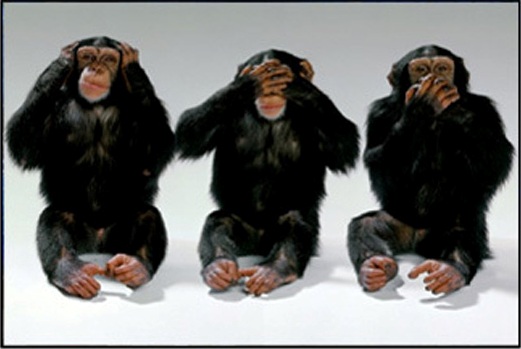 Around the time that the 2011 internet meme explosion happened, I predicted that memeticists would see less of the criticism that ¨Memes don't exist¨. Claiming that ¨memes don't exist¨ had been a common criticism of memetics for decades before that. For example, here's J. Marks (2000): Around the time that the 2011 internet meme explosion happened, I predicted that memeticists would see less of the criticism that ¨Memes don't exist¨. Claiming that ¨memes don't exist¨ had been a common criticism of memetics for decades before that. For example, here's J. Marks (2000):
Now unlike genes, memes have the decided disadvantage of not actually existing.However, now - with memes saturating popular culture and the news, critics who claim that memes don't exist run a bigger risk of looking out-of-touch - or just stupid. I think this has happened - memetics has seen less of this criticism of late. Meme denialism is on the wane. However, I was reminded of this issue recently by reading a 2013 article by Charles Goodnight - in which he claims that ¨Memes do not exist, end of story¨ and ¨there is no meme¨. I can't say I'm impressed by Charles' position. He seems to want to act as though the 'gene' revolution of the 1960s and 1970s never happened. This would, I believe, be a retrograde step. Distinguishing between heritable information and its expression is extremely useful to evolutionists - even if Charles doesn't seem to appreciate this. Charles also seems hung up on the issue of whether 'discrete' memes can represent 'continuous' human culture. This seems like a non-issue to me. For one thing, there's no evidence that human culture is 'continuous' in the first place. Forms of culture that can't be digitized and put on the internet have proved elusive. Alleged 'continuous' human culture has not been shown to exist. Indeed, philosophers don't know if anything in the world is continuous. In Shannon information theory, all information is represented by finite quantities. Supposedly-continuous phenomena can only be described via discrete approximations. Direct descriptions are impossible - since the value of a continuous variable would typically takes an infinite quantity of information to specify. Memetics operates in this realm of information theory. This isn't a bug, it's a feature. Update 2014-07-13: Another recent case involves Gene Anderson:
Memes and culture traits: There is an absolutely enormous amount of work on this. Nothing remotely like a “meme” exists. Cultural knowledge is not packaged in neat little clumps, does not spread like genes or bugs or viruses from person to person, and does not have a life or identity of its own.I think that Gene is mistaken and confused. He's an anthropologist, but I don't see any sign that he has an understanding of cultural evolution. This puts him low on my list of critics that are worth bothering to address.
References
Wednesday, 7 May 2014Repology I've long been sceptical about whether a science of copying could compete
against genetics - or even find much of a niche in its presence. I've long been sceptical about whether a science of copying could compete
against genetics - or even find much of a niche in its presence.However, I've now changed my mind about its potential viability. In particular, I've previously lamented the lack of a science of copying. Saying that the topic is part of information theory doesn't really cut it. Since I think naming things is important, one of the things I've looked for is a name for the science of copying - and now I think I've found one: "repology". Repology is the science of reproduction, replication and copying. By "copying", I mean what it says in the 2013 article: What are inheritance and copying? Basically, copying involves information in one place spreading to multiple locations. It has two essential elements: Shannon mutual information and causality. A science of copying isn't the same thing as a science of heredity. In particular, heredity consists of other means for patterns to persist besides copying - including: longevity and resisting modification. However, copying is an important component of heredity. In terms of the Dawkins trinity (of fidelity, fecundity and longevity), repology is the science of fecundity - whereas heredity involves all three components. My hope is that the term "repology" will be acceptable to both advocates and opponents of the replicator terminology promoted by Dawkins, Hull and Szathmary. To dismiss a possible objection immediately, no implication that the reproduction, replication or copying involved are "high fidelity". Repology does have some advantages over genetics. In particular, it doesn't come with useless historical baggage linking it to nucleic acids, or confining its domain to biology. It is unencumbered by such nonsense. The most significant criticism of repology seems to me to be the idea that is is essentially the same thing as the science of heredity (i.e. a generalized version of genetics). Yet, fidelity, fecundity and longevity are somewhat different topics - and there are some benefts from a more fine-grained approach. Repology hasn't seen very much action so far - but I'm hoping that giving the field a name will help a little with that.
References
Monday, 5 May 2014A large critique of memetics This 16-page critique of memetics comes from Vilém Uhlíř and Marco Stella - anthropologists from the Czeck republic. It was published in the Czeck journal, Anthropologie. This 16-page critique of memetics comes from Vilém Uhlíř and Marco Stella - anthropologists from the Czeck republic. It was published in the Czeck journal, Anthropologie.It's titled: "WHO NEEDS MEMETICS? POSSIBLE DEVELOPMENTS OF THE MEME CONCEPT AND BEYOND" I don't have that many comments. This critique is pretty bad. Here's one painful excerpt:
For memetics, culture is not driven by the motives of humans, but by non-conscious "instincts" of its own particles, memes. No matter that the true Darwinian evolution has no agency and is essentially aimless. This passive fatalism with no space for human consciousness seems to stem from animated ultra-metaphors clumsily used to describe memes. Here's how they present the modern rise of theories of cultural evolution:
It seems to us that we are facing an attempt to "exhume" or resuscitate memetics inside biosocial theories of culture, via a conscious strategy of avoiding the downgraded words "meme" and "memetics" (e.g., Distin 2011). Apparently:
the fatal fault of memetics is that it is too dependent on Dawkinsian reduction.From my perspective, this article is interesting not so much because it offers interesting critique of memetics, but rather because it clearly illustrates the swathes of nonsense that emanate from anthropology departments on this topic. These folk know enough to see that there is a turf war going on - but not enough to coherently defend their positions. It's rather surreal to see the science I love twisted around for the purpose of these kind of "straw man" attack. I hope that nobody is stupid enough to get their information about memetics from sources like this.
Against the requirement that genes are "functional"
I've previously pointed out how
stupid
and parochial the requirement that genes be made out of nucleic acid is.
Only daft biologists would define their terminology without thought to their own ancestors, descendants, aliens, or non-nucleic inheritance. Various sensible biological thinkers - such as Richard Dawkins, George Williams and David Hull clearly took pains to avoid this mistake. However, I think they all made another mistake - in insisting that genes are defined as being "functional" or "active". It's onerous to determine whether a particular inherited unit is "functional". Typically, one must test out its carriers in a wide range of environments. The requirement of activity needlessly complicates the concept of a gene. Scientific concepts should be simple. When they are simple they are beautiful. Complex concepts typically represent a failure to apply reductionism properly. The idea of genes that must be "functional" or "active" drags in factors from ontogeny into genetics. This influence is unnecessary and unwarranted. Scientists went to great pains in all other areas to keep concepts in genetics and ontogeny separated out - but then muddled them up in the definition of the term "gene". Hull defends "activity" requirement for genes in the book "Science and Selection". He says that Mendelian genes are active by definition - and so therefore, it's OK. For one thing, we can't blame Mendel for this mess - he never even used the term "gene". For another, this seems like an argument from historical legacy to me. Richard Dawkins explained why genes needed to be "active" by definition in his "The active germ-line replicator" chapter - from 1982. The answer seemse to be adaptationism:
The whole purpose of our search for a 'unit of selection' is to discover a suitable actor to play the leading role in our metaphors of purpose. This does not seem remotely convincing to me: some genes can be purposeful without every gene being defined to be purposeful. To see what biology would be like without the requirement that genes be functional, consider the work of Richard Semon, coiner of the term "mneme". Mnemes were just units of memory/inheritance. There was no requirement that they served any useful purpose. "Mneme" lost out to "gene" - but it was not on grounds of scientific merit. In every respect - except for ease of pronunciation - mnemes have genes beat. Another modern attempt to get away from this mess is the concept of "replicator". However, this is questionable terminology - for many reasons. Probably the most serious is that the "replica" root strongly implies "high-fidelity" copying - an inappropriate connotation for a proposed unit of inheritance. I've gone into all this in my book - and in Against replicator terminology. A science of replicators would still leave the "gene" and "genetics" terminology in a hopeless mess. If we repair the "gene" and "genetics" terminology, a separate science of replicators would no longer be necessary. I have faith in the ability of scientists to refactor their terminology - and clean this mess up. The alternative is to lumber innuemerable future generations with a terminological mess. Let's not choose that option.
Sunday, 4 May 2014What to propagate? I've been asked privately that - since I think that all goal-directed behaviour comes from differential reproduction of copied entites, what I would recommend propagating. I've been asked privately that - since I think that all goal-directed behaviour comes from differential reproduction of copied entites, what I would recommend propagating.Many people promote various different answers to this question. However, the main reason for this seems to be in order to manipulate the behaviour of others. This advice is obviously of low value for those trying to decide what to do. Of course the bottom line is that most people are free enough to propagate whatever they like. So: please consider the rest of this article as my two cents: From a scientific perspective there are three main classes of copied entity that have the most direct influence over human behaviour: DNA genes, social learning (memes), and individual learning. The DNA genes with the most influence are usually those of the host involved, but sometimes the genes of other people, mutualists or parasites are also significant. Human genes have delegated most of our behavioural repertoire to the human brain. So, in practice the brain makes most of the body's decisions that are more complex than reflex actions. However, genes still get to have their say - they originally designed the brain's reward system - constraining the brain's options. In practice most humans act as though they are propagators of both genes and memes. The significance of gene-propagation is quite high - just looking at the seven billion humans. Indeed some opponents of memetics argue that the influence of genes is overwhelming - and that the common examples of deleterious memes (such as smoking memes and obesity memes) generally exist because they benefit the genes of various corporation owners). However, I think any sensible analysis denies the validity of the "it all boils down to genes" perspective - i.e. memetics beats Wilson-style sociobiology. Some have suggested that meme propagation is personally important to them. Famous examples include Dawkins - who wrote:
I'd rather spread memes than genes anyway. ...and Steven Pinker - who wrote, in How the Mind Works:
I am happy to be voluntarily childless, ignoring the solemn imperative to spread my genes. And if my genes don't like it, they can go jump in the lake. Personally I am much more sceptical about meme propagation at the expense of their gene propagation. I tend to regard it as memetic hijacking. I tend to view those who propagate memes at the expense of their genes as memetic hijacking victims. If memes steal your genetic genetic fitness, you are probably being manipulated. Many seem to regard nature as "wasteful, cruel and low". They see gene propagation as bad. However, my perspective is rather the reverse of this: evolution is good. Some regard personal gene-propagation as selfish - and advocate propagating their group, species or ecosystem instead. For example, The Laughing Genes recommends propagating high-level entities - such as your own species. I regard this advice as probably a form of signalling. Selfishness has a poor reputation, and consequently, many want to signal unselfishness. This appears to be the basis of much moral preaching promoting unselfishness. What about the idea that memes are on the rise? That there is likely to be a memetic takeover - and so attempts to spread genes are ultimately likely to be futile? It is true that in the last genetic takeover, few organisms from before the transition made it through. However, that seems unlikely to happen again. These days there are too many museums for anything to get that lost. Genes can still reasonably dream of immortality.
References
Saturday, 3 May 2014The alleged eusociality of humans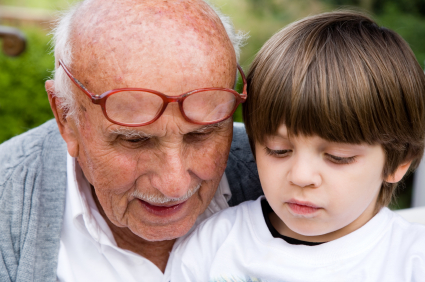 Kevin Foster and Francis Ratnieks
once asked
if humans were eusocial - apparently on the grounds that sterile grandparents frequently care
for human young. More recently Edward Wilson and
John Wilkins have also claimed that humans are "eusocial". Kevin Foster and Francis Ratnieks
once asked
if humans were eusocial - apparently on the grounds that sterile grandparents frequently care
for human young. More recently Edward Wilson and
John Wilkins have also claimed that humans are "eusocial".It seems like an extreme stretch to refer to humans as "eusocial". Many other workers - including myself - have used the term "ultrasocial" to refer to humans instead. Future human societies may conceivably feature large numbers of sterile human clones. Then, the term "eusicial" would become much more appropriate. However we just aren't anywhere near that today. As Matt Ridley likes to quip: not even people in England delegate their reproductive activities to the queen! Modern human societies do have eusocial components, though. Memetic eusociality is quite common. For example, most dollar bills do not reproduce directly - and instead prefer to delegate reproduction to banks. It is the same with many books - individual books are typically sterile workers - whose purpose is to divert resources towards a reproductive "queen". This type of eusociality does, in fact, play a significant role in promoting human sociality. However, it would be a tremendous muddle to call humans "eusocial" - on the grounds that some human memes are eusocial. Such muddling together of organic and cultural evolution would create a big conceptual mess. Typically memes don't interbreed with humans - since they aren't part of the same species. Memes have their own lineages which are not to be muddled up with those of humans. Eusocial meme lineages do not make eusocial humans!
Thursday, 1 May 2014Memetic eusociality or environmental mismatch John Wilkins provides us with an opportunity to compare the eusociality of evolutionary psychology with the eusociality of memetics. He writes: John Wilkins provides us with an opportunity to compare the eusociality of evolutionary psychology with the eusociality of memetics. He writes:
Many evolutionary psychologists hold to the contrary that we are “eusocial”, meaning inclined to be more cooperative than a game theory account might suggest we would be, because we evolved in small groups of related people, and that now, in a larger society of less related people, we have a moral module in our heads that misfires, so to speak. I think this is a common perspective on how kin selection applies to groups of weakly-related humans from evolutionary psychologists. In memetics, many humans are cultural kin - i.e. they share memes - significantly more than they share genes. Memes promote copies of themselves in other bodies by manipulating their hosts into behaviours that benefit others with shared memes. The kinship involved is real, not an illusion - or simply the product of an unnatural environment. The memes really are related. Often near-identical copies are present in the human hosts involved. In the evolutionary psychology view, cooperation is a dwindling hangover from a rosier past. In memetics, the cooperation is strengthening - as the memes grow in numbers and power, due to cultural evolution. The 'cooperation-as-hangover' view probably has some truth to it. However, it should be abundantly clear that the memetics approach to the issue does a vastly better job of explaining the rise of large-scale cooperative societies in the modern world. In addition to hosting the existing kin of memes, other humans represent prospective kin for memes. Humans represent fertile ground in which existing memes can distribute their progeny. To reproduce, many memes need peaceful, cooperating humans in contact with other humans. It really is no surprise that this is what we see. This is the symbiont hypothesis of eusociality. For anyone interested in learning more about the topic, the 'cooperation-as-hangover' view is sometimes called the environmental mismatch hypothesis.
References
Subscribe to:
Posts (Atom)
|
 Lists of all postsChronological | AlphabeticalMemetics linksBook | References | Glossary | FAQQuotes | Videos | Criticisms | Links Memetics book listsMemetics | Symbiosis | AltruismApplications | Criticisms Author 
Author linksHome | FacebookMemetics book
Popular posts
Subscribe To
 Posts
All Comments
Posts
All Comments
|


