Friday, 9 December 2011

Facebook persists with their "memology" nonsense

I told Facebook this time last year that the study of memes is not called "memology".

Yet still they persist with their nonsense. Oh well. Their video is above. Their "memology" page is here.

An engineer claims that things like the death of Steve Jobs, Amy Winehouse and Gadaffi are not down to a "viral effect" - whereas status updates such as "like my status" are - because the deaths are current affairs events that people just happen to be simultaneously talking about. That seems to be a confused perspective, it seems to me. Both spread in a similar "epidemiological" manner. It would be reasonable to classify meme "virality" according to whether the content was deleterious to its host or not - but surely not like this.

Thursday, 8 December 2011

Symbiotic language

In a sense we have a symbiotic relationship to a nonmaterial being which we call language.
- Terrence McKenna, The Evolutionary Mind.

On that note, Mark Changizi has a new book out - called "Harnessed". It's about how language evolved to match humans.

Mark explicitly endorses memes in the book:

These poor pre-language Homo sapiens schmucks are in for a severe chimp-schooling, because what makes us modern language-wielding humans formidable compared to chimps is not what's in our genes, but what's in our memes. It is the cultural artifacts that have evolved to fit our minds and transform ancient event-recognition software into communication software that makes us kick-arse. The rise of the planet of the apes - the first such rise, when we humans rose and took over the planet - was due to culture having nature-harnessed us, and transforming us into a new kind of creature.
...and here:

This is a selection process that selects not on biology, but on human artifacts that are used by biology. The human artifacts are animal-like, in the sense that they themselves have evolved over time, under selection pressure. These artifact-creatures (in the realm of “memes”), like naturally selected biological creatures, can be highly complex, with all the hallmarks of an engineering masterpiece.
Mark has the language as being composed of "symbionts":

“Aha!” the alien prober exclaimed. The modern humans are not merely learning language and music, they’re being raised in an environment with symbionts. Language and music are technological masterpieces that evolved to live with non-linguistic hominids and transform them into something beyond their biology. What makes these modern humans no longer the non-linguistic Homo sapiens apes they biologically are is not on the inside, and not in the ancestral environment. It is due to a novel variety of evolving entity the humans have been evolving with. Language and music are evolved organism-like artifacts that are symbiotic with these human apes. And like any symbiont, these artifact symbionts have evolved to possess shapes that fit the biology, namely our brains. As a metaphor with symbionts, these aliens could then begin digesting what we modern humans are.

What are we, then, in the eyes of alien probers? We are our biology, from the genes on up. But we are more than that, indicated by the fact that the probers don’t abduct just a human, but entire human habitats. We are our biology within its appropriate habitat. But that’s true about all animals on Earth. The special thing the aliens had to grapple with when they started probing humans was that biology and habitat are not enough. They needed to abduct the cultural artifact symbionts that were co-evolving with us. That’s not something any other animal can lay claim to. The pieces of what we are can be found in our wet biology, the habitat, but also in the artifactual symbionts we have been co-evolving with.

Language-as-symbionts seems to be gradually catching on. It is a theme of Simon Kirby and George van Driem - as well as all the memeticists, of course.

This Podcast from Mark - mentions memes briefly.

I see that elsewhere Mark says:

My research suggests that language and music aren’t any more part of our biological identity than reading is. Counterintuitively, then, we aren’t “supposed” to be speaking and listening to music. They aren’t part of our “core” after all.
Er that isn't right! Check out babbling babies!

Parasites which saturate their host populations

One issue I which address in my book is why parasites tend to turn more benign when they approach saturation of their host population.

I still probably do not yet know the whole story - but I think I now understand some more parts of it:

  • In a mostly-saturated population, burning through the host's resources rapidly becomes a less effective strategy - since the rate at which new infections can be spawned goes down. So: keeping the host alive for as long as possible starts to look like a more realistic parasite strategy.

  • Parasites that saturate their host populations are subjected to different selection pressures. In particular - in the common case where the first parasites to arrive have an advantage over later arrivals - parasites become more "interested" in infecting hosts early in their lifecycle. That means infecting children - and the best people to infect children are their parents and family. That results in more vertical transmission down the host generations - so: in such cases, gene and meme interests would become more closely aligned.

Memes tend to promote human ultrasociality - and they create environments where their hosts are in close proximity and horizontal transmission is common - so host populations can become saturated fairly easily.

However, the first hypothesis is probably of low relevance to memetics: memes don't usually manage to execute those kinds of nasty strategy in the first place.

The second hypothesis may be more applicable to memes.

Richard Dawkins: Virus Of The Mind

This is a podcast. The memes - or rather: mind viruses - start at around 19:00 and then there's more after 28:00.

Dawkins goes into the case of the Craig Shergold chain letter postal virus in some detail.

Daniel Dennett: The philosophical importance of Darwin's theory of evolution

Daniel Dennett on the philosophical importance of Darwin's theory of evolution.

Memes start at around 47:00.

Melissa Brown: Social Darwinism

Professor Melissa Brown speaks about the history and consequences of social Darwinism, and offers insight into new ways of thinking about social evolution. She is introduced by William Durham.

The video is almost two hours long. There's a panel discussion with William Durham at the end.

The video offers a long history of cultural evolution, with some emphasis on the darker parts. It gets onto sociobiology around 40 minutes in. Memetics is discussed very briefly 1:01:00 in. D.I.T. is discussed at 1:02:21.

Memetics meets deprogramming

This one is a bit of a strange video. It's called "Introduction to Thought Viruses".

It consists of self-help advice from a rather shady-looking character about how to deprogram yourself and free yourself from the shackles of society and attain enlightenment.

So far, I haven't seen all that much memetics self-help that isn't from Richard Brodie or Susan Blackmore.

The case for private culture

There are many defintions of "culture". Most agree that culture is a socially-transmitted phenomenon. This post will criticise those definitions - and argue that we can make better use of this word.

Firstly, the etymology of the word "culture" is based on an agricultural metaphor. It refers to "cultivation of the mind". It makes no mention of social transmission. I propose that individual learning may also be used to "cultivate the mind".

Then there's the issue of what is important about culture:

Brains allow organisms to use their brains to adapt to the environment. Organisms use both social and individual learning to help them do that. However, social learning additionally allows groups of organisms to maintain knowledge pools for long periods of time - allowing for cumulative cultural evolution. This possibility seems to be the main phenomenon that makes culture of interest. However, now there are other means of creating persistent databases - by creating backups. The possibility of making backups creates potentially-immortal learning systems which can preserve large databases without the need for separate individuals to act as peers. Such systems could exhibit cumulative cultural evolution using individual learning only.

Also, we currenly lack a good term for "learned material". "Culture" is material that is learned socially. The term "knowledge" excludes learned behaviour patterns. The term "skill" excludes learned knowledge. The term "engrams" only refers to how learned material is stored. "Learning" seems pretty overloaded. Overall, there seems to be no good general term for "things that have been learned".

These considerations suggest that it would be better - scientifically speaking - if the term "culture" was defined so that it includes individual learning.

I don't think is is tremendously important to have a term for social learning that excludes individual learning - since social learning and individual learning are such inextricably interconnected phenomena - however, if such a term is needed, "transmitted culture" could be used.

Of course, "culture" is a common word with considerable inertia. It seems appropriate to hesitate before attempting to assign it a counter-intuitive scientific meaning. Redefining common English terms is a reliable way to self-identify as a crank. However, expanding the term "culture" so would resolve some boundary problems with both cultural evolution and memetics. I think that we should bear this option in mind.

References

The case for private memes

Memes are commonly associated with social communication and learning.

However, socially-learned information coevolves with information acquired within the brain by individual learning. Socially-learned ideas compete with individually-learned ideas for attention and for the same neural real estate. All learned information evolves - not just socially-learned information. The Darwinian basis of individual learning was appreciated by Skinner. The case that learned information evolves along Darwinian lines has been made before - for example by Gary Cziko in Without Miracles.

Social learning depends on the same mechanisms as individual learning to operate. Also, many socially-learned operations incorporate individual learning into their transmission process. For example learning to ride a bicycle is probably about 10% social learning and 90% individual learning.

Cultural evolution may be modelled as a process in which individuals learn from others, combine the results with information they already have, add to it with individual learning, and then pass the results on. Individual learning is a fundamental part of this process.

Ideas inside brains are not represented to treated very differently if they are learned from another individual, or produced locally. For example, if Alice sees Bob using a slip-knot and then reverse-engineers the knot, the resulting knowledge is very similar to if Alice invents the slip-knot by herself.

I think consideration of where the optimal scientific boundaries lie strongly suggests that an evolutionary science of ideas should embrace both social and individual learning. Attempting to place a division between social and individual learning is a dubious way to divide the scientific area - since these two fields are so closely interdependent.

In the past, I've described such ideas in terms of "intercranial memes" and "protomemes".

This post will discuss more radical solutions.

Solutions

One possibility would be to create new terminology to deal with Darwinian approaches to individual learning. Skinner has already provided us with the term "extinction" - but the terminology of individual learning could be much more thoroughly Darwinised.

Another obvious possibility would be just to expand memetics to include individual learning. Memetics already has some momentum. Cloning it to handle individual learning seems inferior to just expanding memetics to cope with it. That would mean that protomemes became full memes.

This would pleasingly unite Dawkins' "memes" with Semon's "mnemes".

When giving his etymology of the term "meme", Dawkins originally offered the "consolation" that:

it could alternatively be thought of as being related to `memory'
However, a "memory-gene" only really makes sense if it covers individual learning too.

As I said in my post on meme etymology:

Semon's influence can live on by making memes into "memory-genes" - making use of the "consolation" that Dawkins offered us.

Meme's eye view

If genes are what cells inherit from their parents, memes should be what cultural creatures get from their parents. However, just as parasites reproduce inside their hosts, memes typically reproduce inside minds - as well as between them - and so the parent of a meme may well be another meme inside the same mind. With this perspective, it seems rather odd to only consider memes that are descended from memes in the previous generation of hosts. It should be the previous generation of memes that are under consideration.

Disadvantages

This solution proposed here does have some disadvantages:

Expanding memetics would conflicts with the 35-year old history of memes and memetics. It would probably divide the memetics community - which could do without such upheavals. It would cause considerable further confusion. Also, the attempt might fail.

Critics would probably delight in some memes retreating further into the human mind - where investigating them empirically would become more difficult. They would also probably delight in some memes getting more tangled together. Already memetics regularly faces the criticism that memes aren't as discrete as they should be if they are to be "like" genes. At the moment memes neatly divide into discrete chunks during environmental transmission - but protomemes being memes would mean that that was no longer true. These criticisms are pretty daft - but memeticists should probably hesitate before willingly providing their critics with ammunition.

The move might also divide memetics from the adademic field of cultural evolution. At the momemnt, it is quite convenient for me to be able to say that memes have scientific validity - since they are almost exactly what Boyd and Richerson defined their "cultural variants" to be in 1985. If memetics expanded, that claim would become inaccurate.

I don't plan to resolve these political disputes here at this stage.

This post exists to point at the field of learning (composed of both social-learning and individual-learning) and to say: that area is what we most urgently need an evolutionary science of - and that area should probably have the best available terminology.

For more about this issue, please see: The case for private culture.

Memetics, demonology and possession

Memetics critic Jeffrey Schloss in his 2009 book complained that:

It is not entirely clear how it is that positing unseen and undefined entities that infect human minds by unassessed processes involving the entities’ own quest for transmission and that cause people to do things that transcend their genetic imperatives is fundamentally different from medieval demonology
So: memetics shares a considerable amount with the ideas of demonology and possession.

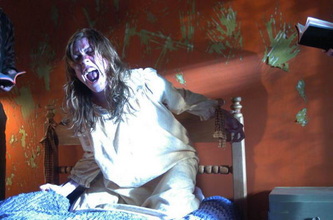
Memetics posits that people can become infected with foreign entities that are bad for them - and can manipulate their behaviour and personality. Sometimes deprogramming them requires interventions by friends and family which superficially resemble exorcisms.

Indeed, in addition to resembling these old ideas, memetics helps to provide a scientific explanation for the psychological phenomena that caused the reported cases of supposed demonic possession - helping to explain the association of reports of these phenomena with witchcraft and satanic cults, for example.

Of course not all such cases would necessarily have been socially-transmitted - but in many cases they would have been.

So: the resemblance is no accident - many cases of supposed demonic posession would have been associated with infections of deleterious memes - and the exorcisms used to eliminate them were a primitive form of what we would now call deprogramming. This is an example of a case where folk-medicine contains some useful information.

Of course a significant difference is that those involved with exorcisms tended to buy into a supernatural mythology - whereas those who do deprogramming ususally recognise that they are dealing with disorders associated with harmful belief systems which have a naturalistic origin.