A funny one! Thanks to Luke Clayborn Hopper for directing me to it!
Sunday, 4 September 2011Yay: transmission!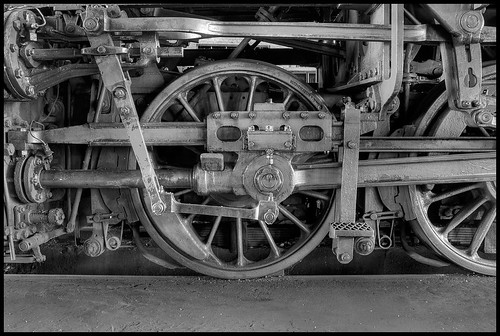 I use the term "transmission" - from epidemiology -
to describe the spread of memes. However, there are some critics of the "transmission" terminology. Here are Cosmides and Tooby (1992, p.118): I use the term "transmission" - from epidemiology -
to describe the spread of memes. However, there are some critics of the "transmission" terminology. Here are Cosmides and Tooby (1992, p.118):
The use of the word "transmission" implies that the primary causal process is located in the individuals from whom the representations are derived. In contrast, an evolutionary psychological perspective emphasizes the primacy of the psychological mechanisms in the learner that, given observations of the social world, inferentially reconstruct some of the representations existing in the minds of the observed. Other people are usually just going about their business as they are observed, and are not necessarily intentionally "transmitting" anything. So, does transmission have to be intentional? Does transmission require an intentional transmitter who is actively doing the transmitting? Or can you transmit unintentionally? I checked with the dictionary. It seems to me that there are several precidents for using the term "transmission" without there being any intentionality involved. One is the idea that glass "transmits" light. That seems to be transmission without any emphasis on an intentional transmitter to me. Meaning two says: "to communicate, as information or news" - which seems pretty broad and makes no reference to intentionality. So: I think the "transmission" terminology is fine.
Saturday, 3 September 2011Alex Mesoudi's take on memes I tracked down Alex Mesoudi's take on memes. He describes memetics as being a "fad". In Cultural Evolution, page 42, he says: I tracked down Alex Mesoudi's take on memes. He describes memetics as being a "fad". In Cultural Evolution, page 42, he says:Memetics makes the neo-Darwinian assumption that culture can be divided into discrete units that are inherited in a particulate fashion, like genes. It also assumes that memes are transmitted with high fidelity, this being one of the defining characteristics of a replicator according to Dawkins. For me, this is disappointing material. Mesoudi fails to provide references. As far as I can tell, Dawkins did not, in fact, claim that high fidelity transmission was one of the defining characteristics of a replicator. What Richard Dawkins actually says in The Selfish Gene (page 17) is: A third characteristic of replicator molecules which would have been positively selected is accuracy of replication. If molecules of type X and type F last the same length of time and replicate at the same rate, but X makes a mistake on average every tenth replication while Y makes a mistake only every hundredth replication, Y will obviously become more numerous. Dawkins clearly says that accuracy of replication is a trait of replicator molecules which is subject to positive selection. That means that the replicator molecules varied in their replication accuracy. This is completely the opposite of high fidelity transmission "being one of the defining characteristics of a replicator" - since it is saying that replicator molecules varied in their transmission fidelity and were subject to selection based on that variation. Mesoudi is attributing to Dawkins the idea that high fidelity transmission is a defining characteristic of replicators - which is the opposite of what Dawkins said in The Selfish Gene. Dawkins went on to offer an explicit definition of the term "replicator" in The Extended Phenotype - and that doesn't include the concept of high-fidelity transmission either. This material about memetics assuming high fidelity transmission appears to be F.U.D. As far as I can tell, the origin of it is a 1985 book on the topic - "Culture and the Evolutionary Process" by Robert Boyd and Peter Richerson. I figure they probably needed selling points for their variation of cultural evolution - and the ability to handle analog transmission was one of the ones they explicitly went for - on page 37. For that to be true, previous authors needed to have assumed discreteness. They took the conventional meaning of the word "replicator", and either failed to notice or ignored the fact that Dawkins (1982) had explicitly defined it as: I define a replicator as anything in the universe of which copies are made.In this definition, high fidelity transmission is conspicuous by its absence. As far as I can tell, that is how the idea of high fidelity transmission is a defining characteristic of memes most likely arose. It is a rather sad story - but it is not clear why it is that this misunderstanding still being perpetuated some 26 years later. Memetics doesn't require high fidelity transmission. The most successful memes do indeed exhibit high-fidelity transmission - just as Dawkins said. They have migrated onto the internet, where transmission is digital - resulting in hundreds of millions of bit-identical copies of the latest Lady Gaga song - but that doesn't mean that every single meme is transmitted with high fidelity. That would be ridiculous. The idea that high fidelity transmission is required by memetics is just a bunch of nonsense. The researchers involved have been advised about this before. For example here: In a section entitled “cultural variants are not replicators”, they repeat the false claim that copying must be perfect for a replicator to count as such ...and here: Boyd and Richerson first introduce replicators as “material objects that are faithfully copied”. It certainly isn't Richard Dawkin's view who described replicators as “any entity in the universe of which copies are made”. Also, I went on about this in my video review of Not By Genes Alone. I will repeat the message again here: memetics does not require high fidelity data copying. The idea that it does is just a basic misunderstanding - originating - as far as I can tell with Boyd and Richerson, 1985, p.37. Their claim seems patronising to me. It is basic information theory that you can produce high fidelity information transmission (which is much more important for adaptive evolution) from low fidelity data transmission. Boyd and Richerson were not attacking a straw man - since I actually have seen two people mess this point up:
Hull makes one passing mention of "memes" in "Science as a Process", on page 406. It is plain from his other writings that he endorsed the term. However, I do not endorse Hull's formulation. I think he made a mistake - or at least was being misleading. However, please don't attribute to memetics Hull's mistake. Lumsden and Wilson made some mistakes too, but I don't go around saying that gene-culture evoultion has got it all wrong. The idea of high fidelity transmission is genuinely important for evolutionary theory - because information needs to be transmitted with high fidelity in large-scale culmulative adaptive evolution (with some caveats about incredibly strong selection pressures and mysterious sources of directed mutations). However it is possible to have high-fidelity information copying with low fidelity data transmission, as Shannon and Von Neumann previously explained long ago. We actually see such things in the modern world in the form of self-encrypting computer viruses. The data is wildly different in each generation, but the information is transmitted with high fidelity. So, it is high fidelity transmission of information - not data - from place to place that is the correct idea which associates the concept of "high fidelity" with the fundamentals of evolutionary theory.Also, not all of the transmitted information has to be conveyed with high fidelity, just some of it. You need some kind of mutual information between ancestors and descendants, or evolution is not going to be very "cumulative". There's a page with more details about this point here. This is not a completely trivial point, and I can understand how people could get into a muddle about it. However, now that we have the internet, the time for getting into pointless muddles should be over. I think the people from academia who persist in spreading this kind of material around need to be explicit about where they are getting it from, quoting chapter and verse. So far, there hasn't been very much of that. Boyd and Richerson (1985) cited "The Selfish Gene" and "The Extended Phenotype". Page numbers please. Boyd and Richerson (1985, p.266) pointed to the forward to "The Meme Machine". There Dawkins defends against the charge that cultural evolution does not have good enough fidelity to exhibit adaptations - which is a perfectly reasonable point to make. Dawkins has plenty of material in those books which flatly contradicts the alledged business about high fidelity copying - so I figure Boyd and Richerson can't have been trying very hard to find a sympathetic interpretation. If people remain incapable of quoting the incriminating chapters and verses, I figure they are eventually going to have to shut up about it. In the mean time, please try to remember: neither genetics nor memetics requires high-fidelity data copying. The idea that they do is just a fallacy. Memetics is the cultural sub-branch of genetics, which is defined as being the science of heredity. How inheritance takes place is an implementation detail in genetics and, similarly, it is an implementation detail in memetics. This should not be that difficult to understand. As for memes being "discrete" and "inherited in a particulate fashion", it is just a matter of fact that memeplexes can sometimes get sliced up during transmission, just as geneplexes can, and - after being sliced - some heritable information is on one side of the slice and some of it is on the other - producing two or more "discrete" pieces - or "particles" - with potentially different pathways to immortality or oblivion. Do memeplexes have preferred "break" points - rather like the grooves on a bar of chocolate? Sometimes they do, and sometimes they don't - and DNA sequences are much the same - occasionally there are preferred points of division (e.g. see restriction enzymes), but usually there are not - and the divisions that take place during meiosis can take place practically anywhere. Hull (2001, p.120) addresses the "particulate" criticism, as follows: Some authors argue that no general analysis of selection process equally applicable to biological and conceptual evolution is possible because genes are "particulate" while the units in conceptual replication are highly variable and far from discrete. In point of fact neither biological nor conceptual replicators are all that particulate. In both cases, the relative size of the entities that function either as replicators or as interactors is highly variable and their boundaries sometimes quite fuzzy. Contrast this with Mesoudi (2011, p.46): However, whereas genetic inheritance is particulate, cultural inheritance in many cases appears to be non-particulate. In what senses is genetic inheritance particulate, though? In sexual creatures, nucleotide sequences can - and do - divide at practically any point. Yes, there are start and stop codons - but that takes us out of the realm of genetics and into the world of development. From a genetics perspective, about the only sense in which genes are "particulate" is that they don't divide half-way through a base pair. In summary, the supposed "particulate" nature of genetic inheritance is just nonsense. Organic genetic expression is somewhat particulate - at least if you can cope with ideas like "particles within particles" and "overlapping particles" - but genetic inheritance, not so much. Dawkins clearly allowed for "non-particulate" replicators in his 1983 "Universal Darwinism" essay - saying: A full science of Universal Darwinism might consider aspects of replicators transcending their detailed nature and the time scale over which they are copied. For instance, the extent to which they are "particulate" as opposed to "blending" probably has a more important bearing on evolution than their detailed molecular or physical nature. Dawkins is presumably talking about recombination there. There is a difference between genetic and cultural evolution in terms of what types of recombination are permitted - with most genetic recombination being in the form of splicing, while memetic recombination can involve averaging, extrapolation and interpolation. Memetics has permitted these kinds of recombination from the beginning. There is no version of memetics that does not allow for "blending" recombination - except in form of straw men in the minds of critics. Population memetics no more requires particulate memes than population genetics requires particulate genes. In both cases, it is the researcher who selects the boundaries of the entities whose frequency they are measuring. From my perspective, the alleged "discrete" and "particulate" problems supposedly associated with memes represent more daft storms in a teacup. Laland and Brown said that cultural evolution had been characteried by Sense and Nonsense - and I think that the "discrete" and "particulate" criticisms take us well into the "nonsense" territory. These are not real problems but rather show all the signs of being marketing material concocted by rival researchers keen to find some way of distinguishing their own ideas from those of others that came before them with much the same notions.
Tim Tyler: Paul Ehrlich's critique of memeticsTranscript: Hi! I'm Tim Tyler - and this is a video which responds to some of Paul Ehrlich's criticisms of memetics, which he gave in an interview with Carl Zimmer. In my book on memetics - which is out now - I take a look at some of the critics and criticisms of memetics. A number of technical criticisms of memetics have been raised - but these appear to be rather uniformly uniformed or misguided. Here we'll look at Paul Ehrlich's memetics critique. Paul Ehrlich is being interviewed by Carl Zimmer - who had a nice section on memes in his evolution book. Paul Ehrlich knows some things about cultural evolution, and has written some nice papers on the topic - including a couple of interesting ones with Marcus Feldman. Here's Carl, on the left, and Paul, on the right: [Paul Ehrlich] Paul complains that the mutation rate in cultural evolution is high, giving the example of chinese whispers. The mutuation rate in organic evolution is, in fact, highly variable. Some organisms reduce their mutation rate well below what would most help them to evolve adaptively. However, other organisms attempt to live in environments which are too hostile for them, and their genomes get mutated into oblivion, and they suffer from an mutational error catastrophe. Heat, radiation, and chemicals can all cause the mutation rate to shoot up. If you want to see the equivalent of chinese whispers in the organic realm, you can look at the creatures living around ground zero in Chernobyl and Fukushima. You will see that there is no shortage of mutations there. Similar hostile environments occur naturally and frequently involve intense heat or radiation. Evolutionary theory handles differeing mutation rates just fine. The mutation rate is a parameter in most evolutionary theories of inheritance, and can be set to whatever value you like. Cultural evolution does high-fidelity transmission too. The bible illustrates reasonably high transmission fidelity is not a new phenomenon, and on the internet, engineers can produce more-or-less whatever error levels they like, using error correction technologies - and they can easily push error rates down further than is seen in organic evolution. Paul says that you can't refuse to accept genes - whereas you can refuse to accept memes. However, that's not true: you can refuse to accept genes. Contraception use represents a refusal to accept genes. Use of barrier contraceptives by men results in a substantial reduction in the spread of sexually transmitted disease genes. Use of hormonal contraception by women results in a rejection of her parner's genes. If you avoid sharing needles with drug addicts you can substantially reduce the chance of you acquiring the genes of a number of unwanted diseases. Vaccines represent a premptive rejection of certain genes - and so on. Paul says that genes are largely transmitted without modification, whereas memes can be modified - and that you can't change genes deliberately - whereas you can change memes. Except that people can change genes deliberately these days. Genetic engineering is still a relative newcomer to the scene, but already it is used ubiquitously in making the foods that we eat. Engineering isn't really much of a difference between the organic and cultural realms - since we have both genetic engineering and memetic engineering. Evolutionary theory incorporates memetic engineering in much the same way it is incorporating genetic engineering - via directed mutations and deliberative selection. Paul says of memetics that "in 30 years it really hasn't led anywhere". Now, it seems to me that the 1976 publication by Richard Dawkins on the topic was fairly rapidly followed by a flurry of activity in the field from academics - with publications in the early 1980s from Lumsden and Wilson, Cavalli-Sforza and Feldman, and Boyd and Richerson. That may not be a coincidence - and Richard Dawkins does get cited. Yes, these folk mostly attempted to rebrand memetics in the process of putting their own personal stamp on it, but most of the basic ideas are pretty similar underneath - except in the case of Lumsden and Wilson, who were way off base, as is now widely recognised. One thing you have to bear in mind is that in academia all types of cultural evolution face the problem that the people whose job it is to study the evolution of human culture - cultural anthropologists, historians and so on - mostly can't stomach Darwinism, and have a 150 year tradition of misguided resistance to evolutionary explanations. This appalling situation stunts all academic forms of cultural evolution, not just its best known form, memetics. We have had multiple memetics conferences, a memetics journal a number of books and hundreds of papers on memetics - and on the internet there has been a meme revolution. Internet memes are now covered regularly by news channels, and memetic hitchhiking is used ubiquitously by marketing companies to help distribute their products. Instead, academia has cultural evolution and gene-culture co-evolution, which are extremely similar to memetics, but typically shun the "m"-word, due to what looks a lot like petty turf wars and "not invented here" syndrome. Most of the problems with the adoption of memetics are really sociological problems. There's nothing technically wrong with memetics. Paul Ehrlich has made some other criticism of memetics in print. For instance, in 2005, he was the lead author of a paper which said:
Among humans, genes can only pass unidirectionally from one generation to the next (vertically), normally through intimate contact. But ideas (or “memes”) now regularly pass between individuals distant from each other in space and time, within generations, and even backwards through generations. Through mass media or the Internet, a single individual can influence millions of others within a very short period of time.In fact these objections are rather easily identified as being misguided ones. Cold virus genes pass from host parent to host offspring, they pass between individuals of the same generation and are also transmitted from offspring to parent. Hepatatis B is a hardy virus that can exist on almost any surface for up to one month and so can be transmitted by mail. Anthrax is an infectious bacterium that has been weaponised and sent through the mail. There are all kinds of other water-borne infections that can travel large distances using the river system. Salmonella and e-coli bacteria are able to survive on food inside aeroplanes. Viruses can spread from one person to many - in what is commonly known as a pandemic. So: the relationship between the cultural and organic realms looks pretty close in these respects. It seems pretty clear that Paul has been criticising memetics without being very familiar with its basic concepts. The reason experts in the field produce invalid technical criticisms of memetics is because they are unable to produce correct technical criticsms of it - because there is nothing wrong with it. Enjoy,
Tim Tyler: Does the Lamarckian aspect of memetics make natural selection redundant?Transcript: Hi! I'm Tim Tyler - and this is a video which responds to one of Steven Pinker's criticisms of memetics - the one where he asks whether culture's Lamarckian component makes explanations of culture that invoke natural selection redundant. In my book on memetics - which is out now - I take a look at some of the critics and criticisms of memetics. Steven Pinker is one of these critics. Pinker expressed a number of objections to memetics in a 2009 Harvard lecture. Here we will look at his notion that Lamarckian principle of "felt need" makes redundant those explanations of cultural evolution which invoke natural selection. Here's Steven: [Steven Pinker] The principle of "felt need" works a bit better in the cultural realm than it does in the organic realm. Cats can't grow claws in response to their desire to hang on to birds, but a human wants to hang on to something, they can often get a pair of pliers. Lamarck's idea was, essentially, that organisms respond creatively to help them meet their needs. Many organisms do, in fact, adapt in their own lifetimes to help them meet their needs. Plant roots grow around rocks, trees find the hole in the canopy where the light gets in. However this adapting often features only limited creativity - there are usually constraints on how far it can go. However, in the case of large-brained organisms, some fairly creative solutions are often possible. So, if you are smart - and you feel the need for some innovation or other - then you can often respond creatively, and make something that satisfies that need. So, the principle of "felt need" actually works - after a fashion - if you have a sufficiently big brain. Notice, though, that how well it works depends on how smart you are. Having a big brain helps, but it doesn't solve every problem - so there are still some limits. Creativity doesn't eliminate the need for selection. Rather it partially internalises selective processes. An intelligent creature can perform trials inside their head - seeing what works and what doesn't work in a mental simulation of the external world. Such simulations reduce the need for expensive real world trials. However, this doesn't really eliminate any selective processes, it just moves some of them from the real world into a simulated mental world inside the organism's mind. Also, mental simulations are usually imperfect - so so real world testing is also needed, to see if what works in the mental world actually works in real life. So, in reality there is plenty of cultural competition. Culture is not solely intelligently designed. Companies compete to sell products, charites compete for dontations, authors compete for readers, musicians compete for listeners - and so on. To deal with cultural competition and failure, rather obviously, you need a theory that handles both mutation and selection - and evolutionary theory is the main theoretical framework for doing that. So, we need forms of cultural evolution and cultural genetics. Directed mutations are a bit of a novelty for evolutionary theory - but it already handles a wide range of different types of variation - bit flips, inversions, duplications, deletions - and a wide range of types of ploidy change and symbiogenesis. Intelligently designed variation is just another mutation module to add to a long existing list of such modules - and it fits right in, thus allowing modeling of both genetic engineering and memetic engineering without any particular problems. It may not make Pinker terribly happy to imagine creationists doing a jig at the thought of intelligent design being installed in the heart of evolutionary theory as a mechanism of mutation. However, that is pretty much what modeling cultural evolution demands. There's no getting around the fact that some variation is produced by large-brained organisms thinking the variants up. So long as you remember to only invoke intelligent design after some intelligent designers have evolved it really does not cause any problems. Inevitably, some of those fighting the creationists will choke and splutter at the introduction of intelligent design into evolutionary theory - but they will just have to get a grip. Intelligently designed variations are not a form of magic. Although we can't fully do so today, someday, we will be able to "unpack" the intelligent cultural variations that arise inside brains and give an explanation for them in terms of the interaction of large numbers of unintelligent components. Enjoy,
Songs about memes
I sometimes get asked about meme songs. I've covered individual songs before, but haven't made a list - until now. So, here's a list of the ones I know about:
The Ultimate Internet Love Song - You meme the world to me.
Of course there are also innumerable songs about particular memes - I won't go into all those here.
Memes video from "FlyingEvolutionist59"Here's FlyingEvolutionist59 on memes. It's a basic introduction. There are a few mentions of the possibility of a memetic takeover. The description says it is: "Something of a discombobulated discussion on memes as the fundamental unit of imitation and cultural inheritance."
Ratty the Raccoon explains human mind control by memesRatty's presentation style isn't the greatest, but after a slow start he has some nice things to say about memes. Ratty explains memes using an analogy, and then discusses the impact of memes on human xenophobia, tribal behavour, and tendency towards fighting.
Thursday, 1 September 2011Tim Tyler: Are memes like parasites?Hi! I'm Tim Tyler - and this is a video which responds to one of Steven Pinker's criticisms of memetics - the one where he compares memes to viruses. In my book on memetics - which is out now - I take a look at some of the critics and criticisms of memetics. Steven Pinker is one of these critics. Pinker expressed a number of objections to memetics in a 2009 Harvard lecture. Here we will look at his claim that a viral interpretation of memetics can't be right - because words lack adaptations to evade the host immune system. Here's Steven: [Steven Pinker] OK, so to clear some basic things up first of all: In memetics, memes are like genes. They are cultural genes. That is why the term "meme" is similar to the term "gene". However, there are things which resemble viruses in memetics. Just as with organic viruses, a memetic virus is typically composed of a whole bunch of memes and some other components which make up its phenotype. Cultural parasites are not an "yet another emendation of the analogy between cultural and biological evolution" but rather, simply a consequence of the relationship between those two things. OK - now back to Steven's objections: [Steven Pinker] So: words are not much like parasites. In this segment, Pinker seems to be some way off-base to me. The ideas he is criticising are some pretty strange ones - and are certainly nothing like my own views. Memetics allows for symbiotes that are mutualists, parasites or commensalists. There is no "parasites-only" version of memetics. Most individual words would be classified as memetic mutualists - rather than memetic parasites - since they benefit the host by helping them to communicate - and that explains why we have language. However, if you look at word combinations, then there are both mutualist and parasitic entities are to be found - and then we can consider objections to do with parasites. Here's one example of a mutualist sentence:
The square on the hypotenuse of a right-angled triangle is equal to the sum of the squares on the other two sides. That's the Pythagorean theorem, and knowledge of it is probably usually benificial to its host. An example of a more parasitic sentence is:
There's an invisible sky daddy who loves you, knows everything you do, and can save your immortal soul from damnation - so, the most important thing you can do in your life is to warn other people about how to avoid the eternal hellfire, by bringing them into his loving embrace. This idea tends to screw up its host by diverting resouces which would otherwise be devoted to host reproduction to the reproduction of the parasitic piece of text. However, note that this idea is a complex one. Pinker's objection that a mere word lacks the adaptive complexity required to overcome the host's immune system doesn't have much force here - because this parasite obviously has considerable adapted complexity - expecially if you consider the whole memeplex that would typically surround it in the wild. Also, the sections which aim to deactivate the host's memune system are really rather obvious: with references to love, rescue, embracing and appeals to family ties. The reason deleterious memeplexes can evade the host memune system is essentially much the same for memes as for organic parasites. It is not as easy as all that to defend against "sheer words". Words arrange themselves into a vast number of possible sentences, and encoding which ones are good and which ones are bad in the genome - and covering all the world's languages - would involve storing an enormous quantity of information there - and there just isn't enough space. Also: verbally-transmitted ideas evolve quickly - whereas the host memune system is slower to respond and adapt - and it has to cope with a very large number of possible attackers, which represents a considerable burden on it. Lastly, in the case of transmitted memes confronting a host memune system, there is a twist that does not apply to organic immune systems, which again hampers its ability to fully defend its host. Organic immune systems just reject anything alien. However, memes are - on average - beneficial - and letting the good ones through while rejecting the bad ones is a very difficult problem. If we knew in advance which ideas were the good ones, then we wouldn't need to rely on cultural transmission in the first place - we could just invent the good ideas. However, we don't know that - so we do the best we can using heuristics about who to copy from - and inevitably some bad memes get through the net. The price we pay for getting lots of good ideas culturally is that some bad ones make it past our defenses. However, that is better than beefing up our memune defenses - since that would stop lots of good ideas from reaching us too. Enjoy, Pinker's entire critique may be found here.
Tim Tyler: Can memetics explain creativity?Transcript: Hi! I'm Tim Tyler - and this is a video which responds to one of Steven Pinker's criticisms of memetics - the one where he questions whether it can make sense to talk of Romeo and Juliet evolving into West Side Story. In my book on memetics - which is out now - I take a look at some of the critics and criticisms of memetics. Steven Pinker is one of these critics. Pinker expressed a number of objections to memetics in a 2009 Harvard lecture. Here we will look at his assertion that the process of evolution of Romeo and Juliet into West Side Story has little in common with the process responsible for industrial melanism. Here's Steven: [Steven Pinker footage here] Steven says that to compare the way in which West Side Story was developed from Romeo and Juliet with the way a white moth changes into a black moth as part of the process of industrial melanism would be misleading. So: what these processes have in common is that both are instances of an evolutionary process - consisting of copying, variation, and selective retention. However, evolution takes place using a wide range of mechanisms, and there is no particular reason for any two evolutionary processes to be particularly similar. For example, the K-T extinction event is is not much like industrial melanisim either - though although both are still forms of evolution. Similarly variation in evolution arises using a range of mechanisms, and there should not necessarily be any expectation for any two of them to look very similar. So, for example: comsic rays are quite different to ploidy-changing events in polyploid crops, which in turn are quite different from endosymbiotic symbiogenesis. Pinker is essentially pointing out that memetics has a hord time handling creative processes. Saying that memetics does a poor job of explaining human creativity is actually a common complaint of critics of the field. It certainly isn't the strongest point of memetics - but there is a good reason for that. Memetics is strongest in the area of population memetics. So, for example, it does an excellent job of explaining why the Indo-European languages form a branching tree with a common ancestor, why long-isolated islands tend to have backwards cultures, why high population densities results in greater contagious spread of ideas - and so on. From the perspective of population memetics, a single creative act is just a type of mutation. Now we can model mutations in ideas - but, because we don't yet have a complete model of the mind - and we don't know how to build a mind - the results are not that great. The models which are used are typically much the same ones that are used by conventional psychology - and don't owe much to genetics. Population memetics - which is really the most successful branch of memetics -typically doesn't bother very much with modelling mutation - and instead it just tracks population-level processes. Treating the mind as a black box, and mostly ignoring what goes on inside it has been a wildly successful method, and has resulted in substantial progress of population memetics within academia - much as the exact same strategy has done in population genetics. Of course, West Side Story was not just one creative act, but dozens of them, and I am sure there was a great deal of trial and error in getting the right dance moves, music, lyrics, and so on - so it does make reasonable sense to compare it to other evolutionary processes - but I think we should start by making some effort to compare like with like. In the case of Steven's example he has selected a case where there are some similarities - but also some distracting differences. In both industrial melanism and the creation of West Side Story we have an ancestral form adapting to a different modern environment. However, there are also some differences, which interfere with the comparison by introducing irrelevant noise. In industrial melanism, single lineages independently changed form - whereas West Side Story consists of quite a mixture of different cultural lineages. The script had one set of cultural parents, while the choreography, the lyrics and the music each had their own different sets of ancestors with their own separate descendants and life cycles. So, West Side Story is more like a complex symbiosis than a single species. One might compare it to a patch of forest. In keeping with the theme of adapting to a modern environment, we might imagine a forest ecosystem attempting to invade a modern city environment. I think this is a fairer comparison - which does a better job of attempting to compare like with like. Steven points out that one of the differences between these systems is that West Side Story is partly the product of memetic engineering. That is a fair enough difference to point out. Engineered systems are indeed a bit different from ones that are not engineered. To produce a comparable forest, one would have to introduce genetic engineers to assist the forest creatures in adapting to their new environment. Of course the mere introduction of some genetic engineers doesn't stop the forest evolving. Using engineering speeds up evolutionary change, much as deliberative selective breeding did before it, and much as unconscious selective breeding did before that - but it doesn't stop the forest from evolving and changing and obeying the rules of evolutionary systems. One of the best ways of visualising this situation is to consider evolutionary change as taking place in systems involving a range of different intelligences. The stupidest type of evolution involves creatures with no brains that evolve using largely undirected mutations, then we have creatures with brains, and creatures whose brains implement virtual worlds which can simulate the future, and then highly intelligent creatures which have mastered engineering. Pinker is comparing systems at opposite ends of this intelligence scale, and claiming that variation arises in them in dissimilar ways. That's true - the systems vary in how much intelligence is involved, and the smarter systems can make use of more interesting forms of variation. However both systems still evolve. They exhibit copying, variation and selective retention. So, evolution is what these processes have in common. Although the details of the way in which variation arises are different in these two systems, that is perfectly acceptable because variation in evolution arises in a large number of ways, which can be very different from one another. We already know and understand that. It is absolutely fine for variation to arise in many different ways that do not necessarily resemble one another. It does not represent some sort of problem. "Evolution" simply does not imply a lack of intelligence. That is just a basic misunderstanding of what the term "evolution" means. Yes, ignorant creationists who want to introduce intelligence into evolution should be combatted, but not by changing the definition of "evolution". That term is clearly explained in the evolution textbooks. Intelligence is not excluded. It doesn't get a mention, and nor should it. Brains no more prevent evolution by thinking than our kidneys prevent evolution by filtering our blood. Enjoy, Pinker's entire critique may be found here.
Subscribe to:
Posts (Atom)
|
 Lists of all postsChronological | AlphabeticalMemetics linksBook | References | Glossary | FAQQuotes | Videos | Criticisms | Links Memetics book listsMemetics | Symbiosis | AltruismApplications | Criticisms Author 
Author linksHome | FacebookMemetics book
Popular posts
Subscribe To
 Posts
All Comments
Posts
All Comments
|


