 The founder effect The founder effect
describes dynamics where a partly-isolated niche is invaded by a
small number of immigrants, whose descendants go on to dominate the niche. The offspring population often exhibits reduced genetic diversity.
The founder effect is about equally applicable to cultural and organic evolution.
Often the easiest places to observe the founder effect is on isolated islands. They represent
a kind of natural microscope for students of the founder effect. Australia, New Zealand,
Iceland, Japan, Tasmania and Madagascar are all places that exhibit both genetic and
cultural founder effects.
Cultural founder effects can be seen in large organizations that grow from small ones.
Often the founders of organizations have unusual ideas of various kinds - which they
sometimes go on to impose on the corporations they end up directing. Apple and
Microsoft are both famous examples of this.
Founder effects are also seen in products. The Xerox copiers, Coca-cola, The Sony Walkman,
and the Apple iPhone are product lines that started with single product, and then
subsequently underwent substantial proliferation. If you are the first to market with a
product in a new niche, the changes are good that you will launch the second and third
products in that space as well.
Cultural evolution exhibits what is known as the
serial founder effect
as well. This takes place when there's a string of founder effects, one after the other.
For example, we can see this when there's a chain of companies founding new start-ups from existing employees - and existing corporate culture.
The cultural founder effect is an important effect to understand when considering product development.
Since the descendant of cultural founders can monopolize product niches for a while, creating cultural
founders is the aim of many, and identifying cultural founders is valuable to investors and trend spotters.
 A new web site devoted to "new thinking on evolution" has been launched. It's titled
" The Third Way". It bills itself as follows:
The vast majority of people believe that there are only two alternative ways to
explain the origins of biological diversity. One way is Creationism that depends
upon supernatural intervention by a divine Creator. The other way is Neo-Darwinism,
which has elevated Natural Selection into a unique creative force that solves all
the difficult evolutionary problems. Both views are inconsistent with significant
bodies of empirical evidence and have evolved into hard-line ideologies. There is
a need for a more open “third way” of discussing evolutionary change based on
empirical observations.
Comparing Neo-Darwinism with creationism seems likely to irritate supporters of the former.
At the moment, the site apparently mainly consists of
a list of people and
a list of books.
It seems a bit disappointing. Surely the biggest current revolution in Darwinism
is the expansion of its domain - to cover
physics,
chemistry, culture and other domains -
often referred to as
"Universal Darwinism".
That revolution apparently gets no coverage on the site. If you compare
their book list with
my Universal
Darwinism book list, there's no overlap.
It seems as though they are missing the revolution.
 20th
century biology saw what we might call the gene revolution - a new
emphasis on and understanding of the importance of genes. A number of landmarks
in the revolution might be identified: the rediscovery of Mendel's work
around the turn of the century, the development of population genetics,
the discovery of the structure of DNA, and the work of George Willams,
William Hamilton, Richard Dawkins and others in developing a
gene-oriented
perspective on evolution.
What did we gain during the gene revolution? What did we lose?
We gained a renewed understanding of how useful it is to split organisms
into heritable information and everything else. The genome is inherited
and goes on to strongly affect evolution. The phenome is not inherited -
and only affects evolution via its effect on genotypes and their distribution.
The transitory nature of phenotypes means that they can be ignored in
population genetic studies.
We also learned how useful it is to split the genome up into pieces and
analyze the pieces - and the relationships between them, such as linkage.
This perspective led to the ideas of kin selection and intragenomic conflict.
Organisms had previously been regarded as harmonious wholes. The atomization
of the genome during the gene revolution showed that organisms were more
like loose coalition of parties with interests that are not always shared.
Famously, the gene revolution also led to the genes eye view, a means of
analyzing and visualizing the operation of particular genes.
The gene revolution also seemed to result in an unhealthy focus on genes
in some areas. People equated inheritance with DNA, and this led to much
muddle and confusion. Part of the problem was that molecular geneticists
started calling pieces of DNA 'genes' - and this usage became wildly
popular, leading to people equating genes and small DNA sections. Other
forms of heredity, such as cultural inheritance, became neglected during
this time. This aspect of the gene revolution was quite negative. My
proposal for combating this problem is to try and ensure that everyone
understands that
genes
are not sections of nucleic acid.
The gene revolution seems to have been pretty positive overall. However,
it has its critics.
Many of them object to the atomization of genomes into genes.
They say that gene expression is context sensitive, that genes
interact during development, that traits aren't the product of
single genes, that each gene influences multiple traits.
However, splitting phenomena into pieces and analyzing the pieces and their relationships is a strategy called
"reductionism". Reductionism is a widely recognized as a legitimate strategy in science.
It acts as bedrock for most 20th century science.
Another complaint is that a focus on the gene diverts attention
from phenotypes - portraying them "passive" or ignoring them entirely.
For example, in Darwinian Fundamentalism S. J Gould wrote:
Only one causal force produces evolutionary change in
Darwin’s world: the unconscious struggle among individual organisms
to promote their own personal reproductive success - nothing else, and
nothing higher (no force, for example, works explicitly for the good
of species or the harmony of ecosystems). Richard Dawkins would narrow
the focus of explanation even one step further - to genes struggling for
reproductive success within passive bodies (organisms) under the control
of genes - a hyper-Darwinian idea that I regard as a logically flawed and
basically foolish caricature of Darwin’s genuinely radical intent.
The gene's eye view has been the target of the most criticism - with
people saying it anthropomorphizes genes, introduces teleology into
biology - and a wide range of other criticisms. Most of the criticisms
of the gene's eye view appear to be ridiculous misunderstandings of it.
The gene revolution seems to have not yet hit cultural evolution.
The cultural version of the gene revolution is the meme revolution,
which - by most accounts - has yet to happen. This seems likely to
be because of
cultural
evolution's scientific lag.
Cultural evolution does have the cultural equivalent of population genetics, though.
Frequency analysis of memes is common.
However, there is still very little work on cultural kin selection.
This puts cultural evolutionary theory at a point corresponding to
where organic evolutionary theory was somewhere between 1930 and 1960.
Many of the criticism of memetics are isomorphic to the criticisms
of the gene oriented perspective on evolution. Sometimes the same
criticisms are raised by the same people. Just as genetics proponents
faced criticism for dividing the genome up into genes, so memeticists
face the same criticism for dividing cultures into memes.
Some doubt that a meme revolution will ever happen:
This revolution won't happen. Because there is nothing comparable to the gene in "cultural evolution", no identifiable replicator that could serve as a foundation for a scientific theory. Dawkins, Blackmore et al. proposed the ominous "meme", but this concept never lived up to the expectations of its supporters. "Memetics" is in a permanent comatose state, with no signs of recovery.
I think this is unduly pessimistic. The split between genotype and phenotype can easily and usefully be applied to culture too: simply by saying that memes are heritable, while other aspects of culture are not. Dividing cultures up into pieces in order to analyze them makes obvious sense too - and the meme's eye view is about as useful as the gene's eye view - and its validity has been recognized by leading scientists in the field.
Memetics was ahead of its time, is all. Memes have already conquered the internet. The next generation is growing up with memes. We seem bound to see a science of them in due course. I'm still hoping that we won't have to wait for the tenures of the existing cultural anthropologists to 'expire' before we see it.
An early contribution to repology
took place in 1976, when Dawkins introduced the concept of a "replicator" to biologists. In 1982, he wrote:
I define a replicator as anything in the universe of which copies are made.
The "replicator" terminology has gone on to be popular, but controversial. The controversy
centres around the issue of the ordinary English term "replicator" strongly implying
high-fidelity copying, while Darwinian evolutionary theory doesn't require high-fidelity
copying in order to work - according to standard information theory - e.g. see John Von Neumann (1952)
"Probabilistic logic and the synthesis of reliable organisms from unreliable components".
Repology is based instead on the "rep". A rep is defined as follows:
Rep: anything that has been copied from something else
High-fidelity copying is emphatically not implied. Instead, copying fidelity is an attribute
of the rep. High-fidelity copying is not a defining trait.
Note that the definition differs from the Dawkins definition of "replicator" is that
the child is the "rep", while the parent is the "replicator".
Whether an entity is an ancestor can change during the course of their lifetime, while an
offspring is always an offspring. Once a rep, always a rep. DNA sequences in mules are "reps", but they do not fit the
definition of "replicators" - since they are never copied from.
Reps differ from a generalized version of the concept of "gene" - since you can have
inheritance and heredity without copying. If we take "gene" to refer to the basic unit
of heredity, this need not refer to a copied entity. For example, I inherited my
grandfather's clock. However, I didn't copy it. Reps are not the basic unit in
a science of heredity.
Having side-stepped the controversies associated with the replicator concept, repology
should be able to put the science of copying on a firm foundation.
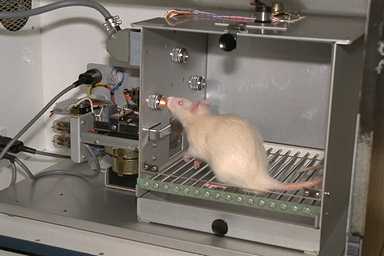 Some say that learning is a form of evolution - e.g. see my
Keeping Darwin in mind essay. However others say that
evolution is a form of learning. For example, here's
Leslie Valiant (from Probably Approximately Correct) in a section titled "Evolution as a form of learning":
To see evolution as a form of learning we view the genome in evolution
as corresponding to the hypothesis in learning. The performance of the
genome corresponds to its expected closeness to ideal behaviour, where
the expectation is taken over the distribution of experiences the world
offers.
What is going on here?
Is evolution a form of learning?
Or is learning a form of evolution?
I think that this is a fairly easy question: learning is a form of evolution, but
not all evolution is a form of learning. Some evolution is more like forgetting
than learning. It represents a loss of adaptive fit. If you forget everything
you ever knew, that's still a part of evolution, but it is hard to see it as a
form of learning. So: evolution is the larger category, while learning is a
subset of it.
Perhaps those who claim that evolution is a form of learning should start by
making it clear that it is only adaptive evolution they are talking about. Then
they would have a reasonable point.
 Memetics (and cultural evolution in general) is a poorly-understood area of science. However, memetics doesn't seem especially difficult to understand (unlike, say, quantum theory). Plenty of people have understood memetics. So: why don't most people understand it?
One theory that has been proposed is that understanding of memetics threatens a wide range of memes - since an understanding of memetics tends to result in a better cultural immune system. The threatened memes thus tend to "conspire" to ensure that their hosts don't understand memetics. Not literally "conspire", of course (that would be silly) - I just mean to say that multiple memes would have been exposed to selection pressure to influence host behaviour in the same direction.
I've previously covered this hypothesis in my
memetics resistance
article.
Another hypothesis is needed to explain resistance to memetics among social scientists. Cultural evolution and memetics have faced over a century of organized resistance from social scientists. Apparently, they think it is, wrong, bad and a threat. The first two seem like delusions - but they are correct in identifying cultural evolution and memetics as a threat. Many social scientists are busy fighting a turf war with biological approached to human behaviour. At stake are jobs, prestige and traditions. Every piece of confusion they can tar their opponents with is one more day of salaries for them and their colleagues.
I've also previously noted that memetics is part of a larger-scale resistance to to Darwinism being applied to human behaviour:
Part of the explanation for this involves resistance to Darwinism being applied to human behaviour. Memetics resistance is part of a larger resistance to Darwinism being applied to humans. Early approaches to human cultural evolution were characterised as being "social Darwinism" - which soon became a term of derision. Soon, preaching "Social Darwinism" conjoured up images of racial cleansing, forced sterilization, Nazia, Hitler - and so on.
Darwinism threatens the human ego's desire to be a special angelic form. Out genes have programmed us to believe we are wonderful, special and irreplaceable. Darwinism seems to say that we are descended from worms. Some people can't stomach that.
What about failure of the memeticists to educate others? This seems likely to also be a factor. Richard Dawkins has not pushed memetics very much. Academic students of the topic neglected to popularise it. Memetics experienced neglect and slow development. Not enough people have put a concerted effort behind research and education in the field.
In summary, stupidity looks like an unlikely hypothesis for the widespread failure to understand memetics. Manipulation, vested interests and cognitive bias seem likely to be involved instead.
References
Three years ago I wrote an article for this blog titled " 2011 - year of the meme!". It started out by saying:
The latest Google Trends results for "meme" are pretty spectacular
However, what happened next was even more spectacular - memes exploded on the internet - mainly in the form of "internet memes". 2011 was the year that memes went viral on the internet.
Another article tracked the gene-meme crossover point. Retrospectively we can say that 2011 was the year when memes became more popular than genes on the internet.
However then things seemed to plateau and level off. I wrote the peak meme article - wondering if internet memes would prove to be a fad.
Now, memes are on the rise again. It seems clear that the memexplosion is continuing. Here are the graphs:
The current Google Trends results for "meme"
The current Google Trends results for "memes"
The memexplosion has probably been good for memetics. We have lots of new article and scientific articles using the "meme" terminology. There's a new association with shallow pop culture - which might further put off those in academia - but I think we can live with the association for the sake of sheer popularity. It is hard to say for sure - but it looks as though the resistance to memes in academia hasn't held back the online memexplosion very significantly. If it did ever have an effect on meme adoption, it looks as though it isn't going to any more.
There still seem to be a lot of scientists who are simply confused about memes, memetics - and cultural evolution in general. However, it now seems practically inevitable that the next generation - who have been brought up with memes - will enthusiastically adopt the term. While it is true that science is not a popularity contest, I expect that, as time passes, more of the older scientists will cave in to popular usage - and make their peace with the excellent and appropriate term for sections of heritable cultural information: "meme". Even if that doesn't happen they will eventually die off: "Science progresses one funeral at a time".
 In 2009, Stephen Hawking made some comments about cultural evolution. He said:
with the human race, evolution reached a critical stage, comparable in importance with the development of DNA. This was the development of language, and particularly written language. It meant that information can be passed on, from generation to generation, other than genetically, through DNA. There has been no detectable change in human DNA, brought about by biological evolution, in the ten thousand years of recorded history. But the amount of knowledge handed on from generation to generation has grown enormously. The DNA in human beings contains about three billion nucleic acids. However, much of the information coded in this sequence, is redundant, or is inactive. So the total amount of useful information in our genes, is probably something like a hundred million bits. One bit of information is the answer to a yes no question. By contrast, a paper back novel might contain two million bits of information. So a human is equivalent to 50 Mills and Boon romances. A major national library can contain about five million books, or about ten trillion bits. So the amount of information handed down in books, is a hundred thousand times as much as in DNA.
Even more important, is the fact that the information in books, can be changed, and updated, much more rapidly. It has taken us several million years to evolve from the apes. During that time, the useful information in our DNA, has probably changed by only a few million bits. So the rate of biological evolution in humans, is about a bit a year. By contrast, there are about 50,000 new books published in the English language each year, containing of the order of a hundred billion bits of information. Of course, the great majority of this information is garbage, and no use to any form of life. But, even so, the rate at which useful information can be added is millions, if not billions, higher than with DNA.
This has meant that we have entered a new phase of evolution. At first, evolution proceeded by natural selection, from random mutations. This Darwinian phase, lasted about three and a half billion years, and produced us, beings who developed language, to exchange information. But in the last ten thousand years or so, we have been in what might be called, an external transmission phase. In this, the internal record of information, handed down to succeeding generations in DNA, has not changed significantly. But the external record, in books, and other long lasting forms of storage, has grown enormously. Some people would use the term, evolution, only for the internally transmitted genetic material, and would object to it being applied to information handed down externally. But I think that is too narrow a view. We are more than just our genes. We may be no stronger, or inherently more intelligent, than our cave man ancestors. But what distinguishes us from them, is the knowledge that we have accumulated over the last ten thousand years, and particularly, over the last three hundred. I think it is legitimate to take a broader view, and include externally transmitted information, as well as DNA, in the evolution of the human race.
The time scale for evolution, in the external transmission period, is the time scale for accumulation of information. This used to be hundreds, or even thousands, of years. But now this time scale has shrunk to about 50 years, or less. On the other hand, the brains with which we process this information have evolved only on the Darwinian time scale, of hundreds of thousands of years. This is beginning to cause problems.
This content seems reminiscent of my A new kind of evolution essay/video - from 2008.
However, the proposed Darwinian / external transmission dichotomy does not seem to be viable to me. For one thing, external transmission is going on all the time - even with primitive creatures. It's called "environmental inheritance".
Stephen also has a section about what I refer to as the coming memetic takeover:
It might be possible to use genetic engineering, to make DNA based life survive indefinitely, or at least for a hundred thousand years. But an easier way, which is almost within our capabilities already, would be to send machines. These could be designed to last long enough for interstellar travel. When they arrived at a new star, they could land on a suitable planet, and mine material to produce more machines, which could be sent on to yet more stars. These machines would be a new form of life, based on mechanical and electronic components, rather than macromolecules. They could eventually replace DNA based life, just as DNA may have replaced an earlier form of life.
This mechanical life could also be self-designing. Thus it seems that the external transmission period of evolution, will have been just a very short interlude, between the Darwinian phase, and a biological, or mechanical, self design phase. This is shown on this next diagram, which is not to scale, because there's no way one can show a period of ten thousand years, on the same scale as billions of years. How long the self-design phase will last is open to question. It may be unstable, and life may destroy itself, or get into a dead end. If it does not, it should be able to survive the death of the Sun, in about 5 billion years, by moving to planets around other stars.
Stephen seems to think that Darwinian evolution is coming to an end. For instance, he says:
There is no time, to wait for Darwinian evolution, to make us more intelligent, and better natured. But we are now entering a new phase, of what might be called, self designed evolution, in which we will be able to change and improve our DNA.
This is partly a terminology issue: the issue of what set of processes the term "Darwinian evolution" refers to. However many thinkers have put forward a good case for classifying human cultural evolution as being "Darwinian". Basically a) we should give Darwin credit and b) it is challenging to produce a sensible definition of "Darwinian evolution" that includes the process that produced plants and animals, and excludes the processes that go on inside brains and are responsible for thought processes. Once the need to keep Darwin in mind is properly understood, it is hard to go back to classifying mental processes as - in some sense - non-Darwinian.
The main points used to classify cultural evolution as non-Darwinian revolve around the issues of the 'randomness' of mutations and 'Lamarckian' inheritance. This is ironic - Darwin knew little about the source of variation, and he pioneered the idea of 'gemmules' - which were mediators of the inheritance of acquired characteristics. Calling cultural inheritance non-Darwinian on either of these grounds surely involves historical revisionism.
I've put together a Universal Darwinism book list.
There are not that many books on the list at the moment. That reflects the current paucity of material available on the topic.
Hopefully more material will appear - now that the significance of the topic has become more clearly evident.

 Gillian R. Brown and Peter J. Richerson have
a nice 2013 article on the differences between:
- Human Behavioural Ecology;
- Evolutionary psychology;
- Cultural evolution;
Since they are both proponents of cultural evolution the article spends much of its time
explaining where the other fields go wrong.
It's a good article, but while reading it, I was reminded of the difference in
perspective between what the article describes as cultural evolution and the
memetics tradition.
The concerns of memetics seem modern to me, while these authors seem to be mostly
concerned with distant prehistory - a poorly-documented era which it is difficult to study.
The article contrasts the idea of an "adaptive lag" (from evolutionary psychology)
with cultural evolution's idea that cultural adaptation works quickly to eliminate
adaptive mismatch. They say:
Thus, Cultural Evolutionists expect that many types of temporal and spatial
mismatches between ancestral human adaptations and their current environments will be
solved by Cultural Evolution fairly quickly; for example, the development of protective
clothing and shelter technology systems has allowed human beings to survive in
environments with extreme low temperatures. Cultural Evolution seems to
explain why humans have been, if anything, more successful in the Holocene than in
the Pleistocene.
This is perfectly reasonable - but memetics is typically much more interested
in the areas of mismatch - where meme and gene interests are not aligned.
Mismatch helps to distinguish gene-based theories from meme-based ones. It covers
the cases where humans are manipulated by others, using memes - an important case
to defend against. Basically, misalignment of interests has the advantages of
conflict over cooperation - there's more damage and more newsworthyness.
The authors are aware that memes can be maladaptive. For example, they write:
the risk of acquiring maladaptive information might have increased
substantially in modern environments, for example because mass media exposes us to
many attractively packaged cultural variants designed by advertisers to increase their
sales, not the recipients fitness.
Just so - but memetics focuses on these types of case a lot more.
Other differences are that the authors invoke group section - rather than kin
selection - to explain cooperation caused by cultural evolution. Also the article
seems symbiology free to me - as though the revolution in our understanding of
symbiosis in the 1960s-1980s never happened. An article from someone versed
in memetics would surely be full of terms such as "parasite" and "mutualist" to
describe cultural symbionts. This article skips over these concepts
and terminology - it is symbiology-challenged.
Human behavioural ecology and evolutionary psychology seem like weak competitors
to what the authors describe as "cultural evolution" to me. It is plain
that these disciplines will need to incorporate theories of cultural evolution
if they expect to do very much useful work.
Memetics on the other hand, covers the same subject matter in a similar way -
but with considerably different emphasis from these authors. Reconcilliation
there is also needed - but it looks like a more challenging prospect to me.
|
|






 Posts
Posts

