 This is a call for programmers interested in the symbiont hypothesis of social evolution.
I've covered the symbiont hypothesis of eusociality before - e.g. see my 2011 book - or:
This is a big and important hypothesis relating to the origin of social organization and eusociality. However, it seems
to have become absurdly neglected in modern times - where kin
selection has got almost all of the limelight.
The field urgently needs more study. It needs computer simulation. In particular, I am thinking about
simple agent-based models, or cellular automata - that illustrate its basic idea - that the introduction
of symbionts can promote social behaviour. In a termite-like model - where the symbionts directly benefit
the hosts, it is pretty obvious that this will happen. However there are an abundance of open questions
in this area - associated with how model parameters affect the resulting evolutionary dynamics.
Science needs a lot of models in this general area to resolve these questions. So far, as far as I can
tell, very few of these models have been constructed.
A basic model might feature hosts, symbionts and walls - creating an environment with cave-like
enclosures. Step 1 would be to find some parameter settings where the introduction of symbionts
favoured cave-dwelling hosts that interacted with each other more frequently - more effectively
spreading the symbionts to newborns.
If you are a programmer with a scientific bent, you can help to resolve the questions associated with these models.
If you do a reasonable job, you will probably go down in history in the process for doing so.
This is work of large social and political significance. Humans have cultural symbionts,
which make them cooperate. The cultural symbionts make the large difference between modern humans and
primitive cavemen. However, because of low levels of scientific study of the symbiont hypothesis of
eusociality, science still has a relatively poor understanding of exactly how and why they do this.
The study of cooperation has been an active topic historically - partly as a result of this social
and political significance. However the symbiont hypothesis of eusociality has been enormously
neglected. I think most workers in the field don't understand it - or its importance.
 Darwin famously originated the concept of "sexual selection". His idea at the time was that mate choice is an important factor in evolution.
Symbiolgy usefully generalizes this. Mating partners are only one of many types of partner in symbiotic relationships.
Sometimes, mutualists pick their partners, predators pick their prey and parasites pick their victims.
These processes are well-characterized as being forms of partner selection.
Paralleling "female choice" there are also "predator choice" and "parasite choice". Mates are selected - but also, so are hosts, prey, food, trading partners, assistants, targets of mimicry, bodyguards, slaves and tennents.
Sexual selection was famously involved in introducing minds into the evolutionary process - making a lie out of the idea that natural selection is "blind". However sexual selection rather unfairly gets all the attention - while other forms of partner selection are neglected - apparently through not having such a distinguished founder and such a catchy name.
Predation and parasitism likely existed before sexual recombination - giving these forms of partner selection a more primitive status. Their toll in modern times is impressive: far more organisms are lost to predation and parasitism than are neglected in the competition for mates. The term "prey selection" has seen some use. However, an umbrella term is also clearly needed. Evolutionists should make more use of the idea of "partner selection".
 The modern use of the term "natural selection" has some issues, from my perspective. The problems I see are:
- Natural selection crudely combines the production and elimination aspects of Darwinism;
- Natural selection is defined as being "non-random" change;
- Natural selection is widely and frequently characterized as being an "algorithm";
To summarize the first objection, I think it is better to teach evolution by separating its productive and eliminative aspects. I've gone into this many times before, in particular:
This split seems like a simple matter of good epistemic hygene to me.
My second objection is about philosophical difficulties with the concept of randomness. I've gone into that in detail in:
My third objection is the topic of this article. Starting with Lewontin (1970), the term "natural selection" has been frequently characterised as being an "algorithm". Of course, there is a kind of abstract algorithm associated with Darwinism - involving the iterative application of both production and elimination. The issue described here is concerned with using the term "natural selection" to characterize this algorithm.
The term "natural selection" suggests that nature is choosing something. We can imagine nature choosing which organisms live, which die, which organisms are selected as mates, and which organisms are selected as victims. However all these usages omit the production of variation.
The Darwinian algorithm includes the production of variation. This is mutation. I think that mutation should be a different category from selection. It is possible - at a stretch - to characterize mutation as a form of choice: nature "chooses" which mutation to use. However, the biggest problem with combining them is that this conceptually muddles together two very different things.
IMO, even those who swallow the first two items I am objecting about should reject using the term "natural selection" to describe the Darwinian algorithm. It includes something else besides selection - namely the production of variation. Variation and selection should be conceptually separated out. If you are going to use "natural selection" to describe an algorithm involving selection and mutation, you've polluted the term for selection alone.
This post is about objections to the term "Darwinism". It makes no attempt to cover objections to Darwinian theory.
 One of the advocates of describing evolutionary change as being "Non-Darwinian" is Lianne Gabora. However, check out what she means by "Darwinian": One of the advocates of describing evolutionary change as being "Non-Darwinian" is Lianne Gabora. However, check out what she means by "Darwinian":
To make writings on these matters less awkward, the terms ‘Darwinian’ and ‘selectionist’ are used as a shorthand for ‘by means of natural selection or a process that is algorithmically equivalent to it’. It would be wrong to interpret this as implying that Darwin never gave thought to evolution by means other than natural selection. He was, of course, immersed in the views of his day, and considered several possible explanations for adaptive change (e.g., his ultimately unsuccessful theory of gemmules). Moreover, although Darwin did not use the term neutral evolution, he acknowledged that evolutionary change can involve fixation of variants that confer no selective advantage over previous adaptations; nevertheless, neutral evolution is commonly referred to as non-Darwinian [70,75,123]. Similarly, although Darwin was not committed to the idea that all life evolved from a single common ancestor, processes such as horizontal gene transfer (that is, genes transmitted between organisms in a manner other than through traditional reproduction) are commonly referred to as non-Darwinian [131].
With this definition of Darwinism, we are all non-Darwinians - including Darwin himself. Larry Moran is another advocate of this definition of "Darwinism". I am pretty sure that this is not a good way to define the term "Darwinism". This is straw man Darwinism. Only critics define Darwinism in this way: no advocates do so. Why is this bad? Critics have a weaker claim on defining terminology in a field than advocates do. They should mostly accept the terminology of advocates when criticising. If critics get to make up too much terminology, we get a polluted namespace, full of too many daft and useless terms.
Another complaint about "Darwinism" is that the term is used pejoratively by creationists:
Evolutionary biology owes much to Charles Darwin, whose discussions of common descent and natural selection provide the foundations of the discipline. But evolutionary biology has expanded well beyond its foundations to encompass many theories and concepts unknown in the 19th century. The term “Darwinism” is, therefore, ambiguous and misleading. Compounding the problem of “Darwinism” is the hijacking of the term by creationists to portray evolution as a dangerous ideology—an “ism”—that has no place in the science classroom. When scientists and teachers use “Darwinism” as synonymous with evolutionary biology, it reinforces such a misleading portrayal and hinders efforts to present the scientific standing of evolution accurately. Accordingly, the term “Darwinism” should be abandoned as a synonym for evolutionary biology.
I don't see why scientists should adopt terminology based on a bunch of idiocy about theology and god. I'm regularly told that I can't use the term " intelligent design" - because that term has already been taken - by a bunch of idiots. As you can probably imagine, I am not impressed by this: idiots don't get to decide what terminology scientists use.
"Darwinism" might not be an ideal term. However, it seems to me that it has fairly comprehensively trounced its competitors in the struggle for survival of words. In terms of volume, even neo-Darwinism fails to compete. The "don't call it Darwinism" paper fails to come up with a decent alternative. The nearest thing it manages to offer is "evolutionary biology". This seems to fail to me. "evolutionary biology" is an application domain. Darwinism is a refutable theory. Those things are not really in the same category. Also, "evolutionary biology" is a topic confined to biology. When I use the terms "Darwinism" and "Darwinian evolution" I am talking about something that also covers physics and chemistry - and is emphatically not confined to biology.
"Darwinism" has been a pretty spectacularly successful meme. I think we should make the most of it.
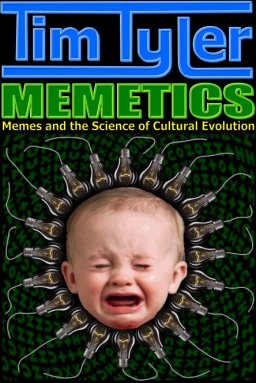
 A couple of introductions to memes were published recently:
Thanks to Brian and Dan for their efforts in this area. Brian's effort is longer and contains more controversial content. He offers a historical perspective on the development of memetics. One of the things he says is:
A “selfish meme” interpretation of a cultural universal, however, implies that it is maladaptive (harming fitness).
Of course selfish memes can and do harm fitness associated with their host's DNA. However, that isn't really part of the definition what "selfishness" is all about in this context. The idea is that selfish memes are in it for themselves. They behave as though they are self-interested - and as though they are indifferent to the fate of their hosts. That doesn't mean that they harm their hosts. For example, strawberry genes can be described as being "selfish". They (behave as though they) care about making copies of themselves - and not about any humans who might eat them. Does this "selfishness" on the part of the strawberry genes mean that they are bad for humans? No. In fact, strawberries are a health food.
Dan Zarella's article is also good. I'm still deeply critical of Dan's assertion that his "R0" differs significantly between cultural and organic epidemics, though. Both genes and memes can spread explosively and both genes and memes can reach saturation levels in their host population. What Dan is saying here is just wrong.
Dan says:
I’ve never found a meme with a sustained R0 above one. Given a large enough population and a long enough time, the R0 of every idea falls below one and the idea stops spreading.
This is not the normal meaning of r0. Here's how Wikipedia puts it:
In epidemiology, the basic reproduction number (sometimes called basic reproductive rate, basic reproductive ratio and denoted R0, r nought) of an infection can be thought of as the number of cases one case generates on average over the course of its infectious period, in an otherwise uninfected population.
Here r0 is a constant value. It doesn't change over time. That is because r0 is defined with respect to an otherwise uninfected population.
 I reviewed the discussion of what makes a process "Darwinian" in the paper:
Cultural transmission and the evolution of human behaviour: a general approach based on the Price equation
The authors advocate using the Price equation to divide evolutionary change into
selection and transmission bias components. They then claim that a high selection
component makes a process more "Darwinian" and a high transmission bias component
makes it less "Darwinian".
I think that this is a pretty strange approach. Darwinian evolution depends heavily on both
selection and mutation. One without the other generally results in a short-lived
evolutionary process. For me, selection and mutation are both core components of
Darwinism.
The mutation rate is highly variable in the organic realm. For example, around
Chernobyl, the mutation rate was massively elevated in the 1980s. Does this
mean that organic evolution suddenly became non-Darwinian in Chernobyl? I would
say "no" - harsh environments are perfectly compatible with Darwinism. However,
this paper's authors seem to think otherwise.
Worse for this proposed classification scheme, the split between selection
and transmission bias depends on how you partition the population into generations
before applying the Price equation. High levels of selection at one temporal scale (e.g.
parasite lifecycle) gnerally look like transmission bias at a longer temporal scale
(e.g. host lifecycle).
The authors give an example of what they see as a cultural process heavy in
transmission bias:
At the other end of the continuum is the case where
the transmission component is large and the selection
component negligible. Such a case would be where
individuals were exposed to ideas, but deliberately or
subconsciously modified them through their cognition
to such an extent that the trait they exhibit bore little
resemblance to the traits of the previous generation.
Changes in trait frequency would then be best
explained with reference to the (genetically evolved)
transformative properties of the human mind, not cultural
natural selection. Such a situation does not possess the
usual paradigmatic features of a Darwinian process
The evolution of ideas within minds is not Darwinian?!? Many
neuroscientists would disagree. See
Keeping Darwin in Mind for the details.
The problem here is that the authors have chosen a high level of partitioning
before applying the Price equation - namely, social transmission between
minds. High level partitioning favours the "transmission bias" component of the Price equation.
However a more appropriate level for studying the Darwinian evolution of ideas
would be to see how ideas are copied within minds. Or maybe how neural spikes
are copied as axons split. If you partitioned on these scales, you would see less
transmission bias, and more selection.
If you want to base a classification scheme on the Price equation, you need
to decide how to divide the entities you are studying into discrete generations.
Unfortunately, most real-world evolutionary processes have copying on multiple
different scales - and so the are many ways of doing this and it matters which
one you choose. Unless you keep the subjective aspect of the partitioning scheme
you are using in mind, using the Price equation in this way will just result in
reflections of your preconceptions.
 Occam's razor Occam's razor is the principle that one should prefer the simplest explanation that fits the data. It is one of the foundations of the scientific method. Occam's razor has turned out to be a flawed way of managing hypotheses - but it's still not too bad an idea.
Occam's razor is a special case of a more general principle: that the least useful may be profitably discarded. This idea is associated with evolution via natural selection. In honor of Darwin, I propose that we call it "Darwin's razor".
Definition of "Darwin's razor": the least useful is best discarded.
Occam famously discarded all but the shortest hypothesis. However, from a more Darwinian perspective, that's often a bad idea. For one thing you lose a diverse breeding population of hypotheses. For another, it is harder to adapt if new observations no longer fit the previously-selected hypothesis. Lastly, if you only consider the shortest hypothesis, it turns out that you can't estimate probabilities correctly.
"Darwin's razor" represents the winnowing, destructive side of Darwin's theory. I've previously referred to this as being "natural elimination". Of course, Darwinism also has a creative side: the production of new forms. However, that is hardly well described as being like the operation of a razor. "Darwin's razor" is all about eliminating the old, the unwanted and the unfit.
 Occam's razor famously had only one blade. Darwin's razor is more like one of those modern multi-blade razors. This analogy works in two ways: Occam's razor famously had only one blade. Darwin's razor is more like one of those modern multi-blade razors. This analogy works in two ways:
- Occam's razor said to only keep one hypothesis, while Darwin's razor allows you to keep a breeding population of hypotheses;
- Occam's razor only applied to one thing: hypotheses, while Darwin's razor is a universal razor that can cut through practically anything.
To give some examples of the universality of Darwin's razor in different domains:
- Wallet full of small coins? Apply Darwin's razor.
- Too much spam? Darwin's razor can help.
- Fridge full of useless jars? Darwin's razor works there too.
- Garden full of things you never planted? Use Darwin's razor.
Also, using Darwin's razor regularly makes you irresistibly attractive to members of the opposite sex.
Occam's razor has turned out to be a somewhat-inaccurate approach. However, Darwin's razor does a much better job of surviving critical scrutiny. It isn't possible to keep all unrefuted hypotheses around (as Solomonoff induction might suggest) because there isn't enough space in the universe. You have to discard something. Darwin's razor recommends discarding the least useful stuff. It's simple and pragmatic advice that's hard to disagree with. Darwin's razor.
 The Cambrian explosion
has become synonymous with the idea that evolution
is characterized by periods of explosive generation of diversity - followed by
shake-outs - in which that diversity is winnowed.
I think we can see examples of this phenomenon in cultural evolution.
Economists are used to the idea that marketplaces regularly see periods
of adaptive radiation followed by shake-outs. This is part of the
idea of a boom-bust cycle.
Human languages seem to be past their "explosion" stage - and we are now in
the "shake-out" stage - when diversity decreases.
By contrast, computer languages are still in the "explosion" stage.
TV channels are also still in their "explosion" stage.
Indeed, for most categories of memes you care to think of, we are currently
seeing explosive growth. We are living through the cultural Cambrian era.
Some explosions have clearly not started yet. We haven't yet seen much of
an explosion of fusion reactor designs, or an explosion of machine
intelligence. An explosion of machine intelligence is widely forecasted, though.
Rodney Brooks titled his 1999 book "Cambrian Intelligence". More recently
we have Dag Kittlaus claiming that
A Cambrian Explosion In AI Is Coming
It's not hard to believe.
What about the shake-out phase? We live in a world with a small number of search engines, a small number of social networks and a small number of popular operating systems. There's mostly only one internet. In some "winner-takes all" markets, competitors inflate - squeezing out the smaller players.
Biologists have long hoped for alien life to study - so that they can see what principles of biology are fundamental and which are accidents of history. Cultural evolution largely fulfills that dream - by providing new forms of life for biologists to study which are not based on DNA. In the case of the Cambrian explosion, speculation about multi-million year old events can be usefully supplemented by modern systems undergoing similar adaptive radiations followed by competitive winnowing. Evolutionary biology is likely to grow stronger and more mature by assimilating these new examples of the dynamics of evolving systems.
A diagram has emerged in the coverage of the S.F.I. workshop that Daniel Dennett organized earlier this year. I think it neatly illustrates one of the most common misunderstandings about cultural evolution. First, here is the diagram:

The main problems here are not with the "cultural evolution" column. It appears that people understand cultural evolution! The problems are all in the "biological evolution" column. Every entry is wrong:
- It is not true that - aside from culture - traits are only inherited from parents. Alice might have gotten her flea bites from her daughter, her warts from her grandmother and her chlamydia from her second cousin.
- It is not true that transmission which is not down host generations happens in cultural realm and not in the organic realm. DNA-based traits can be inherited from offspring, as happened with Alice in the last example.
- The speed of cultural evolution with respect to the organic realm is much exaggerated. If you look at areas where the generation time is comparable - such as medicine vs bacteria and viruses, the ideas simply aren't outstripping the pathogens in terms of the speed of their evolution. When people argue that cultural evolution is fast, they are mostly impressed by its short generation time and the large number of ideas. However, bacteria and viruses can reproduce quickly too. Plus they are far more numerous than ideas (and so they can perform many more experiments). Perhaps one day cultural evolution will unambiguously go faster.
- Traits acquired during a human lifetime can be transmitted genetically. Fleas can be acquired during a human lifetime and are propagated genetically; AIDS can be acquired during a human lifetime and is propagated genetically - and so on.
- People can choose which genetic traits they inherit. If you choose to never have sex, you won't inherit any syphilis genes, or any chlamydia genes. It's not true that you don't have a choice.
- DNA is not the only medium of inheritance - aside from culture. Organisms inherit resource boluses from their parents. They inherit accommodation - as seen with rabbit warrens, beaver dams and dental carries. They inherit their location. The idea that DNA is the only medium of inheritance is wrong.
- Lastly, even the column headings in this table are wrong. Culture is part of biology. Contrasting "cultural evolution" and "biological evolution" makes no sense.
If contrasting "cultural evolution" with "biological evolution" [sic] it is important not to use an out-dated characature of biological evolution that predates our understanding of the significance of symbiosis. If you mistkenly do that, you'll get the relationship between them all wrong.
I don't know who created this table. Anyway, they have helped to highlight a common misconception - so thanks are due.
Update 2014-10-15: I also saw this table on the "bioninja" web site. I suspect that is the original source.
|
|






 Posts
Posts

