Monday, 12 October 2015

Natural sorting

You may have heard about natural selection. There's also natural sorting.

Sorting is a process which involves creating order out of disorder by rearrangement.

Sorting is ubiquitous in nature. There are pecking orders, lek rankings and dominance hierarchies. Rocks sort themselves by size on beaches and gasses sort themselves by density in the atmosphere.

In computer science, filtering and sorting get similar space on bookshelves. Knuth's epic volume 3 of The Art of Computer Programming is devoted to Sorting and Searching. This equal billing seems fairly reasonable to me.

However, sorting is rarely mentioned by physicists, biologists or evolutionary theorists. In evolutionary theory in particular, filtering seems to get all the limelight - while sorting is largely ignored.

I think the neglect of sorting is probably a case of terminology influencing thought. Selection is regarded as a central concept in evolutionary theory - while sorting doesn't enjoy the same status.

Whatever the reason for its neglect, sorting is a pretty important phenomenon. Environmental gradients are common (e.g. depth and altitude). Often organisms get sorted along the gradients - with the most competent organisms getting the best niches. For humans proximity to city centers results in an important gradient. The poorest humans get sorted to the outskirts by property prices - while a lot of courtship of the most desirable mates takes place in central locations.

Sorting and filtering are often combined in biological systems. Sorting is fairly often followed by filtering. In some cases the filtering is performed by mates - who choose the best partners they can find. In other cases, filtering is done by predators. For example, when a cheetah chases gazelles, the prey naturally sort themselves from fastest to slowest. The cheetah then filters out the slowest one.

It is worth noting that sorting has other effects on evolutionary dynamics that aren't much to do with sorting being a prelude to filtering. Consider assortative mating, for example. That's not really sorting followed by filtering - the sort itself is what affects the evolutionary dynamics.

It is possible to classify natural sorting into two main types based on the mechanism involved. Some types of sorting involve direct comparisons between neighbors. Others do not - and instead rely on different entities having different speeds or trajectories. Examples of sorts that do not involve direct comparisons between neighbors include the gazelle example above, electrophoresis and the ink diffusion spectrum phenomenon.

Sorting processes that involve neighbour copmparisons are dissipative: they create order and they need a power supply and generate heat. Sorting processes that don't compare the entities they are sorting tend to be more reversible. For example, a prism sorts light rays. However it isn't dissipative: the effect of a prism can be reversed by another prism. This observation suggests the names 'dissipative sort' and 'reversible sort' for the two categories of sorting processes.

Sorting is usually thought of as being a one dimensional phenomenon. However natural sorting also takes place in two and three dimensions. Here's a two-dimensional sort of ink pigments:

The dimensionality involved is not a defining characteristic of sorting processes.

It is sometimes possible to describe dissipative sorting operations in terms of selection. For example, when you shake your breakfast cereal, and the largest lumps rise to the top that process could be described as a series of many individual "selections" in which layers of the cereal act as porus sieves that allow small particles to fall through and select against large particles. This sort of re-description is possible for sorts that involve neighbor comparisons. It is usually less helpful to describe sorts that do not involve neighbor comparisons in terms of selection. Even where re-description in terms of selection is possible, describing sorting as a series of filtering operations is often long-winded and obtuse. It is usually best to simply describe sorting processes using the term "sorting".

One of the notable exceptions to the neglect of sorting by evolutionary theorists is John Wilkins. He has long been reframing natural selection in terms of sorting. I didn't get the idea from him, though I had long been aware of him framing evolution in terms of sorting. For an example of John's thinking on the topic see the "Evolution and Chance" talk.origins FAQ.

Sunday, 11 October 2015

Memes and host lifespan

Cultural evolution has led to increased lifespans among many modern humans.

Symbiology has some basic models of how symbiotes affect host lifespan which seem likely to be applicable to cultural evolution. When a symbiont usually dies with its host, it can sometimes pay for it to divert resources from host reproduction into host maintenance processes. That makes the host live for longer and results in more opportunities for the symbiont to reproduce before it perishes with its host. Copies of individual memes do perish with their hosts - and this model is broadly consistent with the observed longer lifespans produced by cultural evolution to date.

However, there's an alternative scenario described by the same kind of model. If there's a lot of horizontal transmission of symbionts between hosts, the symbionts can sometimes profit by converting the hosts' resources into copies of their own heritable material as quickly as possible. This is the strategy employed by the Ebola virus, for example. Rather than increasing host lifespan, these types of parasite dramatically decrease it.

When does this latter scenario arise? The models are fairly specific about when this type of scenario is likely. It happens when the host density is high or when there's a lot of opportunities to spread between hosts.

The ability of memes to leap from host to host has dramatically increased over the last century. These days, mobile phones deliver memes pretty directly into peoples' brains in a near-constant stream. Horizontal meme transfer has increased dramatically in modern times - and it looks set to continue to rise. Our ability to pack humans together in huge cities has also continued to rise.

This raises some questions. What can be done to avoid going into an era in which memes shorten host lifespans - and rip through host resources like the Ebola virus does? Also, we have been seeing a lot of horizontal meme transmission for a while now. Yet if you look at the most meme-rich areas of the planet - such as Japan - host lifespans are excellent. Why are we not in an Ebola-like era already?

The most obvious answer is that memes that quickly kill their human hosts are selected against in various ways - by host immune systems, and by active suppression by groups of humans. People do get sucked into meme-spreading cults that rip through their resources Ebola-style - but education defends against this fate - and so do nearby friends and relatives.

An important reason for studying these dynamics is to see whether we can avoid problems. Will we see plagues of parasitic memes mirroring the 1918 flu epidemic? Will we see persistent draining influences - mirroring the effect of the HIV virus on lifespan in Africa? What about mixed bag pathogens? For example, smallpox helped Europeans to conquer native American tribes - while simultaneously killing many Europeans.

So far the influence of memes on lifespan seems consistent and positive. More memes are strongly correlated with longer lifespans. However I think it is too early to say whether this positive trend will continue without interruption. We should strive to understand these dynamics in order to help us to avoid problems in the future.

Tuesday, 6 October 2015

Susan Blackmore on machine ethics

Susan Blackmore weighed in recently on the topic of machine ethics - in article titled: It’s too late to give machines ethics – they’re already beyond our control.
While I generally think that students of cultural evolution ought to be well placed to contribute to prediction of the consequences of our actions in this area, I found several things to object to in Sue's analysis. On problem is the article's title. It strikes me as being defeatest. We ought to at least try.

Later in the article, Susan writes:

Replicators are selfish by nature. They get copied whenever and however they can, regardless of the consequences for us, for other species or for our planet. You cannot give human values to a massive system of evolving information based on machinery that is being expanded and improved every day. They do not care because they cannot care.

This seems like confused reasoning to me. We have examples of companies, governments and other organizations which have codified various human values. These are often in the form of 'laws' or 'rules'. If the argument is that memes and genes 'cannot care' because they are selfish replicators, then we have many examples of complex meme or gene products which do care - or behave as though they care.

Blackmore looks as though she is arguing from selfish memes to selfish organisms here. If so, that is a mistake parallel to the mistake that Richard Dawkins made in The Selfish Gene. Dawkins (1976) wrote:

I shall argue that a predominant quality to be expected in a successful gene is ruthless selfishness. This gene selfishness will usually give rise to selfishness in individual behavior. However, as we shall see, there are special circumstances in which a gene can achieve its own selfish goals best by fostering a limited form of altruism at the level of individual animals.

...and then...

Let us try to teach generosity and altruism, because we are born selfish.

He subsequently had to back-pedal, writing the following belated retraction (2006):

I do with hindsight notice lapses of my own on the very same subject. These are to be found especially in Chapter 1, epitomised by the sentence ‘Let us try to teach generosity and altruism because we are born selfish’. There is nothing wrong with teaching generosity and altruism, but ‘born selfish’ is misleading. In partial explanation, it was not until 1978 that I began to think clearly about the distinction between ‘vehicles’ (usually organisms) and the ‘replicators’ that ride inside them (in practice genes: the whole matter is explained in Chapter 13, which was added in the Second Edition). Please mentally delete that rogue sentence and others like it.
Selfish memes could result in selfish companies, governments and organizations - but it ain't necessarily so. Saying that such complex entities 'cannot care' seems like an unwarranted generalization to me. Maybe memes "cannot care" - but so what? It is memeplex products that we are mostly interested in when discussing machine intelligence. There's no good reason why they can't care.

Anyway, this topic is an important reason to study memetics. We need the best science has to offer to help us predict the consequences of our actions. The existing man-machine symbiosis probably won't last forever - there will probably be a merger or one side will assimilate the other. It looks as though we have enough power to be able to influence the outcome in a variety of ways - to the extent that technological determinism leaves some aspects of the outcome open. There's a lot at stake - and we should try our best to figure out what we should do.

Monday, 5 October 2015

Matt Ridley: Evolution of The Cloud

Matt Ridley: The Evolution of Everything

The book, "The Evolution of Everything: How New Ideas Emerge" by Matt Ridley is out later this month.

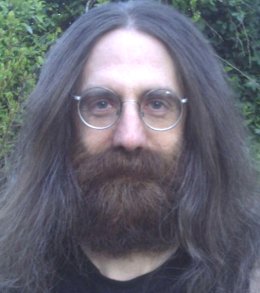
The book has its own domain: http://www.theevolutionofeverything.co.uk/ Here is the book on Google books and Amazon. Peter Forbes says it is Ridley's "magnum opus". High praise - since many of Ridley's other books are pretty good.

The book has a form of Universal Darwinism at its core. Ridley writes:

Indeed, to borrow a phrase from a theorist of innovation, Richard Webb, Darwinism is “the special theory of evolution”. But there is a general theory of evolution, too, and it applies to society, money, technology, language, law, culture, music, violence, history, education, politics, God, morality. The general theory says that things do not stay the same; they change gradually but inexorably; they show “path dependence”; they show descent with modification; they show selective persistence.

The special and general theories of evolution. I love it. What a great way to express the idea of Universal Darwinism. I don't like the term "Darwinism" being reserved for the "special" theory. Rather like Einstien, Darwin pioneered both the special and general theories of evolution; we should give him credit for that.

From the list of examples, it looks as though Ridley might be missing out on Darwinian Physics, though.

You may find that the first chapter is available free here. It's a philosophical/historical overview of bottom-up explanations.

Google Books has the first two chapters online here.

Reviews:

Sunday, 23 August 2015

Symbiont kin selection

Cultural kin selection proposes that cooperation can arise due to shared memes - as well as due to shared DNA genes.

However, cultural kin selection can be thought of as a special case of symbiont kin selection - an idea that may apply to many types of close living organisms.

Colony life - as found in ants, bees and mole rats - leads to increased levels of transfer of symbionts between the organisms involved (often due to sheer close proximity). The mole rats eat each others feces - and so come to share the bacteria they need to digest their tubers. Ants frequently cultivate fungi - and their nests are heavily dominated by fungi digesting rotting wood. They have many other symbionts too - there are special bacteria that they use to suppress the growth of competing strains of fungi, for example.

As well as acting on the host genes, kin selection acts on the genes of the symbionts too. If the symbionts in different organisms are related, then - to the extent that these can manipulate the behaviour of their hosts in favour of cooperation - they will tend to do so.

Probably ant fungus is the most extreme example of this form of kin selection. Though distributed the fungus is closely related - more so than the ants themselves are. It forms something like a massive multi-cellular organism in each ant colony - a superorganism. It may benefit from that ants acting as a coordinated whole more than the ants themselves do. The ants snack on the fungus - so it probably has a variety of ways of manipulating ant behaviour - through taste, smell and direct chemical action.

Seen from the crude perspective of Hamilton's rule, shared symbiont genes may elevate relatedness further. For example, intra-colony relatedness in naked mole rats has been estimated to be 0.81 - but this relatedness figure is based on the host genes. As with other mammals, most of the genes involved are not mole rat nuclear DNA, but are genes in gut microorganisms. The bacterial cells outnumber those of their hosts by a factor of ten. What happens to that relatedness figure once "horizontal" sharing of bacteria is accounted for? It probably goes up: a lot of those bacteria will be asexual clones.

For an example relevant to humans but still involving DNA genes, consider yeasts - as found in bread, wine and beer. Many yeasts have become human-transmitted symbionts. The main way they spread their genes around in the world involves human social contact. If they can somehow make their human hosts socialize more with other humans, they are likely to directly benefit. Kombucha may be one of the best examples of a socially-transmitted yeast - since it often spreads directly through peer-to-peer contact. Are Kombucha enthusiasts more sociable than other humans? Probably. But are they more sociable as a result of being manipulated by the Kombucha? It is an interesting question that deserves further study.

Symbiont kin selection is a bit different from the symbiont hypothesis of social evolution - but it is fair to say that these ideas are related.

Symbiont kin selection should illuminate cultural kin selection, which can be accurately modelled as a special case of it involving cultural symbionts - rather than DNA-based ones.

Symbiont kin selection is a neglected idea in social evolution. Because of lack of study, it is not easy to assess its overall significance - but it could easily be a big deal. If you look at humans, a lot of their cooperation is based on shared memes - rather than shared genes. In the workplace, for example, shared memes are ubiquitous - and shared genes are rare. Even within family life, shared memes are ubiquitous. Cultural kin selection could easily explain more cooperation than genetic kin selection does. This example illustrates the potential power of symbiont kin selection - but maybe it is equally powerful in other eusocial creatures. More powerful, maybe - since they are further along in the road to colony life than we are. Symbiont kin selection could easily be stronger in them than it is in us.

Saturday, 25 July 2015

The meaning of heredity

I generally use the term "heredity" to refer to the transmission of traits from one generation to the next.

However, I notice that some sources differ - confining the idea of "heredity" further. The Encyclopedia Britannica is explicitly DNA-gene centric:here:

heredity: the sum of all biological processes by which particular characteristics are transmitted from parents to their offspring. The concept of heredity encompasses two seemingly paradoxical observations about organisms: the constancy of a species from generation to generation and the variation among individuals within a species. Constancy and variation are actually two sides of the same coin, as becomes clear in the study of genetics. Both aspects of heredity can be explained by genes, the functional units of heritable material that are found within all living cells.
Reference.com confines the idea of heredity even more - to organisms that experience meiosis - with this:

heredity:the transmission of genetic characters from parents to offspring: it is dependent upon the segregation and recombination of genes during meiosis and fertilization and results in the genesis of a new individual similar to others of its kind but exhibiting certain variations resulting from the particular mix of genes and their interactions with the environment.

These sources are simply wrong. However, their mistake is widespread and leads to confusion about cultural evolution. For example, Larry Moran defines evolution using the term 'heredity' - saying: "Evolution is a process that results in heritable changes in a population spread over many generations." - and then goes on to argue that:

I've already alluded to one of the classic questions that a proper definition can answer — the increased height of Europeans over the past five centuries. Armed with a good definition of biological evolution we can focus on one of the key requirements; namely, heritable change. It turns out that the increase in height is due to a better diet and not to genetic changes. Therefore, this is not evolution according to the scientific definition.

This is a serious conceptual mistake. European diet has improved (largely) through memetic evolution. Memes are passed from one generation to the next in cultural evolution - and rather obviously this should meet any sensible scientific definition of evolution - as is attested to by the now-massive literature on cultural evolution. Yet Moran dismisses it - apparently due to his conception of the definition of the term 'heredity'. This seems like a spectacular mess to me.

Larry is not alone in this evolutionary denialism. Here's Mark Ridley on why cultural evolution doesn't qualify as being "evolution":

Changes that take place in human politics, economics, history, technology and even scientific theories are sometimes loosely described as evolutionary. In this sense "evolutionary" means mainly that there has been change over time - and perhaps not in a preordained direction. [...] human ideas and institutions can sometimes spit during their history - but their history does not have such a clear-cut branching tree-like structure as does the history of life. Change and splitting provide two of the main themes in evolutionary theory.

His complaint appears to be that cultural evolution is too reticulated - one of the most dopy objections to cultural evolution ever - once you consider how reticulated bacterial evolution is.

Anyway, these days, almost everyone agrees that cultural evolution is a type of evolution. The remaining debate in the area is mostly over whether cultural evolution is Darwinian. However we obviously have a mopping-up operation to do - as some folk don't even regard cultural evolution as being a type of evolution! That position seems indefensible to me.

Sunday, 5 July 2015

In light of cultural evolution

There's a recent trollish article doing the rounds titled:

The Theory Of Evolution Does Not Apply To Modern Human Beings.

Basically it argues that humans don't behave as the theory of evolution dictates. For example, the more resources you give a human, the fewer children they have.

I think this article nicely illustrates the confusion associated with a lack of understanding of cultural evolution. Almost everything in the article makes me think: "yes: but only if you ignore cultural symbionts".

It's well-known that parasites can reduce host reproduction - and even drive hosts extinct. The demographic transition is driven by cultural symbionts that reduce host reproduction. This has been extensively modeled by cultural evolution enthusiasts. This isn't contrary to the theory of evolution - you just have to include the evolution of memes in order to understand it.

If you add resources to a human population the memes absorb the resource faster than the human hosts do - and more memes often means less host reproduction.

Something very similar happens in the organic realm - if you add sugar to a human population. A little sugar might help with reproduction - but beyond a certain point, fertility begins to decline. Instead of making more human genes, the sugar fuels the reproduction of gut microbes at the expense of the genes of the human host. The host's belly swells up to accommodate them all. Eventually the host is effectively sterilized.

This all illustrates the dictum: Nothing in human evolution makes sense - except in the light of cultural evolution.

References

Terence Mckenna - on memes in 1990

Terence Mckenna - on memes in 1990. From a lecture titled: 'opening the doors of creativity'.

Here are some other meme-themed videos by Terence.

Wednesday, 1 July 2015

Recombination as a meme repair mechanism

In the organic realm, the idea that recombination can repair bad genes by replacing them with good ones is one of the two main theories that accounts for the origin and maintenance of sexual recombination (the other main theory is the Red Queen hypothesis).

The idea suggests that sexual recombination results in an uneven distribution of deleterious mutations in the offspring - with some having many bad genes and others having few. Those offspring with many bad genes are culled by selection - while those with few get to try again in the next round.

Even random assortment among mating partners would produce this effect. However in practice, the best quality individuals can often seek each other out - and so have offspring with an especially-low mutational load.

The "gene repair" theory of sex has been championed by Richard Michod, among others. He presents the theory in a stimulating popular book, titled: Eros and Evolution.

MIT is in the news today with a souped-up implementation of this idea applied to computer software. They are using recombination to fix crashing programs by using code from working ones. They call their software CodePhage. Here's the associated MIT press release. Their paper is called Automatic Error Elimination by Horizontal Code Transfer across Multiple Applications. It's an interesting case of bio-inspired computing.

I think recombination is a common meme repair technique. If you realize you have a bad meme, it makes sense to find someone with a functioning copy and acquire it. Much the same applies at the level of organizations and institutions. The need to repair dysfunctional memes probably drives a significant quantity of the memetic recombination that we see in the ideosphere.