In my experience, people's understanding of Darwinism usually starts off in the organic realm, expands to cover culture, then expands further to cover brain processes - and eventually extends to cover many other fields. This is more-or-less the course of my own understanding of Darwinism - and others have reported going through a similar progression.
Not everyone seems to penetrate through to the later stages. Many people seem to get stuck before the first stage - not even understanding organic evolution. The next-largest group understands organic evolution, but doesn't appreciate cultural evolution. Then there are those who understand cultural evolution - but don't grasp within-brain Darwinism.
Specialists in evolution generally need to understand the stage beyond their own. If you understand organic evolution without understanding cultural evolution, you won't have the concept of gene-meme coevolution, which is pretty fundamental to understanding how the gene pool of many species evolve. Similarly, those who understand cultural evolution without understanding within-brain evolution generally seem to have all kinds of misconceptions about how cultural evolution works. They often wax lyrical about how different cultural variation and transmission are from their organic counterparts, not realizing that the "intelligent design" processes they see in cultural evolution are themselves the product of Darwinian evolution - acting within brains.
It's not that analogues of natural selection have nothing to add to our understanding of cultural change. But unlike the case of genetic evolution, where selection assumes the full burden of generating adaptation from the vast space of genetic possibilities, most of the work done in exploring the space of logically possible ideas must be attributed to the organization of the brain.
This is a fine start: acknowledging that selectionist frameworks are necessary to understanding cultural evolution is the first stage of developing a modern understanding the topic. However, one should not stop with the Darwinism when introducing the human brain! If you examine how the brain works, you will find copying with variation and selection plays a prominent role. The brain itself is a Darwin machine. Signals are copied whenever an axon splits. They are extinguished whenever a neuron fails to pass on their signal. When you invoke the brain, that isn't an alternative to natural selection and Darwinism. The brain includes copying and selective processes at many levels.
Rather curiously, the typical progression of understanding of Darwinism is different from the order in which the evolutionary processes developed historically. Understanding usually goes: Organic -> Culture -> Brains. History went: Organic -> Brains -> Culture. Humans seem to understand how culture works more easily than they understand how their own brains work.
Dan Sperber has long argued for various disanalogies between organic and cultural evolution. Here he is with (Nicolas Claidiere) in a recent 2014 paper:
While some cultural items may indeed be propagated by
imitation and other forms of copying, it is clear that a large
number are not. In particular, many are also (re-)constructed.
For example, a student taking notes in a lecture does not
simply copy any spelling error that the lecturer happens to
write down, but will in fact, in her own notes, correct the
error and in doing so re-construct the correct spelling. As
such, cultural propagation is partly preservative, but also
partly (re-)constructive, to different degrees in each particular
case. As such, it is not only a matter of inheritance, as is gener-
ally the case for biology, but also of reconstruction. Whichever
of these is more important in any given case is an empirical
question, but either way, the direct analogy with biological
evolution is considerably weakened by this fact.
Correcting spelling mistakes is rather a lot like the error
correction involved in DNA copying mechanisms. So, this seems
like a bad example of an alleged disanalogy - it's a clear case where
there are similar error correction mechanisms in both domains.
The authors go on to say:
The mechanisms involved in cultural transmission (with rare exceptions
such as rote learning) have, in various degrees and forms, both preservative
and constructive functions. This is quite unlike the biological case,
in which the proper function of the copying mechanism (replication) is
preservative alone.
It is true that memes are "constructively" modified inside human brains.
However, genes are "constructively" modified inside human bodies too.
For example viral genes may undergo adaptation to their human host,
which may facilitate transfer to their human relatives. Or bacterial genes
may develop resistance to anti-bacterial herbs that their host
consumes.
In both cases, adaptive evolution takes place inside the host before
being transmitted to a new host.
To argue that cultural transmission of memes between hosts
is "constructive" - while organic transmission of viral genes
between hosts is not - one has to consider selective processes
in the cultural case, while screening them out of the biological
case. The result is then not a fair comparison.
Sperber is just ignoring selective processes that take place inside
brains during learning in odder to make his point. If you don't consider the
evolution of memes within brains, then meme evolution seems to involve
amazing intelligent-design processes not present in the organic case.
However, once you understand that
selection
and evolution take place within brains during learning, meme evolution and gene
evolution start to look much more similar to one another again.
The paper gets at least one thing right. It says:
How deep is the analogy between biological and cultural
evolution? Memetics assumes that it is deep indeed; that
the main relevant details of the biological case have direct
equivalents in the cultural case, such that there is, for
example, a cultural phenotype, which achieves a certain
level of (inclusive) fitness, which will in turn determine the
phenotype’s relative success in the population.
I endorse this description. Inclusive fitness and kin selection apply to memes - in cultural kin selection. Also, the phenotype/genotype split is useful in the case of culture - probably most useful if "genotype" refers to heritable information and "phenotype" refers to its products.
We've covered Jason Silva's ventures into memetics before. Recently, he remade one of his meme-related videos - as part of one of his "Shots of Awe" series. Here it is:
There's a substantial community of machine intelligence researchers
which are oriented around the concepts of
"collective intelligence" and
"swarm
intelligence". Memetic algorithm
enthusiasts have been trying to spread the word about memes to these folk for a long time. We've already had
four International Conferences
on "Swarm, Evolutionary, and Memetic Computing", for example.
Memetic algorithms are, by their nature, parallel, distributed systems - based
on a population of interacting agents - the whole field is based on the concepts
of collective intelligence
and collective wisdom.
What I want to say in this post, is that the opposite is also true. Part of the
reason why the concepts of "collective intelligence" and "swarm intelligence" are
interesting is because they involve a sprinkling of cultural transmission -
which sets up a behavioural evolutionary process. The ants in ant colony
optimisation are copying the behaviour of other ants - via
selectively-laid pheremone trails. The birds in a flock are selectively
copying the behaviour of other birds. This kind of selective behavioural
copying is also the basis of memetics. That is no accident, the
fields have the same basic foundation - in
universal Darwinism.
Behavioural Darwinism isn't the only reason why collective intelligence exists. Part of the effect involved arises through sheer aggregation. When a hundred agents guess at the number of beans in a jar, the average of their guesses is better than the opinion of any individual. There are some different effects involved there.
Humans judge memes, in part by the success, health and fitness of those that bear them. That makes some sense. However, the modern world allows some memes to disguise their bearers. Information obtained via the internet or television may be transmitted by a collection of individuals, many of whom are unseen. This allows one of our bad meme detection systems to be subverted. What appears to be coming from a beloved celebrity might actually be the product of a an acne-ridden script-writer.
Assuming you care more about your biology than your culture (which is not necessarily the case - ‘you’ after all are a combination of both), practical lessons, particularly for teenagers, emerge from memetics. Listen more to mommy and daddy and less to your friends! Beware more of fads and fashions which can infect you multiply than of whole social identities like ethnic, religious and occupational identities. One of these latter normally precludes another and hence may be willing to leave something of your biology for itself to live on tomorrow! And finally, trust information conveyed personally rather than via mass media which, like insect-borne diseases, can get to you even when you are down and unable to circulate!
The comparison between mass media and malaria-like insect-borne diseases - which can be transmitted even from bed-ridden victims - is an interesting one.
Now that the internet has enabled practically anyone to become a meme producer, we might see more internet culture that results in couch potatoes who stay permanently glued to their computers - to better emit their stream of memes.
In the past, most memes have required their owners to socialise and engage in direct relationships with other humans. However, now it is no longer necessary for memes to leave their hosts in a mobile state. Humans can infect each other via the internet while they are bed-ridden - just as happens with malaria.
I will now venture the hypothesis that the traditions of social science have moved away from the principles of natural science as a result of a cultural selection process. This can be explained as follows. Social phenomena are so complex that every rule has exceptions. Whenever somebody proposes a theory of cause and effect in a social system, somebody else will find an exception that falsifies the theory. In other sciences, an apparent inconsistency most often leads to a refinement of the theory rather than rejection (Lakatos 1974). But in social science, rejection has often been easier than refinement. Throughout the years, this selection mechanism has slowly depleted large sectors of the social science tradition of falsifiable theories. What is left is idiographic descriptions, definitions, categorizations, and interpretations.
I think this may have some truth to it. Why would rejection of theories be more common in social science than in other sciences? I think this is due to perfectionism. Social scientists deal with an important topic: human society. Having a theory in this domain that is wrong can potentially result in serious negative consequences - euthenasia, slavery, racism, Thatcherism - and so on. So: social scientists are more trigger-happy when it comes to "incorrect" theories than scientists in many other fields.
While this whole idea is an interesting possibility, it could be criticized as being a "just so" story. However, no doubt many theories start out their lives in this state.
Probably other factors also contributed. One famous one is the anti-theoretical approach of historians. Historians at some point acquired the meme that observation was theory-laden - and to make objective observations, you had to clear your mind of existing preconceptions. Franz Boas imported this idea into cultural anthropology. This might not seem to be so terrible an idea - but the consequences turned out pretty badly for both disciplines.
I still think it is important to understand where so many social scientists went so far off the rails with the scientific method - and with Darwinism. If you don't recognize and understand your mistakes, you will be more prone to repeating them.
r/K selection is the conventional classification scheme for the well-known phenomenon in which some organisms produce large numbers of offspring, while others devote their resources to producing a smaller number.
While r-selection produces organisms that produces many offspring, K-selection produces
organisms that produce only a few. There's also the possibility of facultative variation along this spectrum - producing many offspring in one environment and few offspring in other environments. This type of facultative variation is seen in humans. Humans in war-stricken countries produce many offspring, while humans in affluent, meme-rich countries - such as Japan - produce only a few.
The whole of r/K selection theory can be applied on the level of genes, organisms or groups. It is also equally applicable to genetic and cultural variation - as has long been observed by students of memetics.
Memes are often compared to viruses. Small size and r-selection are closely associated. On these grounds, you might expect to see that most memes were r-selected - emphasizing the production of large numbers of offspring over most other factors. There is a considerable quantity of truth to this picture - but not all memes are r-selected. Large complex collections of genes that exhibit parental care are those that are most likely to be K-selected. The same is true of large complex collections of memes. For example, some types of religion take many years to be transmitted from one generation to the next. Many religions are evangelical - but not all are. Judaism, for example mostly keeps itself to itself - and you rarely see adherents knocking on doors or passing out leaflets. Instead it spreads via birth and marriage. Regal memes - those associated with being king and queen - are another example of failure of horizontal transmission.
Most of the examples of K-selected memes given above involve memes that are transmitted in a pattern related to the genes of their hosts. However, not all K-selected memes need to be transmitted in this way. For example, a trade secret of a company might spend most of its time in a safe - and reproduce only when the company opens another factory. In such a case, genes and memes might well have quite separate transmission pathways.
Since most r-selected memes are transmitted "horizontally" between human hosts within a single human generation they typically do not follow the transmission pathways of the host's DNA genes. This results in much greater scope for meme-gene conflicts over resources to arise. Such r-selected memes can behave like pathogens. In extreme cases, necrotrophic memes are seen. The hosts of these memes are just resources to be burned through - from the perspective of the memes.
In the future, humans seem likely to become increasingly subjected to r-selected memes - as more humans get online and transmission of memes between humans becomes ever easier - due to improved networking technologies. That may well mean more cases of meme-gene conflict.
This coming situation is part of the reason why human scientists need to get to grips with memetics now. It is uniquely equipped to model this type of dynamical system.
This 2013 book is titled "MEMEnomics: The Next Generation Economic System" (Amazon, Google books). It is by Said Dawlabani. The blurb reads:
Books about subjects like economics are rarely written from the perspective of human or cultural evolution. Seldom, if ever, does a reader come across a narrative with pioneering methods that reframe a specialized discipline through a wide-cultural whole systems approach. This is precisely what Said E. Dawlabani does in this revolutionary book, Memenomics: The Next-Generation Economic System. This is a book that reframes the issues of competing economic and political ideologies and places them into an evolutionary new paradigm. This is a book about change done right.
Are Chimpanzees Cultural? This video offers an introduction to the history of the issue. The blurb for it reads:
Does culture separate humans from the animal kingdom? Are any other animals cultural? Primatologists have been able to answer these perplexing questions by studying our closest living relatives: chimpanzees.
I found this video via a post by R.E.W. Berl in the CultEvol blog - thanks!
Apparently it was produced by a bunch called The Advanced Apes. Their blog is an unusual one - evolutionary theory mixed up with transhumanism, machine intelligence, the global brain, extraterestrials and cyborgs. They have a Youtube Channel. Some of this material is interesting.
Boyd and Richerson know some thing about cultural evolution, but aren't always down with memes. Here's one of their objections - from The Origin and Evolution Of Cultures.
The second, more substantive problem is that the analogy between genes and culture is not very deep. The two are similar in that important information is transmitted between individuals. Both systems create patterns of heritable variation, which in turn implies that the population-level properties of both systems are important. Population-level properties require broadly Darwinian methods for analysis. But this just about exhausts the similarities. The list of differences is much larger. Culture is not based on direct replication but upon teaching and imitation. The transmission of culture is temporally extended. It is not necessarily particulate. Psychological processes have a direct impact on what is transmitted and remembered. These psychological effects can produce complex adaptations in the absence of natural selection. Users of the meme concept seem to us to believe that it does more work than it really does.
Firstly, there are no complex adaptations in the absense of selection. Unless one argues that some selective processes are
somehow "unnatural" I see no case against this thesis. Boyd and Richerson are arguing, I think - that intelligent design
by humans can produce complex adaptations. However, this misses the basic and fundamental point of Campbell and many others
that brain function depends on natural selection on multiple levels - selection between axon and dendrite spikes, selection between synapses, selection between ideas - and so on.
Boyd and Richerson argue that transmission of culture is "temporally extended" - while transmission of genes is not. This is false, I think, since transmission of genes is also "temporally extended". Organisms typically acquire genes throughout their lifespan as they acquire genomes from parasites and mutualist symbionts. Gene transmission is often a long, drawn-out process involving temporally extended phenomena - including parental care. The idea that transmission of genes is not "temporally extended" seems wrong in just about every way.
Boyd and Richerson argue that psychological processes have a direct impact on what is transmitted in cultural evolution - but not in organic evolution. This too, is mistaken. Psychological processes have a direct impact on what is transmitted in organic evolution too. In particular mate choice, and habits affecting parasite transmission affect gene transfer in a big way - if you are squeamish about rotting food you will probably wind up with a different set of parasites from someone who is afraid of social contact.
Both organic inheritance and cultural inheritance use high-fidelity template copying - and a range of other types of more sloppy and low-fidelity inheritance. Any idea that organic inheritance is entirely based on "direct replication" is mistaken - and the idea that some types of organic inheritance are not based on genes is using the molecular biology conception of a "gene" - which seems pretty irrelevant to me. The molecular biology conception of a "gene" is not what memetics is based on.
To recap a little, in my preferred terminology, "gene" is a general term for a piece of heritable information - and "genetics" is the science of heredity. That means that memes are a type of gene. To say "the analogy between genes and culture is not very deep" makes no sense from this perspective. It isn't an "analogy" in the first place - a meme is a type of gene. Memes can't be too different from genes - a meme is a kind of gene.
Basically, all of Boyd and Richerson's objections seem to be based on misunderstandings to me. Now, maybe this is the fault of memeticists, for not explaining these issues more clearly. However, these points aren't new objections that I'm raising - they are all in the memetics literature. The failure of academics to understand memes remains an ongoing, frustrating issue. This is now the internet era. Scientific differences can be discussed and explored online. Such differences of opinion should mostly fade in the face of the truth.
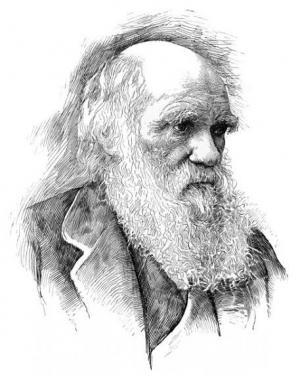 In my experience, people's understanding of Darwinism usually starts off in the organic realm, expands to cover culture, then expands further to cover brain processes - and eventually extends to cover many other fields. This is more-or-less the course of my own understanding of Darwinism - and others have reported going through a similar progression.


 Dan Sperber has long argued for various disanalogies between organic and cultural evolution. Here he is with (Nicolas Claidiere) in
 There's a substantial community of machine intelligence researchers
which are oriented around the concepts of
"
 Humans judge memes, in part by the success, health and fitness of those that bear them. That makes some sense. However, the modern world allows some memes to disguise their bearers. Information obtained via the internet or television may be transmitted by a collection of individuals, many of whom are unseen. This allows one of our
 In 2003,
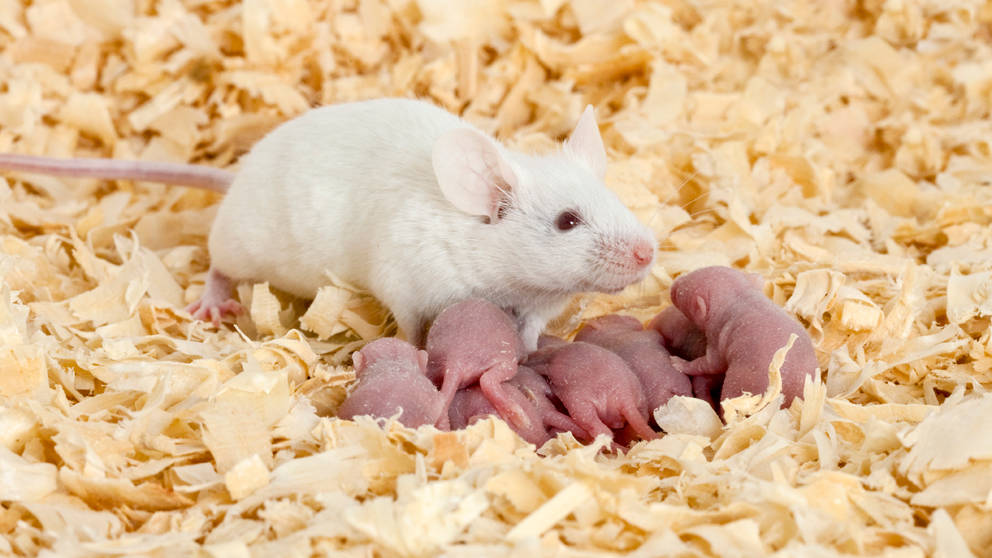
 This 2013 book is titled "MEMEnomics: The Next Generation Economic System" (
 Boyd and Richerson know some thing about cultural evolution, but aren't always down with memes. Here's one of their objections - from




 Posts

