Sunday, 17 August 2014


Cultural eusociality
Eusociality
Eusociality is a type of social organisation used by ants and bees - in which many individuals form a highly cooperative group and reproductive capabilities are suppressed in most individuals. Multicellular organisms originally formed out of eusocial groups of cells that clumped together for the advantages that group living brought to them.Eusociality is common. If you count multicellularity as an advanced form of eusociality, then it is found everywhere. Even if you only consider cases where the individuals still have some kind of semi-independent existence, the prevalence of ants and bees in the biosphere means that eusociality is still a very important phenomenon.
Though meme-infested humans do exhibit ultrasociality, we are not yet near to eusociality - since we don't exhibit reproductive suppression. While it's possible to imagine a future populated by sterile clones of celebrities - and other in-demand individuals - we aren't there yet.
Eusociality is one of nature's ways of building cooperative systems. If offspring can reproduce independently, but travel slowly they often compete with their parents and their siblings as they are forced to compete with them for resources. A eusocial colony is a simple way of building cooperative systems on a large scale.
The widespread occurance of eusociality in the organic realm, raises the issue of what its status is in the cultural realm. It turns out that eusociality is common there too. There are many cases where reproductive 'queens' and sterile 'workers' can be identified in cultural evolution. Books are manufactured in factories - where most of the copies are made - and most of the copies will be destroyed before they manage to reproduce. However the existence of the copies acts to channel resources back towards the reproductive individual - enabling them to gain power and produce more copies - for example by book sales funding marketing and advertising.
Cultural eusociality
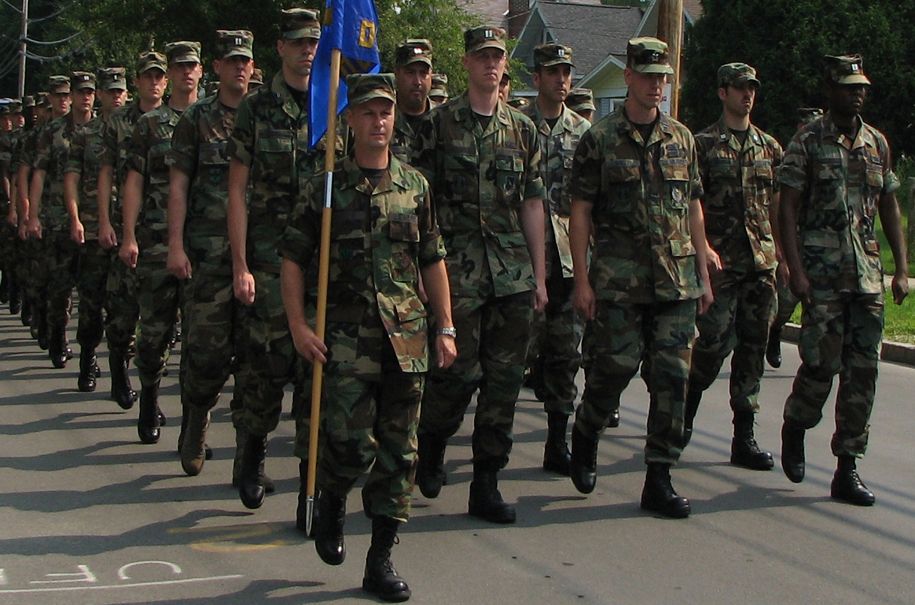 Eusociality is an extreme case altruism based on kin selection - in which workers give up their own opportunities to reproduce to help their queen to reproduce. It is also widely seen in the realm of human culture. There are many cases where the equivalent of cultural "queens" send out cultural "workers" out into the world to channel resources back towards the queens. This pattern is seen with consumer electronics, recipes, factories, server-side software, digital rights management, computer games - and many other phenomena. Cultural kin selection is involved in the explanation for these kind of phenomena.
To give a specific example, the use of patriotism to cause soldiers to sacrifice themselves in battle is an example of sterile workers sacrificing themselves for other reproductive individuals. However, dying in battle is highly likely to be bad for your own genes - so why do soldiers do it? What the deaths of soldiers are adaptive for is the patriotism memeplex. That exists in the form of other copies which directly benefit as a result of the sacrifices of the soldiers. The instance of the patriotism memeplex in the soldiers dies along with its human host - but copies of that memeplex in the generals and politicians survive - and so nationalism spreads. The soldiers are infected by memeoids – their brains are infested with necrotrophic memes which were memetically engineered by the state.
Offspring sterility
In the case of books, their non-digitized form makes copying them challenging. In many other cases, specific sterility features can also be identified. Patents, trademarks, digital rights management - all are oriented towards preventing unauthorised copying of sterile workers - with the aim of increasing the resources that are channeled back towards the original source.It is usually easy to copy cultural information - so, in cases where reproductive memes are surrounded by sterile workers require special explanation. Several factors can result in offspring sterility - including:
- Obfuscation - this protects consumer electronics and microprocessors.
- Cryptography - This involves using technical defenses to make copying difficult - resulting in Digital Rights Management;
- Legal threats - Some types of copying are prohibited by copyright, patent and trademark law;
- Watermarks - This helps to protect some videos, images and money;
- Registration - Some software ensures that it is not copied by "phoning home" - contacting its manufacturer over the internet;
- Dongles - Dependencies on something that is not easy to copy.
Offspring sterility is one of the hallmarks of cultural eusiciality that distinguishes it from simple situations where there is an individual meme which lots of identical copies happen to have been made.
Cultural cloning
Money illustrates that cultural kin can be identical clones.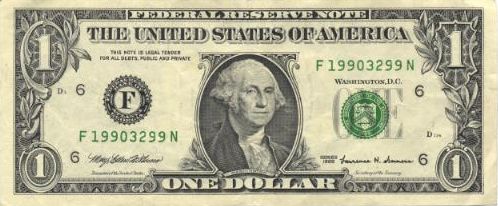 Money is an example of cultural eusociality which involves identical clones. Notes and coins are not normally copied from. When they are, the copiers are hunted down and imprisoned. Technical measures are used to prevent copying - such as watermarks, metal strips and very detailed patterns which are hard to scan. Notes and coins are usually produced from reproductive individuals inside the treasury. The money in circulation plays the role of workers, the machines in the treasury that produce them are the queens, and the the blueprints for those machines are their heritable material. Money illustrates that the kin involved can be identical clones - as they are in conventional multicellular organisms. Identical clones usually offer the best possible chance of kin selection resulting in mutual cooperation.
Parental manipulation
The mechanism responsible for eusociality is typically the same in the organic and cultural realms. Kin selection acts in both realms - the sterile workers and their queens are closely related. In both cases parental manipulation is often involved. The queens make the workers sterile by building them without reproductive parts, so that they can better help their maker without getting distracted.
Eusociality - or extended phenotype?
When considering cultural eusociality, one issue is whether the sterile forms are better viewed as individuals in their own right - or the extended phenotype of the reproductives. For example, a cake factory makes "sterile" cakes - which are rarely copied from directly. It might be unorthodox to describe those as "sterile workers" - since they don't really contain the same "heritable material" as is found in the cake factory. The process of baking makes "reverse-engineering" the cake challenging - and the cake might better be regarded as the extended phenotype of the cake factory. I call this the "hair and nails` issue because, while human somatic cells are a lot like sterile workers, hair and fingernail tissues are not.
Prevalence
Cultural eusociality is ubiquitous. The printing press produced some of the first mass-produced identical copies of memes. These days, digital copying has reduced the cost of copying further - and some web pages and videos have been reproduced billions of times. In many cases, these highly-copied digital systems exhibit offspring sterility, one of the hallmarks of eusociality. This is often implemented via "Digital Rights Management" (DRM) systems.
This article is based on an excerpt from my forthcoming "Memes" book.
Cultural kin selection
Kin selection
Genetically related individuals frequently cooperate and behave altruistically towards one another. This phenomenon is modeled by a branch of evolutionary theory known as "kin selection". This models cases where organisms engage in behaviour that favours relatives over non-relatives. Kin selection explains parental care, nepotism, eusociality among the social insects, problematical adopted children - and many other phenomena. The original explanation of kin selection invoked shared genes. J. B. S. Haldane was one of the first evolutionary biologists to understand the idea in the 1950s. It was subsequently studied and modeled by William Hamilton in the 1960s. Hamilton said:
The existence of altruism in nature can be explained by thinking about the replication of genes. We need to descend to the level of the gene, rather than the individual, in order to see that the gene exists surrounded by copies of identical genes that exist in all its relatives - in particular in its close relatives, its siblings, who have a half chance of carrying a copy of that particular gene, its offspring, which also have a half chance, parents: a half-chance, cousins: one eighth, etc. Seeing this swarm of genes that exists around a particular one, we can then ask what is the behavior caused by this gene that is most likely to cause the propagation of this set of copies in the relatives around it.A broadly similar argument applies to memes. This raises interesting possibilities for what we will be calling "cultural kin selection".
Cultural kin selection
 Just as genetic kin can be expected to cooperate, so it seems reasonable to expect memetic kin to cooperate - on much the same grounds.
Our understanding of altruism needs to be augmented by considering the reproduction of memes. We need to descend to the level of the meme, in order to see that an individual meme is surrounded by copies of itself in the form of the meme's parents, offspring, siblings and cousins - its memetic kin. Seeing this swarm of memes that exists around a particular one, we can then ask which of the behaviors that could be promoted by this meme would be most likely to cause the propagation of the swarm of copies of itself that surround it.
That kin selection can be usefully applied in the cultural realm is an old idea. Boyd and Richerson discussed the idea in 1980. Paul Allison and Francis Heylighen noted it in 1992. Anthropologists had previously distinguished between "biological kinship" and "social kinship" (Hawkes, 1983) or between "natural kin" and "nurtural kin" (Watson, 1983) - but they mostly lacked a coherent theory about the evolutionary basis of these categories. Cultural kin selection helps to explain why these traditional anthropological categories are as useful as they are.
Suicide terrorism represents a good example of cultural kin selection. All the memes in the suicide bombers are extinguished, but copies of their memeplexes in other individuals are promoted by the publicity generated by their actions. Suicide terrorists believe that they are part of a brotherhood and that their actions help their relatives. This is not far from the truth - though the "brotherhood" is a cultural - not an organic one - and the bombing typically promotes associated memes - not organic genes. Cultural kin selection is involved many types of human social behaviour - including political, military, religious and professional groupings.
Parental resource allocation
Parental investments in offspring are one of the the most prominent manifestations of kin selection in the organic realm. These so not require particularly advanced cognition or much in the way of recognition of kin. Parents usually provide their offspring with more than just a genetic inheritance. They often provide them with material resources, to help their offspring get off to a good start in life. Parental investment typically involves one or more of these two types of contribution:- Resource boluses - allocated at birth;
- Resource trickles - supplied over an extended period of time;
Another strategy is to provide a resource trickle over a more extended period of time. This requires an extended association between the parent and their offspring after it is born. Such extended relationships do exist - but they are not that common: many organisms simply abandon their offspring. Trickle feeding is the approach taken by strawberry plants, for example. They reproduce sexually using seeds - but also employ vegetative reproduction - using "runners". In this latter case, the baby strawberry plants are attached to their parents by fibrous stalks that provide them with nutrients while they are getting established. Among mammals, 'brooding' is common and maternal affection for offspring is fairly widespread. Humans also use trickle-feeding techniques with their own offspring. Maintaining a connection between parent and offspring in this way allows parents to dynamically allocate resources between their offspring - depending on their perceived viability.
Cultural parental resource allocation
Resource boluses and resource trickles are both found in cultural evolution. Resource trickles seem to be more common than in the organic realm. The world of finance provides many examples. One example is sales people: it is common to put new recruits on a salary after teaching them how to do their job. This allows them to support themselves while they are learning their new trade - but before they are able to earn a healthy commission. Another example is franchises. When a new franchise starts up, it is sometimes supported economically for a while by existing ones - while the new establishment finds its feet. Offices, factories, farming and mining operations often behave in a similar way.Maintaining a connection over which funds can be transferred is simple and cheap in the modern world, and a resource trickle provides more dynamic control over the flow of resources. Cultural parents don't normally perish during childbirth - and so parents are often around to supply a resource trickle.
Religious memeplexes are among those that make extensive use of extended parental investments. Religions are often old and highly evolved elements of culture, with considerable adaptation to the human psyche. It is common for them to feature extended indoctrination periods. Sometimes the indoctrination takes place by trusted family members during childhood years - when the human mind is at its most impressionable. There's an extended association between the religious memes in the adult teachers, and their cultural offspring inside the children.
Teaching
A common example of cultural parental investment involves teaching. Teachers sometimes have extended relationships with their students. While they are together, memes are planted in the minds of the student - and the teacher cares for and nurtures them. Teachers don't just deliberately expose people to their memes, they check to make sure they are installed properly, and provide additional exposure if they are not. The memes are repeated and reinforced until they are well established in their new host. If one teaching method fails, another teaching method can be tried. Teachers often act as though they care for the future welfare of the memes they implant in students. They also act as though want the students to keep coming back - so that more memes can be installed. The meme's eye view pictures the memes inside the teacher influencing their behaviour - so that they ensure that the memetic offspring are well established in the minds of the students. If the student is inspired to subsequently go on to teach others, that is better still.Teachers often teach others to teach. That's a case of memes not just caring about their immediate offspring - but trying to ensure that they become long-term ancestors. Obviously, being linked with memes associated with teaching others is a way for memes to improve their own fitness. Teaching memes are thus in demand - many other memes act as though they want to be associated with them.
Cultural kin recognition
 Outside relationships that involve teaching, cultural kin selection acting on memes inside different humans demands that memes somehow "recognize" each other while they are inside other human bodies. For mental symbionts to identify other mental symbionts while they are inside human bodies is a non-trivial feat. If you think of memes as software, that may help to understand how such a thing is possible. How this feat is actually performed is interesting. Memes typically use the same psychological apparatus designed for recognizing relatives in order to to identify copies of themselves inside others.
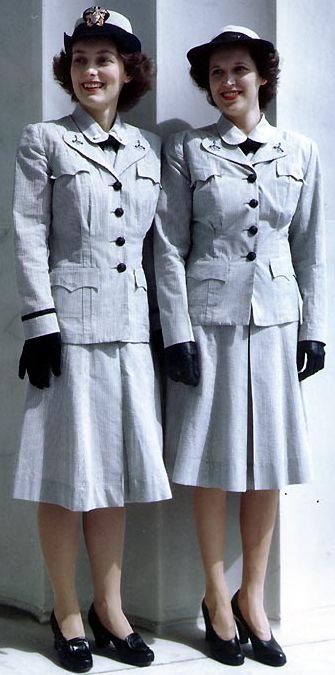
Memes often subvert their host's kin recognition for their own ends by making non-relatives appear to be relatives. A concrete example of subversion of host kin recognition may be found on the battlefield. Shared military uniforms indicate shared nationality memeplexes. These memeplexes are prepared to sacrifice themselves for copies of themselves in other bodies – and they manipulate their hosts to achieve that end – to fool their hosts into believing that their fellows are their genetic kin – not just their memetic kin. This is why military uniforms are often designed to cover the entire body and make soldiers appear to be identical clones of one another - to act as a superstimulus to the kin recognition apparatus in the human brain. Shakespeare expressed the feeling of brotherhood associated with warfare - writing:
We few, we happy few, we band of brothers; For he to-day that sheds his blood with me shall be my brother.The human hosts may not literally be fooled into thinking that non-relatives are really kin. However, kin recognition is part of the human psyche - extending down into unconscious realms. While people may not be consciously fooled, part of their brain is still thinking: "kin" - and acting accordingly.
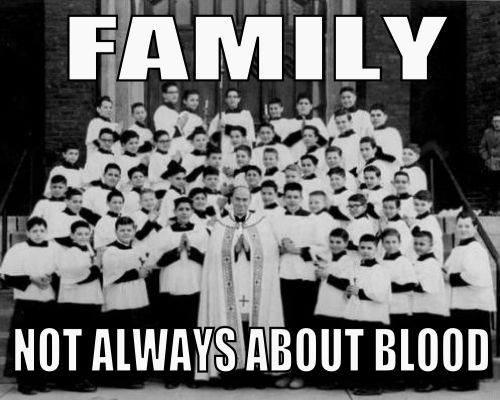
Religions subvert kinship kinship recognition systems as well. Monks are "brothers" in a "brotherhood", and the priests are called "Father". Nuns are "sisters", in a "sisterhood" and the head nun is their "Mother Superior" - or their "Reverend Mother". Then there's the holy "father" - who plays the paternal role. As with the military, the monks and nuns often wear identical uniforms - so they look like kin. Church is all about family - but it the relationships involved are not organic - they are cultural.
Kin recognition has had a rocky ride in mainstream biology in recent years. It has turned out to not be as widespread as was originally imagined. Gardner and West's 2007 article "The Decline and Fall of Genetic Kin Recognition" covers the controversy - suggesting that markers used for kin recognition would tend to rapidly reach fixation - and become useless as kin-specific markers - unless high levels of mutation or selection oppose this. They suggest that selection for marker diversity which is caused by parasites may help to explain why kin recognition is widespread among humans. The theory of gene-meme coevolution suggests another answer to this question - that humans use memes as markers that act as proxies for DNA relatedness that are both highly variable and easily identifiable. In both cases, rapidly evolving symbionts would act to promote altruism by providing a rapidly-changing source markers to act as signals associated with relatedness.
Perhaps the most important thing to say about cultural kin recognition is that it is not a prerequisite for cultural kin selection. David Hales in 1997 claimed that:
memetic kin altruism can only function if memes can induce individuals to distinguish between memetic kin and non-kin.However, advanced cognition which is capable of recognizing other individuals is not required in order to distinguish kin from non-kin. A strawberry plant doesn't need to "recognise" its own offspring - because it is joined to them by runners. Similarly, many organisms don't disperse their offspring very far from home - in which case, being nice to your neighbours is often much the same as being nice to your relatives.
Memetic relatedness
Relatedness is not always so easy to calculate in the case of culture. Here is Peter Richerson (2010) expressing scepticism on the topic:
In the case of culture, the analog of kinship is very hard to estimate. Having two parents with equal genetic contribution makes the calculation of relatedness easy. In cultural transmission, one, two, a few, or many people in your social network are possible sources of culture. People may use different parts of their network for different cultural domains. No one has proposed a way to estimate cultural relatedness in the face of such problems.It is not true that no one has proposed a way to estimate cultural relatedness. Paul D. Allison did it in 1992. John Evers did it in 1998. However, it is true that the concept of "memetic relatedness" between people does face some practical problems. We currently have no practical way to sequence all a person's memes - to recover all the cultural information stored in an individual brain. We can, however measure the occurrence of particular memes, via questionnaires and similar methods. In the organic realm, basic a calculation of relatedness on shared genes works quite well - because of the mechanics of meiosis. However, in the cultural realm, memes are not dished out so evenly and uniformly - and one sample of memes might give one estimate of relatedness, while another sample might produce a different estimate. That is a practical problem for estimating memetic relatedness between people - both for scientists and for memes attempting to track their own offspring. However, there are statistical techniques designed to deal with this sort of issue. If you randomly sample some memes from one person and then see if they are present in another person (and repeat the process the other way around) that will probably produce a reasonably usable figure for the memetic relatedness between them. The issue isn't a show-stopping problem.
However, while calculating memetic relatedness between people is not easy, it is often not necessary. Consider for a moment the similar case of kin selection among organic parasites. Some braconid parasitoids attack caterpillas. They crawl into the caterpillar's brain, form cysts, and manipulate its behaviour. These parasites die - but the behavior they induce helps their kin to reproduce. This is an example of kin selection. However, there's no calculation of the additional level of relatedness between the hosts that arises as a result of them sharing parasite genes. Such a calculation would be irrelevant and unnecessary. Kin selection acting on memes is similar. Many of the important relationships are between sets of memes or memeplexes. Calculating relatedness between memes is pretty trivial. Often such relatednesses are either one or zero - i.e. either the memes are either identical copies, or they are not. This idea can be expanded to memeplexes without much difficulty. That is enough to support the theory of kin selection in the cultural domain. Averaging relatedness over all the memes in a single host is often not necessary in order to model the dynamics involved.
Hamilton's rule
The "holy grail" for students of cultural kin selection seems to have been to derive an equivalent of Hamilton's rule. There have been a number of attempts to do this. An early attempt was made in a paper by John Evers (1998) called "A justification of societal altruism according to the memetic application of Hamilton's Rule". This paper derived a variant of Hamilton's rule applied to memes - adapted to deal with horizontal transmission. It was based on the idea of using a figure for the "fraction of shared memes" in place of Hamilton's relatedness. However, John doesn't really go into the difficulties associated with this idea. Also, adjusting Hamilton's rule to deal with horizontal transmission doesn't seem to be particularly urgent to me.More recently, David Queller (2011) wrote a paper titled "Expanded social fitness and Hamilton's rule for kin, kith, and kind" - which attempted to roll kin selection, "kith" selection and "green beard" effects into an extended version of Hamilton's rule. David Queller's work is not based on memetics. It attempts to cover all kinds of social effect - not just cultural ones. While this work is interesting and general, its generality works against it in some respects. It doesn't allow predictions to be based on shared memes - and that is one of the main virtues of cultural kin selection. David Queller's use of the term "kith selection" clashes with Gordon Rakita's prior use of the term in a potentially confusing manner. I'm inclined to label "kith selection" as unnecessarily-obscure jargon.
Of course, applying an unmodified version of Hamilton's rule directly to pair-wise interactions between cultural creatures is still perfectly possible. In the organic realm, kin selection theory makes use of the idea of "genetic relatedness" - and idea that gives a rough estimate of the proportion of rare genes that are likely to be shared between two individuals. Part of the attraction of Hamilton's rule is that it allows a cheap calculation of this "relatedness" - based on easily accessible information about geneaology. In practice a lot of relatedness figures between cultural creatures are either 0 or 1. The lack of memetic meiosis complicates this approach. Also, in cultural kin selection, there are additional difficulties after relatedness has been calculated. Genes typically affect behaviour in the organic realm fairly directly. However, for the "puppet masters" of memetics, memes must manipulate their hosts in a highly indirect manner. Memes face difficulties associated with accessing host sense data and with controlling host motor outputs. These are broadly similar to the difficulties parasites face in manipulating their hosts. As with parasites, the resulting host behaviour is the result of a battle with host's DNA genes and all the other memes that the host carries. Most memes don't get things their own way. This indirect control over behaviour acts as a further confounding factor which makes it harder for approaches based directly on using Hamilton's rule to produce useful answers.
I think it is best to avoid obsessing over memetic versions of Hamilton's rule. The original Hamilton's rule works in the cultural domain in an unmodified form. The only problem is that the complex and indirect nature of meme expression can mean that it is harder and more complex to apply. Of course, it is still possible to adopt the meme's eye view - and ask how a meme could act so as to affect the propagation of the surrounding swarm of copies of itself. That is still an extremely useful approach - even if you don't directly use Hamilton's rule.
Related content
- Tyler, Tim (2012) Cultural Kin Selection - a teaser.
- Tyler, Tim (2014) Cultural eusociality.
- Tyler, Tim (2014) Technological kin selection.
- Tyler, Tim (2014) The significance of cultural kin selection.
- Tyler, Tim (2014) Cultural kin selection vs cultural group selection.
- Tyler, Tim (2014) Cultural kin selection and the meme revolution.
- Tyler, Tim (2013) A brief history of cultural kin selection.
- Tyler, Tim (2013) Cultural kin selection bibliography.
- Tyler, Tim (2014) Cultural group selection bibliography.
- Tyler, Tim (2014) Homophily.
- Tyler, Tim (2014) Cultural kin selection meets anthropology.
- Tyler, Tim (2013) Tag-Based Cooperation.
- Tyler, Tim (2014) Criticisms of cultural kin selection.
- Tyler, Tim (2014) Cultural kin selection within hosts.
- Tyler, Tim (2014) Cultural kin selection vs memetic engineering.
- Tyler, Tim (2014) Cultural kin selection may have driven imitation capability.
- Tyler, Tim (2014) Links between organic kinship and cultural kinship.
- Tyler, Tim (2014) Misrepresentation of kin selection by group selection advocates.
- Tyler, Tim (2014) Cultural evolution + group selection = a disaster in the making.
- Tyler, Tim (2014) Cultural local competition.
- Tyler, Tim (2014) Cultural superorganisms.
- Tyler, Tim (2015) David Sloane Wilson on cultural kin selection.
- Tyler, Tim (2014) Cultural spite.
This article is based on an excerpt from my forthcoming "Memes" book.
Saturday, 9 August 2014
The spat over "A Troublesome Inheritance"
 It seems as though writing a book about the science of race differences is a fast track to fame.
In the latest chapter of Nicholas Wade's marketing triumph, a bunch of 139 scientists have recently signed a letter critical of hiss book, saying:
Wade juxtaposes an incomplete and inaccurate account of our research on human genetic differences with speculation that recent natural selection has led to worldwide differences in I.Q. test results, political institutions and economic development. We reject Wade’s implication that our findings substantiate his guesswork. They do not.
As far as I can make out, this declaration is a stupid one. It is, in fact, very likely that recent natural selection has led to worldwide differences in the traits they describe. To describe this as "speculation" and "guesswork" goes contrary to practically everything we know about the extent to which natural selection contributes to variation in observed traits.
So, why would so many scientists publicly put their name to such a daft declaration?
The answer is probably political correctness. As Wade responds:
This letter is driven by politics, not science. I am confident that most of the signatories have not read my book and are responding to a slanted summary devised by the organizers. As no reader of the letter could possibly guess, “A Troublesome Inheritance” argues that opposition to racism should be based on principle, not on the anti-evolutionary myth that there is no biological basis to race. Unfortunately many social scientists have long denied that there is a biological basis to race. This creed, prominent throughout the academic world, increasingly impedes research. Biologists risk damaging their careers if they write explicitly about race.I've seen some of the negative commentary on Wade's book. A lot of that commentary is tripe. I don't know if Nicholas Wade's book is any good. It seems to be rather DNA-centric. However, Wade does know enough about meme-gene coevolution to argue that cultural variation between groups arises rapidly, creates different selective environments for human DNA genes - which accelerates divergent evolution of human DNA in different areas. This argument is factually correct.
Wade seems to have managed to obtain the substantial publicity he has received mostly by writing a controversial science book on a taboo topic. That this has happened seems to be essentially a good thing. Probably other science writes will pick up on Wade's obvious success - and we'll see more books on "unmentionable" topics. It's hard to avoid the conclusion that this will be a good thing.
Update 2014-08-12: Jerry Coyne in particular comes across as confused about this issue:
The book was about the genetics of ethnic and cultural differences, and while it made a valid point that ethnic groups do show small but significant genetic differences across the globe, there was no evidence for Wade’s main thesis: that differences in behavior among groups, and in the disparate societies they construct, are based on genetic differences. While that might in principle be true, we simply have no evidence for that conclusion, and it was irresponsible of Wade to suggest that such evidence existed.This is surely an extreme and inaccurate position. Genetic lactose intolerance is one example of genes influencing human behaviour differently in different geographic groups - affecting dairying behaviour.
Of course there are genetically-based behavioural differences between different human groups! I think we have to label those opposing this idea as "race denialists".
For reasonable comments in response to the book, I would recommend Matt Ridley and Larry Moran.
Thursday, 7 August 2014
Blinkered Darwinism
 I think that "Universal Darwinism"
is the best term for the expansive Darwinism that extends beyond
biology into realms such as chemistry, physics, geology and astronomy.
I think that "Universal Darwinism"
is the best term for the expansive Darwinism that extends beyond
biology into realms such as chemistry, physics, geology and astronomy.For a while I've wondered what we should call... the other kind of Darwinism. The kind I was taught in school. The kind in most evolution textbooks. The narrow-minded kind that most scientists today seem to believe in.
In many respects, I think that "Narrow Darwinism" is the most obvious choice. However, my main concern with this term is that I'm not sure it's insulting enough. An alternative - which is much more insulting - is "Blinkered Darwinism". I think the term "blinkered" is about as good at conveying "narrowness" - and has what is surely the significant virtue of much more strongly denigrating its associated subject.
The term "Blinkered Darwinism" gets thumbs up from me.
Wednesday, 6 August 2014
I am a social Darwinist
 These
are, apparently, words that are never spoken. It's always "you are a social Darwinist",
or "they are social Darwinists" - never "I am a social Darwinist".
These
are, apparently, words that are never spoken. It's always "you are a social Darwinist",
or "they are social Darwinists" - never "I am a social Darwinist".For me, that situation is lamentable. "Social" and "Darwinism" are ordinary words with conventional scientific meanings - their combination should not be a term of abuse.
So: I am a social Darwinist. I think Darwinism is true and am sympathetic to and supportive of attempts to make society better by applying it to human society.
One of the most obvious approaches to improving society by using Darwinian evolutionary theory involves memetic engineering. This approach has long been advocated by social theorists. B. F. Skinner's 1971 book "Beyond Freedom and Dignity" was an early contribution to the topic which illustrates the approach.
Scientists should absolutely not let the term "Social Darwinism" to be dragged into the gutter by Darwin-haters. "Social Darwinism" is not synonymous with Nazism, and doesn't entail forced sterilization or gas chambers. That is just a nasty smear campaign.
All kinds of folk did nasty things during the 20th century. However, their crimes do not - or should not - blacken the doors of their descendants - or intellectual descendants - forever. Yes, some folk believed in Darwinism and killed or sterilized some other folk. However many 20th century tribes did similar things - Christians, Muslims and atheists, for instance, are bigger groups that did far worse things. That's not to say that doing bad things is OK - if other people did worse things. It just means you have to get things in perspective.
As far as I know, there's no evidence that Darwin enthusiasts are morally any worse than other folk. The reverse seems much more likely - since an understanding of Darwinian evolution is correlated with educational attainment, which in turn is associated with reduced rates of violence and crime.
In an enlightened civilization, I think that the idea that "Social Darwinism" is a term of abuse would be absurd. It's all just part of the confused delusion that evolution and Darwinism are wrong and bad.
I'm fed up with hearing the "isn't that Social Darwinism?" Yes, that is Social Darwinism - but social policy informed by correct science is likely to be better than social policy which is not informed by correct science.
Monday, 28 July 2014
Tim Tyler: Optimization
Transcript:
Hi. I'm Tim Tyler and this is a video about optimization. It will mostly be about the significance of optimization.
Firstly, what is optimization? Optimization involves problem solving. Particularly it involves solving problems where you have to find a good solution from a space of possible alternatives. Since practically any problem can be framed in those terms, optimization is a very general concept.
A classical example of optimization is where you want to make a cylindrical tin can which encloses the most volume using the smallest quantity of metal. There's a ratio of diameter to length that is most cost effective which is independent of the size of the can. This is the optimal solution to the problem - and the process of finding it is known as "optimization".
Optimization problems are common. Whenever you try to get from one place to another as quickly as you can, you are solving an optimization problem. Trying to get proper nutrition while minimizing your calories is an optimization problem. Trying to acquire money with out breaking the law is another optimization problem.
Optimization techniques were discovered in the 19th century and were considered to be part of mathematics. The field rapidly split into discrete optimization, and continuous optimization - which often involved calculus. For some problems, the best possible solution available is needed while in other cases, you just want a solution that meets some criteria. Different approaches are often needed for these different classes of problem. All optimization problems feature a utility function that says how good solutions are. Some have an additional function that specifies when to stop the search. This can involve time limits, resource limits or a specification of what solution qualifies as being satisfactory.
Some optimization problems are linear - and special techniques were developed for solving those. However most optimization problems are not linear. Some optimization problems were best described in terms of constraints. The effects of adding and removing constraints has been studied.
Optimization can involve either maximization or minimization. It makes no difference mathematically.
The goals of agents can be represented using what are generally known as "utility functions". The agents then behave so that they maximize their utility function. This idea has been used extensively in economics. It has also been also used to formalize some ethical systems.
As the concept of utility maximization is very general, it provides a framework for modelling and comparing the goals of arbitrary computable agents.
Conflicting goals can be modelled using utility functions and this provides a useful framework for examining conflict. In particular the idea of "Pareto optimality" can be applied to conflicts. A solution to a conflict is "Pareto optimal" if no agent can get more of what they want without some other agent getting less of what they want. There's often a set of such solutions - known as the "Pareto set".
Some optimization problems have a temporal dimension, raising the issue of how long-term gains need to be balanced against short term ones. The solutions to some of these optimization problems change over time, and optimizing agents sometimes need to track optima whose location changes over time. Such problems require a dynamical system to track them - and then the stability of optima can become a significant factor. Oscillating or orbiting around optima becomes possible, and optima themselves may decline or completely collapse. The addition of a temporal dimension can result in a much harder optimization problem.
Though optimization techniques can be applied to specific problems, optimization is a general purpose skill that can be applied to a broad range of problems. Competence at optimization is closely related to intelligence - and the idea that optimization capability is a general purpose skill is related to the empirical observation that high intelligence results in increased competence across a broad spectrum of tasks - among humans.
It's often possible to describe properties of an ideal optimizer in a specified problem domain. For example, for the game tic-tac-toe, optimal strategies for both sides are known. In this case, if both players play optimally, the result is always a draw. In economics, this idea is known as economic efficiency. Deviations from maximum efficiency can arise as a result of stupidity or internal conflict. Conflicts can arise as a result of battles with peers or parasites, for example. Stupidity and internal competition are not always easy to distinguish from one another as causes of inefficiency. Internal competition looks a lot like stupidity from the perspective of an external observer.
We have a grand unified theory about how optimization techniques work. The basic idea is due to Charles Darwin and is widely known as Darwinian evolutionary theory. Optimization involves trial and error. It has the classic form of a Darwinian evolutionary process, where variations on existing solutions are generated and then tested - with the more successful solutions being retained and forming the parents of the next generation.
It is true that there are some optimization techniques do not closely resemble this model. For example, random search is an optimization technique - but it has no concept of memory or inheritance. Exhaustive search is another optimization technique that doesn't look very much like Darwinian evolution. It uses memory, but it only has a single simple lineage instead of a tree of variants. However, these techniques are trivial - and are only useful on tiny problems.
Techniques for solving more complex problems tend to look much more like Darwinian evolution. With more complex problems, trying solutions at random - without paying attention to what has already been tried - is not a very attractive option. You are forced to perform local searches. These more complex cases represent the vast majority of real-world problems and the process of solving them more closely resembles Darwinian evolution.
The Darwinism involved is of a very general kind. It permits the use of interpolation and extrapolation during recombination. In addition to retaining successful variants to show where to search, failed variants can be retained to show where not to search. It is a form of Darwinism which incorporates the principles of intelligent design. It more closely resembles Darwinism plus genetic engineering - or the kind of Darwinism that is involved in cultural evolution. Some think that the term "Darwinism" is a misnomer - although it is hard to deny that Darwin originally came up with the basic idea.
Paradigmatic optimization techniques include genetic and memetic algorithms - which are explicitly modelled on gene-based and meme-based evolution respectively.
Optimization techniques are very useful tools for solving problems. However, optimization has also turned out to have some interesting scientific applications. It is possible to model the behaviour of organisms using optimization models in which the organisms behaved as though they are maximizing the number of their distant descendants.
Ecosystems can also be modelled as maximizing a function - they behave as though they maximize entropy. Entropy maximization is a different idea from the second law of thermodynamics. The second law just says entropy tends to increase. Entropy maximization is a very different idea. It says that if there are a range of possible entropy increases, larger ones are more likely than smaller ones, on average. There is more than one reason why entropy is maximised, but the easiest one to understand involves the basic statistical fact that high entropy states are more numerous than low entropy ones - and so undirected changes are likely to lead away from low-entropy states.
The concept of entropy maximization turns out to have a broad domain of applicability. In addition to organisms and ecosystems, electrical discharges, drainage basins, propagating cracks and stars all behave as though they are maximizing entropy. It turns out that maximization is important in physics and chemistry - as well as in biology.
Lastly, the concept of 'optimization' is significant at the moment partly because it is a foundational concept for those interested in building intelligent machines. A synthetic intelligence would be a powerful optimization process. Such entities will probably be the most powerful optimization processes produced by evolution to date - as far as we know. Understanding how to build intelligent machines is essentially the same project as learning how to optimize effectively. It is a challenging project. We know that intelligent humans can fall prey to addictions and religions. We want to design an optimization process that isn't vulnerable to such things.
Although is started out as a relatively small area of mathematics, it has become clear that optimization is a subject of enormous technical and scientific importance with a correspondingly large social impact.
Enjoy,
Sunday, 27 July 2014
Exposure order matters with DNA too!
 One old and persistent fallacy relating to differences between organic and cultural evolution involves the claim that order of exposure to ideas matters - whereas that isn't true for DNA genes.
My foil in this case will be Felix Aurioles, who recently wrote:
It is because of this ambiguity that we must distinguish between behaviors or cultural traits, and the pieces of information that form them. There remains a likeness with genetics; when a phenotype is successful it propagates itself along with the information that encodes it. The difference lies, in that while a certain combination of genes always codes for a particular phenotype; the forms of cultural traits depend not only of the “memes” that compose them, but on the order they were absorbed and on the particular social circumstances they entered the culture.My reply is as follows:
Gene expression is often context dependent - and it is often untrue that "certain combination of genes always codes for a particular phenotype". Instead, genes and environment interact during development to produce a phenotype. This happens in both organic evolution and cultural evolution.It is also untrue that exposure order is not relevant to DNA-genes. For example, exposure to Hepatitis D followed by exposure to Hepatitis B has quite different outcomes to the reverse order of exposure. That is because Hepatitis D is a satellite of Hepatitis B - i.e. it requires its presence to reproduce.
In organic evolution, a pathogen-caused immune deficiency disease (e.g. AIDS) might leave a hole in your immune system through which another pathogen (e.g. tuberculosis or pneumonia) might find easy entry. Similarly in cultural evolution a "faith is good" meme might compromise your memetic immune system - and leave you vulnerable to a "the end of the world is nigh" meme.
This sort of thing is a fairly common phenomena for DNA-based parasites - e.g. look into "opportunistic infections". The cultural equivalent is cultural opportunistic infections.
To effectively compare organic evolution and cultural evolution, you have to have some understanding of how both processes work. Only understanding one of them is not enough. Many critics of memetics from the social sciences often seem to think that whatever smattering of evolutionary biology and genetics they have picked up is enough to allow them to venture forth public criticisms based on their knowledge of these topics - and quite often they are mistaken.
Friday, 18 July 2014
Lessons in memetic hitchhiking from "Weird Al" Yanovic
 Take a quick lesson in memetic hitchhiking with the latest videos from "Weird Al" Yanovic.
Al neatly illustrates the art of spreading his content by linking it to popular trending content.
Another way of looking at this sort of thing is in terms of retromemes.
Of course both retromemes and memetic hitchhiking are fine examples of memetic recombination.
Al's content also illustrates memetic engineering.
In the first three videos Al parodies popular songs. In First World Problems, he hitch-hikes on a well-known internet meme.
"Weird Al" gave a talk at Google recently - where he explains his approach and marketing strategy.
Critics of memetics sometimes claim that we don't have a predictive science of cultural fitness. Some folk may be ignorant about which cultural items spread, but some other people clearly can tell what will spread - and some have based their careers on it. This criticism is bunk.
Monday, 14 July 2014
The 2014 meme explosion
In 2014, it looks as though it might be happening again. Check out this graph of "memes" seaches:
That's a pretty spectacular 2014 "meme" spike! Looking at the meme news it looks as though it may have something to do with the memes that are hitch-hiking on the world cup. However, memes do seem to be on the rise again - and perhaps it will go on to rival the enormous 2011 meme explosion.




 Posts
Posts

